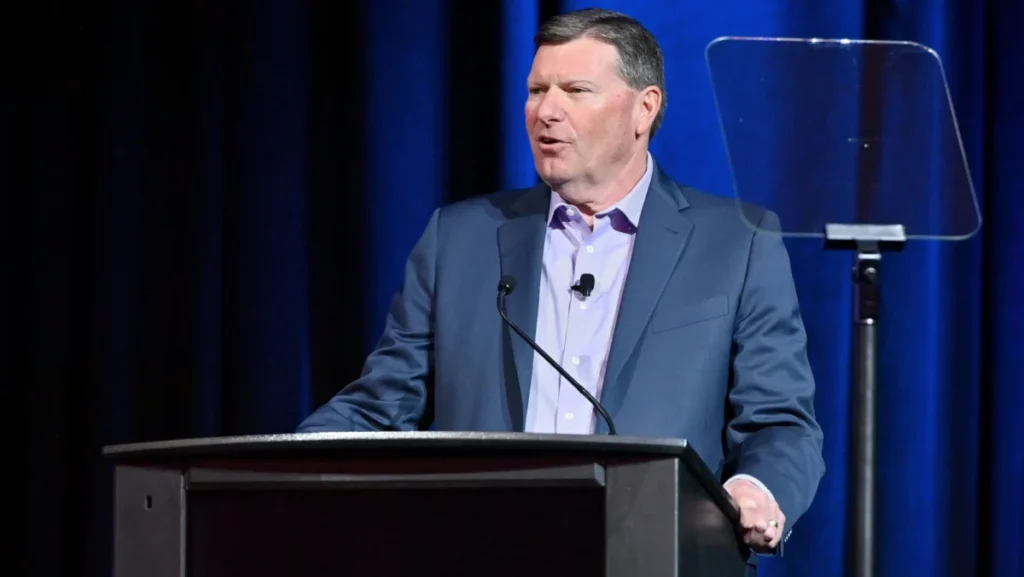

Ray Nutt, the long-serving Chief Executive Officer of Fathom Entertainment, the pioneering specialty distributor jointly owned by America’s major theater chains AMC Entertainment, Cinemark Holdings, and Regal Cinemas, has announced his retirement. His departure marks the end of a highly impactful nine-year run at the helm of the Colorado-based company, which has become a significant force in the alternative theatrical experiences market. Nutt’s decision, communicated via a statement on Wednesday, signals a pivotal moment for both the executive and the innovative distribution entity he led.
"Now is the right time for me to begin the process of stepping down from a full-time executive role and transition to retirement, while also an opportune inflection point in the history of Fathom Entertainment to find its next leader," Nutt stated, underscoring a thoughtful and strategic timing for his transition. Having spearheaded the distributor of niche cinematic events for nearly a decade, Nutt is expected to play an active role in the ongoing search for his successor, ensuring a smooth leadership handover. His tenure, which began in 2017, followed a period of service on Fathom’s board of directors, concurrently with his role as senior vice president of business relations at the then Regal Entertainment Group, now known as Regal Cineworld.
The Evolution of Event Cinema and Fathom’s Strategic Role
Fathom Entertainment operates at the intersection of traditional cinema and specialized content, offering a diverse array of "event cinema" programming. This unique model involves one-off cinematic events that range from live broadcasts of world-class opera, ballet, and stage plays to live concert films, exclusive documentaries, anime specials, faith-based features, and anniversary re-releases of classic Hollywood films. The company’s unique ownership structure by the three largest cinema chains – AMC, Cinemark, and Regal – positions it as a strategic asset designed to diversify revenue streams for exhibitors, attract varied audiences, and optimize screen utilization, particularly during traditionally slower box office periods.
The concept of event cinema, or alternative content, has steadily grown in prominence within the global exhibition industry over the past two decades. Initially seen as a supplementary offering, it has evolved into a crucial component of many theaters’ programming strategies. Fathom’s success is rooted in its ability to tap into dedicated fan bases for specific genres and artists, providing communal viewing experiences that cannot be replicated at home. This strategy has proven particularly resilient in a challenging media landscape increasingly dominated by streaming services and direct-to-consumer releases. By offering unique, often live, and always communal events, Fathom creates a compelling reason for audiences to visit the cinema, reinforcing the value of the theatrical experience beyond mainstream blockbusters.
Ray Nutt’s Transformative Leadership: From Events to Entertainment
Ray Nutt’s appointment as CEO in 2017 marked a significant chapter in Fathom’s history. He brought to the role a deep understanding of the exhibition landscape, cultivated during his time at Regal. His vision for Fathom extended beyond simply distributing discrete events; he aimed to establish the company as a premier specialty distributor capable of curating and marketing a broader spectrum of "event movies." This strategic shift was encapsulated in the rebranding from "Fathom Events" to "Fathom Entertainment," a move that signaled an expansion of ambition and scope.
Under Nutt’s leadership, Fathom significantly broadened its content portfolio and refined its operational strategies. Key milestones included forging stronger partnerships with content creators across various genres, from The Metropolitan Opera and Britain’s National Theatre Live to Turner Classic Movies (TCM) for its "Big Screen Classics" series, and numerous anime studios. This diversification not only enriched the offerings for moviegoers but also provided a stable pipeline of unique programming for participating theaters. The company’s ability to consistently deliver high-quality, exclusive content has been a hallmark of Nutt’s tenure, allowing Fathom to consistently rank among the top ten distributors at the domestic box office for several years, a remarkable feat for a specialty distributor.
Nutt also navigated Fathom through unprecedented challenges, particularly the global pandemic that brought the theatrical industry to a standstill. While cinemas faced closures and significant revenue losses, Fathom played a crucial role in the eventual recovery by providing unique content that helped entice audiences back to theaters once they reopened. Its flexibility in scheduling and its ability to offer distinct, less volatile content compared to major studio releases made it an invaluable partner for exhibitors grappling with an uncertain release calendar. The strategic rebranding and expansion of content under Nutt laid the groundwork for Fathom’s resilience and continued growth even in the face of industry-wide disruption.
A Chronology of Growth and Impact
- Early 2000s: The genesis of Fathom as a concept, evolving from earlier initiatives by major exhibitors to leverage digital projection for alternative content. The aim was to fill screens during off-peak hours and offer diverse programming.
- 2002: The company’s formal establishment, initially focusing on live satellite broadcasts of sporting events and concerts.
- Mid-2000s: Expansion into performing arts, notably partnering with The Metropolitan Opera for live broadcasts, which proved to be a highly successful model for event cinema.
- 2010s: Steady growth in content offerings, including classic film re-releases, documentaries, and a growing emphasis on anime and faith-based films. The "Fathom Events" brand becomes synonymous with unique theatrical experiences.
- 2017: Ray Nutt is appointed CEO. He initiates a strategic review aimed at expanding Fathom’s market presence and content depth.
- Post-2017: Under Nutt’s leadership, the company undergoes a significant rebranding from "Fathom Events" to "Fathom Entertainment," reflecting a broader vision as a leading specialty distributor. New partnerships are forged, and the content pipeline diversifies further.
- 2020-2021: Fathom navigates the unprecedented challenges of the COVID-19 pandemic, adapting its release strategies and playing a vital role in supporting theaters during their reopening phases by providing unique content when traditional studio releases were scarce.
- 2022-Present: Fathom continues its robust programming, contributing significantly to the post-pandemic recovery of the exhibition industry and solidifying its position as a key player in the theatrical landscape.
- June 2024: Ray Nutt announces his retirement, initiating a search for his successor.
Supporting Data and Market Significance
The event cinema market has demonstrated robust growth globally, even as traditional box office numbers have faced challenges. According to various industry reports, the global event cinema market was valued at approximately $1.5 billion in 2023 and is projected to grow significantly in the coming years, driven by increasing consumer demand for unique, communal experiences and the diversification efforts of cinema operators. Fathom Entertainment stands as a dominant force within the North American segment of this market, frequently accounting for a substantial portion of the alternative content box office.
For the major cinema chains, Fathom represents more than just a content provider; it’s a strategic investment that yields multiple benefits. It helps fill seats during traditionally slower weekdays and evenings, diversifies revenue streams beyond concession sales and mainstream movie tickets, and attracts demographic segments that might not typically frequent cinemas for Hollywood blockbusters. For instance, anime events often draw a younger, highly engaged audience, while opera broadcasts appeal to an older, culturally inclined demographic. Classic film re-releases tap into nostalgia and offer an opportunity for intergenerational viewing. This targeted programming fosters loyalty and expands the overall moviegoing audience.
Furthermore, Fathom’s model has a positive ripple effect on smaller and independent cinemas. These venues often rely heavily on event cinema programming to supplement their mainstream offerings, providing a consistent stream of unique content that helps them remain viable and competitive against larger multiplexes. The economic impact extends to local communities, as these events draw patrons who often dine out or engage in other local activities before or after a Fathom showing.
Official Tributes and Industry Acclaim
The announcement of Ray Nutt’s retirement was met with widespread tributes from the leaders of Fathom’s parent companies, highlighting his profound impact on the organization and the broader theatrical exhibition industry.
Adam Aron, Chairman and CEO of AMC Entertainment, lauded Nutt’s contributions: "Ray Nutt’s longtime leadership of Fathom Entertainment has delivered meaningful benefits to AMC, the broader theatrical exhibition industry, and, most importantly, moviegoers nationwide. Under his direction, Fathom has further strengthened its position as the leading force in alternative theatrical experiences, broadening the scope of content available to AMC guests." Aron’s statement underscores the strategic value Fathom brings to AMC, particularly in enhancing the diversity of its programming.
Echoing these sentiments, Eduardo Acuna, CEO of Regal Cineworld, and Sean Gamble, President and CEO of Cinemark, also issued statements recognizing Nutt’s exemplary service and leadership. While specific quotes from Acuna and Gamble were not detailed, their acknowledgement signifies a unified appreciation from Fathom’s ownership for Nutt’s dedication and the positive trajectory he set for the company. These tributes collectively paint a picture of a leader who not only grew a business but also significantly contributed to the evolution and resilience of the entire theatrical exhibition ecosystem.
Broader Implications and The Path Forward for Fathom
Ray Nutt’s retirement ushers in a new era for Fathom Entertainment, prompting questions about the company’s future strategic direction. The search for a new CEO will be critical, as the chosen individual will inherit a robust, well-established business but also face the ongoing challenges of a dynamic entertainment landscape. The next leader will need to possess a keen understanding of content acquisition, distribution, and marketing, coupled with an innovative vision to keep Fathom at the forefront of event cinema.
For Fathom Entertainment itself, the transition presents an opportunity for fresh perspectives. While the core mission of providing diverse theatrical experiences will likely remain, a new CEO might explore expanding into emerging content verticals, leveraging new technologies (such as enhanced interactive elements or virtual reality components for specific events), or forging partnerships in new international markets. The ability to maintain strong relationships with existing content providers and exhibitors will be paramount, as will the agility to respond to evolving consumer tastes.
For the broader theatrical exhibition industry, Fathom’s continued success is vital. As studios increasingly experiment with release windows and direct-to-streaming models, the role of alternative content in drawing audiences to cinemas becomes even more pronounced. Fathom’s model provides a stable, diversified revenue stream that complements the often unpredictable nature of blockbuster releases. The new leadership will be tasked with ensuring Fathom continues to innovate and adapt, thereby reinforcing the enduring appeal and economic viability of the theatrical experience. The transition underscores the industry’s ongoing evolution and its commitment to strategic diversification to meet the demands of a modern audience. The legacy of Ray Nutt will serve as a strong foundation upon which the next leader will build, guiding Fathom Entertainment into its next phase of growth and innovation.