
The landscape of contemporary horror cinema is undergoing a profound evolution, with a new generation of filmmakers, many honed in the crucible of comedy, masterfully blending frights with laughter to amplify both. Directors like Zach Cregger, Jorma Taccone, Matt Bettinelli-Olpin, and Tyler Gillett are at the forefront of this movement, demonstrating how a keen understanding of comedic timing and character can elevate the visceral impact of horror, a path notably illuminated by the trailblazing success of Jordan Peele. Their recent works, including Cregger’s Oscar-winning Weapons, Radio Silence’s Ready or Not 2: Here I Come, and Taccone’s Over Your Dead Body, stand as testaments to this innovative approach, captivating audiences and critics alike.
The Genesis of a Darker Orientation: Zach Cregger’s Journey
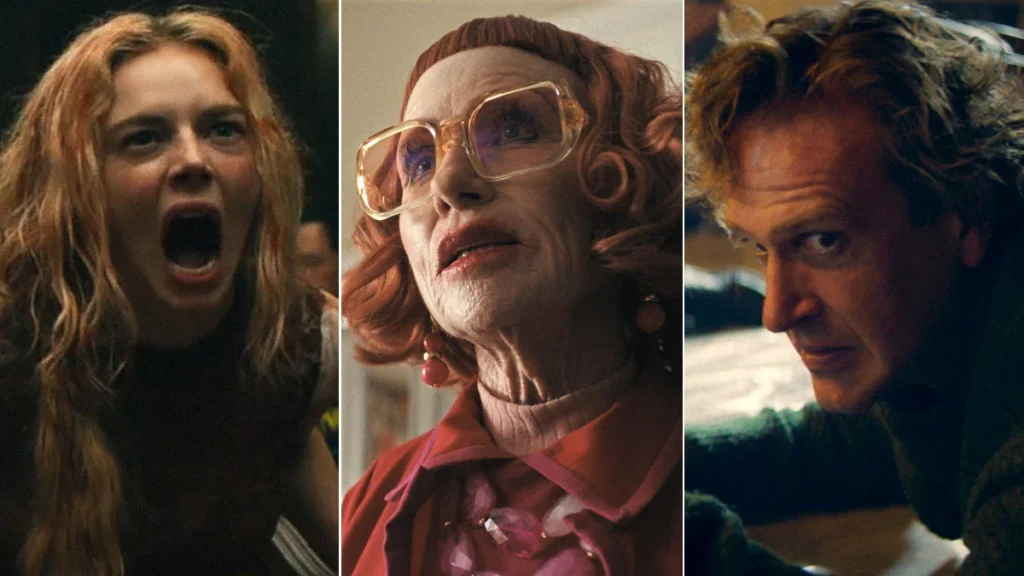
Years before Zach Cregger directed Amy Madigan to a celebrated Oscar win for his 2025 horror movie Weapons, the filmmaker was widely known for his comedic roots as a member of the sketch comedy troupe "The Whitest Kids U’Know." Cregger’s transition into the horror genre was not an abrupt pivot but a gradual realization of a deeper creative calling. While filming a television show on the picturesque island of Fiji, Cregger found himself artistically unfulfilled by the comedic production itself. He recounts to Consequence that his true creative outlet emerged nightly, returning to his hotel to meticulously craft genre screenplays. "I liked the show a lot," he noted, "But I found myself only creatively fulfilled when I would go back to my hotel at night to write a genre movie." It was during this period that Cregger discovered a profound love for writing, particularly "writing what I wanted — and what I wanted was this dark story."
This period marked Cregger’s recognition of his "true orientation… toward darker stuff," a revelation that would eventually lead him to become one of today’s most acclaimed horror directors. Yet, his extensive background in comedy has remained an indispensable toolkit, providing him with unique insights into human psychology, pacing, and misdirection — elements crucial for both eliciting laughter and inducing terror. His ability to weave comedic sensibilities into the fabric of his horror narratives has not only provided moments of levity but has, more importantly, served to heighten the impact of his scares, making the terrifying moments resonate with greater intensity due to the expertly managed shifts in tone.
Pioneering the Modern Horror-Comedy Renaissance: Jordan Peele and His Successors
The modern era of sophisticated horror-comedy arguably found its definitive footing with Jordan Peele’s directorial debut, Get Out, in 2017. Peele, a celebrated comedian from the duo Key & Peele, demonstrated that horror could be infused with sharp social commentary and unsettling humor without sacrificing genuine scares or thematic depth. His subsequent films, Us (2019) and Nope (2022), further solidified his reputation as a master of genre-bending, inspiring a new wave of filmmakers to explore similar territory. This burgeoning trend has seen other directors with strong comedic pedigrees follow suit, including Jorma Taccone, helmer of Over Your Dead Body, and the dynamic duo of Matt Bettinelli-Olpin and Tyler Gillett, creators of the Ready or Not franchise. All these directors, emerging from various comedic backgrounds, leverage their experience not merely to sprinkle humor into tense scenes but to strategically ensure that the scares land with maximum, often shocking, force.
Radio Silence: From Online Pranks to Franchise Success
Matt Bettinelli-Olpin and Tyler Gillett, the creative force behind the filmmaking collective Radio Silence, embarked on their careers as part of the online filmmaking team known as Chad, Matt, and Rob. This period coincided with the explosion of short-form comedy videos online, a format that allowed for rapid experimentation and direct audience engagement. Their early work, such as the viral "Alien Roommate Prank Goes Bad," demonstrated an innate understanding of how to build tension and deliver a payoff, whether that payoff was a laugh or a jolt. Bettinelli-Olpin, one of the original group members (Gillett joined in 2011), recalls a conscious effort to transcend mere sketch comedy. "We were really consciously trying to not do just sketch comedy. It was like, what’s a different version of that? How can these be like little mini short films that have their own identity?"
Their solution was ingenious: to integrate horror elements, particularly jump scares, into their comedic narratives. This hybrid approach revealed a powerful synergy. "We realized you can merge these two things in a way that make both better. It makes the funny stuff funnier and it makes the scary stuff really surprising," Bettinelli-Olpin explained. This foundational insight would become a hallmark of their later work. The Chad, Matt & Rob team eventually evolved into Radio Silence, a collective that has since made significant contributions to established horror franchises, including multiple installments of V/H/S and Scream, alongside their original Ready or Not films.
Their philosophy remains consistent: ground insane situations in relatable, human reactions. Bettinelli-Olpin articulates this perfectly: "real grounded characters who get thrown into an insane situation… The more crazy it gets, the more real their reaction gets, the funnier it gets and the scarier it gets simultaneously." This approach was critically acclaimed in the first Ready or Not (2019), which garnered widespread praise for its darkly comedic tone and relentless tension, grossing over $57 million worldwide against a modest $6 million budget and earning an impressive 89% on Rotten Tomatoes.
The sequel, Ready or Not 2: Here I Come, picks up immediately after the harrowing events of the original. The first film saw freshly married Grace (Samara Weaving) thrust into a deadly game of hide-and-seek with her new in-laws, participants in a macabre Devil-worshipping family tradition. The sequel intensifies the stakes, reuniting Grace with her estranged sister (Kathryn Newton) as multiple families now hunt them, driven by the sinister pursuit of Devil-powered world domination. Gillett emphasizes that the humor in these films doesn’t stem from the characters actively trying to be funny. "She’s not playing funny, the other characters aren’t playing funny. What’s funny is the heightened reality of the story that our very grounded and relatable character is entering." The success, he notes, lies in "not being afraid to be earnest about all of the tones." This allows the audience to genuinely connect with the characters’ terror, making the comedic relief, however brief, feel earned and impactful. Bettinelli-Olpin draws a parallel to Jack Nicholson’s iconic performance in The Shining, noting, "where he’s horrific and terrifying, but there’s humor the whole time. It kind of comes and goes, so it catches you off guard. I wouldn’t call The Shining a comedy by any stretch, but there’s levity to it, which then makes the crazy crazier and scarier."
Jorma Taccone’s Dive into the Terrifying Unknown
Jorma Taccone, a celebrated alum of "The Lonely Island" comedy group, has a directorial resume previously dominated by action-comedy hits like MacGruber (2010) and Popstar: Never Stop Never Stopping (2016). His recent foray into full-fledged horror with Over Your Dead Body, a remake of a 2021 Norwegian film by Tommy Wirkola, marks a significant departure. Taccone himself candidly admits that tackling horror on this level for the first time was "a little uncomfortable," primarily because "horror scares the shit out of me." He vividly recalls an experience watching the intensely terrifying 2005 film The Descent with fellow Lonely Island collaborator Andy Samberg: "Me and Andy watched it at noon on a Sunday on a tiny little TV. And we kept turning it off and pausing it and walking around the room like, ‘Oh God, oh God.’"
Despite his personal aversion to horror, Taccone was drawn to the challenge of creating a remake that he would admire as much as the original. His film, which debuted alongside Ready or Not 2: Here I Come at the 2026 SXSW Film Festival, stars Samara Weaving and Jason Segel. It opens with an unhappily married couple each secretly planning to murder the other during a secluded cabin getaway. Their sinister plans are abruptly interrupted by the arrival of two escaped mental patients (Timothy Olyphant, Keith Jardine) and their equally deranged guard (Juliette Lewis), escalating the dark comedy into outright terror.
Taccone’s initial apprehension revolved around his ability to "thread all these needles of tone." However, the filmmaking process revealed a surprising truth: "the horror stuff actually feels like comedy to me, in terms of how you execute it." This insight underscores the shared technical craftsmanship required for both genres, particularly in the meticulous manipulation of audience expectations and emotional responses.

The Shared Craft: Timing, Rhythm, and the Indispensable Role of Test Screenings
The seamless integration of comedy and horror is not accidental; it is a deliberate artistic choice rooted in a shared understanding of timing and audience engagement. Both genres thrive on precise execution, often relying on the element of surprise and the careful management of tension. A critical tool in refining this delicate balance, as these directors attest, is the test screening process. Bettinelli-Olpin expresses a common sentiment among filmmakers: "we wish test screenings were only used to calibrate." While often perceived as a studio mandate, showing a film to a fresh, unbiased audience provides invaluable feedback for filmmakers attempting to perfect their tonal blend.
Zach Cregger strongly believes in the importance of testing. "The testing process is really important," he states. "You put something in front of an audience and you’re going to know for a certainty whether it is or is not funny, because they will not laugh if it is not funny. There’s no arguing with a test audience. You can’t say, ‘Oh, you come on guys, that’s actually really funny.’ Like, no, it’s not. Because they didn’t laugh. And I think the same goes for scary. If they’re scared, you can feel it in the room and they tell you afterwards. It’s almost binary whether it works or it doesn’t."
Bettinelli-Olpin echoes this sentiment, highlighting the visceral nature of audience reaction. "You don’t need to read a card, you don’t need to hear [the audience] talk about it. When something is not working, we turn to each other and go, ‘You feel it? Oh, that is not working.’" This collective understanding drives their commitment to refinement. While the fear exists that poor test results might force creative compromises, the directors emphasize that "the actual experience of sitting in a test screening is invaluable" for identifying and rectifying issues.
Due to budgetary constraints, Taccone had only one test screening for Over Your Dead Body. Nevertheless, this single screening proved instrumental. One significant change that emerged was the decision to cut a late-movie death scene present in the original Norwegian film. Taccone describes this as "a real kill-your-darlings moment," but ultimately felt it detracted from the core relationship dynamic of his adaptation. "It’s the thing that I so love about feature editing, that those things that you do influence how you feel about a character at the end. And it only comes from editing and editing and seeing it with other people." This highlights how test screenings, even limited ones, can provide crucial perspective on narrative and emotional arcs.
The Precision of Post-Production: Sound, Rhythm, and "Frame-Fucking"
When faced with a scene that isn’t quite landing, be it a scare or a joke, the question of fixability in post-production arises. Tyler Gillett believes that fixing a scare can often be more straightforward than fixing a joke. "So many great scares are sound. Sound is the cheat code in so many ways for horror, from music to sound design." The strategic manipulation of audio cues, sudden silences, and jarring noises can dramatically enhance or diminish a fright. For both scares and jokes, however, Bettinelli-Olpin pinpoints a common culprit: "when they’re not working, it’s usually either because it’s either too fast or too slow. It’s about finding that rhythm."
Cregger emphatically agrees with this assessment, stressing the paramount importance of the edit. "Something is scary or not scary by usually like one or two frames. And comedy is like that for sure — it is just pure timing. So the edit is crucial." He offers an example from Weapons, where a haunting moment involving Julia Garner’s character sleeping in her car, oblivious to an intruder, required meticulous adjustment. In the edit, Cregger recalls, "we extended the duration [of the moment], because I think on the day she opened the door a little early, and we felt like we needed another second and a half before." Finding that precise timing, he concludes, is "kind of a musicality. There was definitely a comedy ear at work for that."
Taccone, with his characteristic candor, uses the term "frame-fucking" to elegantly describe the painstaking process of micro-adjusting timing to achieve the desired effect. However, he cautions that even the most skilled editing cannot salvage a fundamentally flawed performance. "The scariest thing is if you didn’t get the performance [on set]. I think that’s much more of a problem. If a line isn’t working on set, if it doesn’t sound natural coming out of an actor’s mouth, change the line. Those are the moments where I think you have to be really disciplined and be like, ‘There’s no reason to shoot this if it’s not working.’" This underscores that while post-production offers powerful tools, the foundation of effective horror-comedy lies in strong performances and a well-crafted script.
The Unique Stakes of Horror-Comedy
Despite the increasing synergy between horror and comedy, a fundamental difference in their inherent demands remains. As Cregger astutely observes, the stakes for a joke in a horror film are considerably lower than in a pure comedy. "If a joke in a horror movie isn’t working, you just cut the joke out and now you just have a scene that has no joke and nobody minds. You can have a horror movie where there’s maybe only five laughs in the whole movie, and everyone’s going to leave and be like, ‘That movie’s pretty funny too.’ Because you’re just not expecting to laugh at all in a horror movie." The unexpected nature of humor in a horror context means even sparse comedic relief can be disproportionately appreciated.
Conversely, Cregger points out the unforgiving nature of pure comedy. "In a comedy, if it’s not funny, you’ve got to try and make it funny. You don’t get to just cut the jokes out, because people are gonna be like, ‘Why was there like 20 minutes where there was no laughing?’ That would suck." He concludes with a chuckle, "I’d say the stakes feel a little bit higher with comedy." This analysis highlights why directors from comedic backgrounds are so well-suited for horror-comedy: their training instills a rigorous discipline in comedic timing and audience response, skills that translate powerfully to crafting effective scares.
Broader Impact and Implications
The rise of directors like Cregger, Taccone, Bettinelli-Olpin, and Gillett signifies a maturation of the horror-comedy genre. No longer relegated to niche status or B-movie schlock, it has evolved into a sophisticated cinematic form capable of delivering genuine thrills, thought-provoking themes, and impactful humor. This blending broadens the appeal of horror, attracting audiences who might otherwise shy away from purely terrifying narratives. By offering moments of levity, these films create a more dynamic viewing experience, allowing for tension to build and release in ways that heighten both the comedic and horrific elements.
The success of Weapons, currently streaming on HBO Max, and Ready or Not 2: Here I Come, now playing in theaters, alongside the anticipated premiere of Over Your Dead Body on April 24th, 2026, solidifies the mainstream acceptance and critical acclaim for this hybrid genre. These filmmakers, armed with an intimate understanding of human psychology gleaned from their comedic roots, are not just making horror movies with jokes; they are meticulously crafting cinematic experiences where laughter and fear become interdependent, each serving to amplify the other in a truly magical and unforgettable way. Their work promises to continue pushing the boundaries of what horror can be, proving that sometimes, the best way to make audiences scream is to first make them laugh.