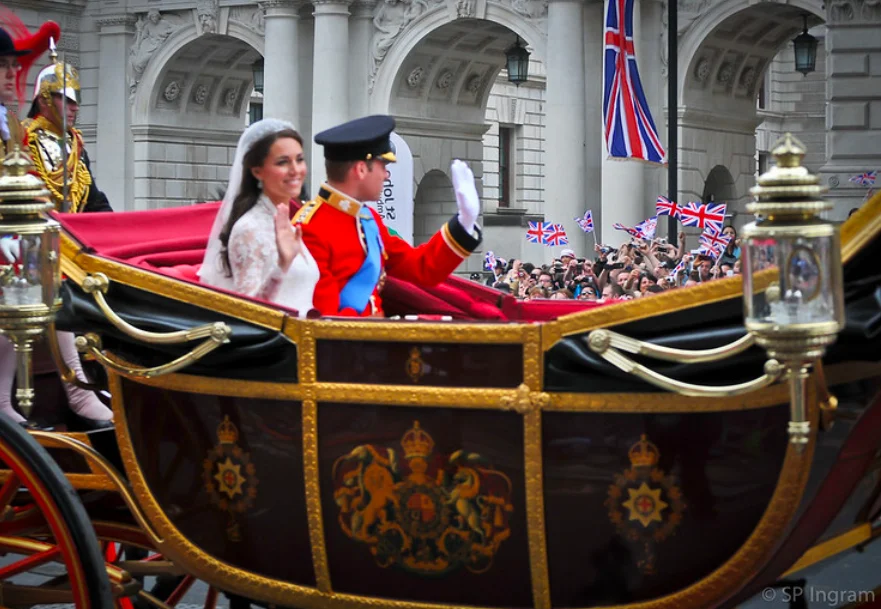

The floral arrangements accompanying a royal bride are far more than mere decorative elements; they are silent storytellers, imbued with layers of meaning, history, and personal sentiment. When Catherine Middleton, now the Princess of Wales, walked down the aisle to marry Prince William on April 29, 2011, her wedding bouquet was a carefully curated masterpiece, a testament to these enduring traditions and a deeply personal nod to her groom and their shared future. This seemingly modest arrangement of white blooms, laced with greenery and wired into a neat shield shape, carried a profound significance, connecting her to centuries of royal brides and whispering tales of love, loyalty, and remembrance.
A Bouquet of Deeply Personal and Royal Significance
Catherine’s bouquet was characterized by its understated elegance, a stark contrast to the grandeur of Westminster Abbey and her now-iconic lace gown. Crafted from locally sourced flowers, all rendered in pristine white, it presented a delicate yet resilient form. The choice of flowers was not arbitrary; each bloom was selected for its symbolic meaning, contributing to a narrative that unfolded throughout the ceremony and beyond.
The dominant flower, Lily of the Valley (Convallaria majalis), a plant that typically heralds the arrival of May, has long been a favoured bloom for brides. Its delicate, bell-shaped flowers exude a sweet, intoxicating fragrance, and its symbolism is particularly poignant, signifying a "return to happiness." This choice echoed a long-standing tradition, drawing parallels to the bouquet carried by Princess Grace of Monaco at her wedding to Prince Rainier III in 1956, which also prominently featured lily of the valley. Both brides, separated by over five decades, chose this bloom, perhaps drawn to its timeless charm and its hopeful connotations.
A touching and deeply personal element was the inclusion of Sweet William (Dianthus barbatus). This common garden flower, with its clusters of vibrant blooms, served as a direct and affectionate tribute to Prince William. The playful pun, a floral homonym, underscored the couple’s evident affection and provided a lighthearted, yet meaningful, personal touch within the formal solemnity of the occasion. This inclusion demonstrated a desire to weave the personal narrative of their relationship into the fabric of a historic royal wedding.
Adding further layers of meaning were ivy (Hedera helix) and hyacinth (Hyacinthus orientalis). Ivy, a symbol of enduring wedded love and fidelity, spoke to the strength and longevity of the union being formed. The hyacinth, known for its rich fragrance and vibrant colours, symbolized constancy of love, reinforcing the commitment and unwavering devotion central to marriage.
The Myrtle: A Royal Wedding Staple
Perhaps the most historically significant inclusion in Catherine’s bouquet was a sprig of myrtle (Myrtus communis). This evergreen shrub holds a special place in the annals of royal weddings, tracing its lineage back to Queen Victoria. The tradition was initiated in 1840 when Queen Victoria carried myrtle in her bouquet, a sprig of which was taken from a bush planted by her own grandmother, Princess Augusta, at the Royal Family’s former seaside residence, Osborne House on the Isle of Wight. Since that time, myrtle has become a ubiquitous symbol of marriage and enduring love for royal brides, representing the blossoming of a new family and the continuation of a dynastic legacy. The inclusion of myrtle in Catherine’s bouquet was a direct link to this unbroken chain of royal tradition, connecting her to generations of queens and princesses who had stood in similar positions of profound personal and public significance.
The Language of Flowers: A Profoundly Symbolic Narrative
The language of flowers, or floriography, has a rich history, with specific blooms carrying distinct meanings. In Catherine’s bouquet, these meanings coalesced to paint a picture of love, commitment, and enduring happiness:

- Lily of the Valley: Return to happiness, sweetness, purity.
- Sweet William: Gallantry, a smile, admiration.
- Ivy: Wedded love, fidelity, eternal life.
- Hyacinth: Constancy of love, playfulness, sincerity.
- Myrtle: Love, marriage, fertility, immortality.
Collectively, these flowers communicated a powerful message of a love that was both passionate and steadfast, pure and joyful, and destined for a happy and enduring future. The carefully chosen blooms offered a silent yet eloquent testament to the couple’s feelings for each other and their commitment to building a life together.
A Post-Ceremony Tradition of Remembrance
Beyond its role in the ceremony, the royal wedding bouquet carries a poignant tradition that speaks to sacrifice and remembrance. Following the wedding celebrations, Catherine’s bouquet, like those of many royal brides before her, was placed upon the Tomb of the Unknown Soldier at Westminster Abbey. This solemn act is a tribute to the fallen and a continuation of a tradition established by Queen Elizabeth The Queen Mother (then Lady Elizabeth Bowes-Lyon) on April 26, 1923, following her marriage to Prince Albert, Duke of York (later King George VI).
Lady Elizabeth’s decision to lay her bouquet on the tomb was deeply personal. Her brother, Fergus Bowes-Lyon, had been killed in action during World War I. By placing her wedding flowers there, she paid homage to his memory and to all those who had made the ultimate sacrifice for their country. This act of profound respect and remembrance has been observed by every senior royal bride since, including Queen Elizabeth II, Princess Margaret, Princess Anne, and most recently, Catherine herself. It serves as a powerful reminder of the human cost of conflict and the enduring gratitude of the nation, weaving a thread of solemnity and national remembrance into the joyous occasion of a royal wedding.
Critical Reception and Comparisons
Upon its unveiling, the bouquet generated considerable discussion. While some praised its delicate charm and its ability to complement the intricate detail of Catherine’s Sarah Burton for Alexander McQueen gown, others found it to be too small, perhaps lost amidst the imposing architecture of Westminster Abbey. This sentiment, however, was often tempered by the broader appreciation for the bouquet’s symbolic depth and its connection to royal heritage.
The comparisons to Princess Grace of Monaco’s wedding bouquet were almost immediate and persistent. Both brides opted for a similar aesthetic: a compact arrangement dominated by lily of the valley. This shared choice highlighted a prevailing sensibility among royal brides who valued elegance, fragrance, and meaningful symbolism. While Grace Kelly’s bouquet was exclusively lily of the valley, Catherine’s incorporated a broader spectrum of symbolic blooms, showcasing a slightly more complex narrative. The juxtaposition of these two iconic bouquets served to underscore the enduring appeal of certain floral choices in royal weddings, transcending generations and cultural shifts.
The Enduring Legacy of a Royal Wedding Bouquet
Catherine, Princess of Wales’s wedding bouquet was more than just a collection of flowers; it was a carefully crafted symbol of love, commitment, and royal tradition. From its personal tribute to Prince William in the form of Sweet William, to its deep roots in royal history through the inclusion of myrtle, and its poignant connection to sacrifice via the placement on the Tomb of the Unknown Soldier, every element was imbued with significance. The bouquet became an integral part of her wedding day ensemble, a testament to the enduring power of nature to convey profound emotions and to connect the present with the past. It remains a cherished memory of a wedding that captivated the world, a floral narrative that continues to resonate with its blend of personal affection and historical weight.
The enduring fascination with royal wedding bouquets underscores their unique position as both personal keepsakes and public symbols. They offer a glimpse into the private sentiments of royal figures while simultaneously upholding centuries-old traditions. Catherine’s bouquet, with its thoughtful selection of blooms and its adherence to time-honoured customs, stands as a beautiful example of this powerful intersection. Its story is a testament to how even the smallest details in a grand event can carry immense weight and meaning, weaving a tapestry of love, history, and remembrance for generations to come.