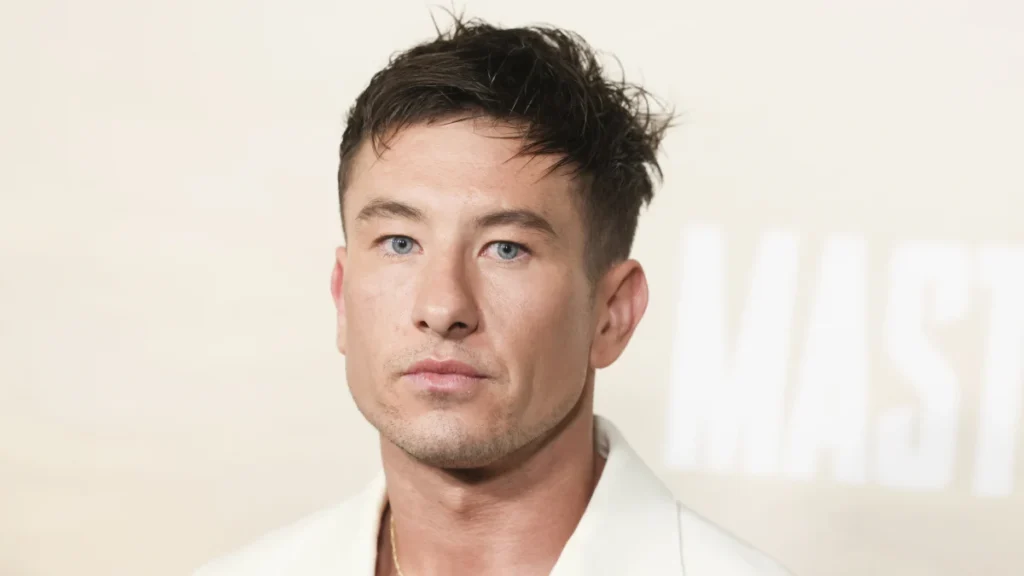

In a candid and revealing interview on Sirius XM’s The Morning Mash Up, critically acclaimed Irish actor Barry Keoghan shared the profound personal toll that relentless online vitriol regarding his physical appearance has taken on him, admitting that the abuse has made him want to withdraw from public life entirely. Keoghan’s confession sheds light on the often-overlooked mental health struggles faced by public figures in the digital age, where instant and unfiltered commentary can quickly escalate into pervasive harassment.
Keoghan, known for his distinctive presence and intense performances in films such as The Killing of a Sacred Deer, The Banshees of Inisherin, and Saltburn, articulated a struggle that transcends typical celebrity scrutiny. "There’s a lot of hate online," he stated. "There’s a lot of abuse of how I look, and it’s kind of past the point of – you know, everyone goes through that… but it’s made me shy away. It’s made me really go inside myself, not want to attend places, not want to go outside." This sentiment highlights a critical distinction between constructive criticism or even general public interest and the targeted, often cruel, nature of online personal attacks.
The Rise of a Distinctive Talent and the Scrutiny of Fame
Barry Keoghan’s journey to Hollywood stardom is itself a testament to resilience and raw talent. Born in Dublin, Keoghan grew up in challenging circumstances, spending a significant portion of his childhood in foster care. His entry into acting was somewhat serendipitous, answering an open casting call that ultimately led to his breakthrough. His early roles often saw him embodying characters with an unsettling intensity, a quality that quickly became his signature. Films like Dunkirk (2017) and Yorgos Lanthimos’s The Killing of a Sacred Deer (2017) showcased his ability to command attention with subtle yet powerful performances.
His career trajectory accelerated significantly in recent years, culminating in an Academy Award nomination for Best Supporting Actor for his role in The Banshees of Inisherin (2022) and widespread acclaim for his lead performance in Emerald Fennell’s Saltburn (2023). With each high-profile role, Keoghan’s visibility has soared, bringing with it an exponential increase in public attention, both positive and negative. While much of this attention has rightly focused on his acting prowess, it has also, as he now reveals, opened the floodgates to deeply personal and hurtful commentary about his appearance.
This phenomenon is not unique to Keoghan but is a pervasive aspect of modern celebrity. The internet, while offering unparalleled opportunities for connection and fan engagement, also provides a platform for anonymous and often malicious criticism. Social media platforms, designed for instantaneous interaction, can inadvertently foster environments where personal attacks are amplified and normalized, creating a hostile space for public figures.
The Psychological Impact of Online Vitriol
Keoghan candidly labeled the situation "a problem," detailing how despite having "removed himself" from social media for the most part, he still finds himself occasionally checking in. "I’m still a curious human being that wants to go on [the internet]," he explained. "And if I attend an event or if I go somewhere, you want to see how it’s received. And it’s not nice, you know?" This describes a common dilemma for public figures: the struggle to balance self-preservation with the inherent curiosity about public perception, a curiosity often fueled by the demands of their profession.
The actor’s description of feeling "shy away" and wanting to "go inside myself" resonates with documented psychological effects of online harassment. Studies on cyberbullying, even among adults, indicate that victims often experience increased anxiety, depression, social withdrawal, feelings of shame, and a significant drop in self-esteem. For individuals whose careers inherently require public presence and self-confidence, such sustained negativity can be particularly debilitating. The constant exposure to comments dissecting one’s physical attributes, especially those perceived as "unconventional" by some, can erode an individual’s sense of self-worth and create a profound disjunction between their public persona and private well-being.
Mental health professionals frequently highlight the insidious nature of online abuse, where the sheer volume and persistent availability of negative comments can create a relentless psychological burden. Unlike face-to-face encounters, online attacks can occur at any time, penetrating personal spaces and making it difficult for individuals to find respite. Keoghan’s admission that the abuse makes him "not want to go outside" is a stark indicator of the severity of this psychological impact, transforming public spaces, both virtual and physical, into sources of potential distress.
Broader Implications: Art, Family, and Industry Responsibility
The impact of this online negativity, Keoghan fears, is not limited to his personal life but could also "leak into your art." He expressed concern that such sustained criticism could make him "not want to even be on screen anymore." This raises a critical point about the potential chilling effect of cyberbullying on creative expression. Actors, by nature, are vulnerable. They pour themselves into their roles, often drawing on deep personal experiences and emotions. When their physical presence, an intrinsic part of their craft, becomes a target of relentless mockery, it can foster a debilitating self-consciousness that hinders their ability to fully inhabit characters and deliver authentic performances. The fear of judgment can lead to self-censorship or a reluctance to take on challenging roles that might expose them further.
Beyond his professional life, Keoghan’s most poignant concern lies with his young son, Brando, born in 2022. "It is disappointing for the fans, but it’s also disappointing that my little boy has to read all of this stuff when he gets older," he shared. This highlights the intergenerational trauma that online abuse can inflict. Parents of public figures often grapple with the inevitable exposure their children will face to online archives of their parents’ lives, including all the negative commentary. The idea that a child might one day encounter hateful comments about their parent’s appearance underscores the long-lasting and far-reaching consequences of online toxicity, extending far beyond the immediate target.
Keoghan’s remarks also implicitly call into question the broader responsibilities of the entertainment industry and social media platforms. The "price of fame" has historically included a degree of public scrutiny, but the digital age has exponentially amplified this. Industry bodies, talent agencies, and production companies are increasingly recognizing the need to provide better mental health support for artists. Similarly, social media companies face ongoing pressure to implement more effective moderation policies and tools to combat harassment, moving beyond reactive measures to proactive prevention. While platforms often cite user freedom of speech, the line between opinion and abuse, especially when it targets physical attributes and leads to documented psychological harm, is a critical distinction that requires more robust enforcement.
Upcoming Projects and Professional Resilience
Despite these deeply personal struggles, Keoghan’s professional commitments remain robust, signaling a powerful underlying resilience. He is slated to appear in the highly anticipated Beatles biopic films, where he will portray the iconic drummer Ringo Starr. This ambitious cinematic undertaking involves four distinct films, each focusing on a different member of the legendary band: Joseph Quinn as George Harrison, Harris Dickinson as John Lennon, and Paul Mescal as Paul McCartney. The films are currently set for a simultaneous release in 2028, a testament to the scale and creative vision behind the project.
During an interview on Sirius XM’s The Julia Cunningham Show, Keoghan expressed his excitement for the films, referring to his costars as his "brothers," indicating a strong bond formed during the creative process. This camaraderie likely provides a vital source of support in an industry that can often feel isolating.
Keoghan has previously spoken about the immense pressure and respect involved in portraying such a revered figure. Last May, he admitted on Jimmy Kimmel Live! that he was "nervous" when he first met the real Ringo Starr, who is still actively touring. "When I was talking to him, I couldn’t look at him. I was nervous, like right now. But he’s like, ‘You can look at me,’" Keoghan recalled. His approach to the role underscores his dedication to his craft, even amidst personal challenges. "My job is to observe and kinda take in mannerisms and study him. I want to humanise him and bring feelings to it and not just sort of imitate." This method of embodying a character, focusing on the emotional core rather than mere mimicry, is a hallmark of Keoghan’s acting style and demonstrates his commitment to authenticity in his work.
The contrast between Keoghan’s professional triumphs and his personal anguish over online abuse is stark. It highlights the complex duality of modern celebrity: the public adoration and critical acclaim on one hand, and the relentless, dehumanizing scrutiny on the other. His ability to channel his focus into demanding roles, like that of Ringo Starr, while grappling with significant personal distress, speaks volumes about his professional integrity and resilience.
A Call for Empathy in the Digital Age
Barry Keoghan’s admission serves as a powerful reminder of the human beings behind the public personas. In an era saturated with digital content and instant reactions, it is easy to forget that celebrities, despite their fame and fortune, are susceptible to the same emotional wounds as anyone else. His willingness to speak out about the deeply personal impact of online comments on his appearance is a courageous act, offering a window into the often-hidden struggles of those in the public eye.
His story contributes to a growing conversation about the need for greater empathy, responsibility, and ethical conduct in online interactions. It reinforces the urgent call for social media platforms to evolve their policies and enforcement mechanisms to create safer digital spaces. Ultimately, Keoghan’s experience underscores that while fame may open doors to extraordinary opportunities, it also exposes individuals to unprecedented levels of scrutiny and, at times, cruelty, making the simple act of "going outside" a profound challenge. As audiences continue to engage with his compelling performances, his frankness about his personal struggles adds a layer of depth to his public identity, urging a more compassionate and considered approach to online discourse.