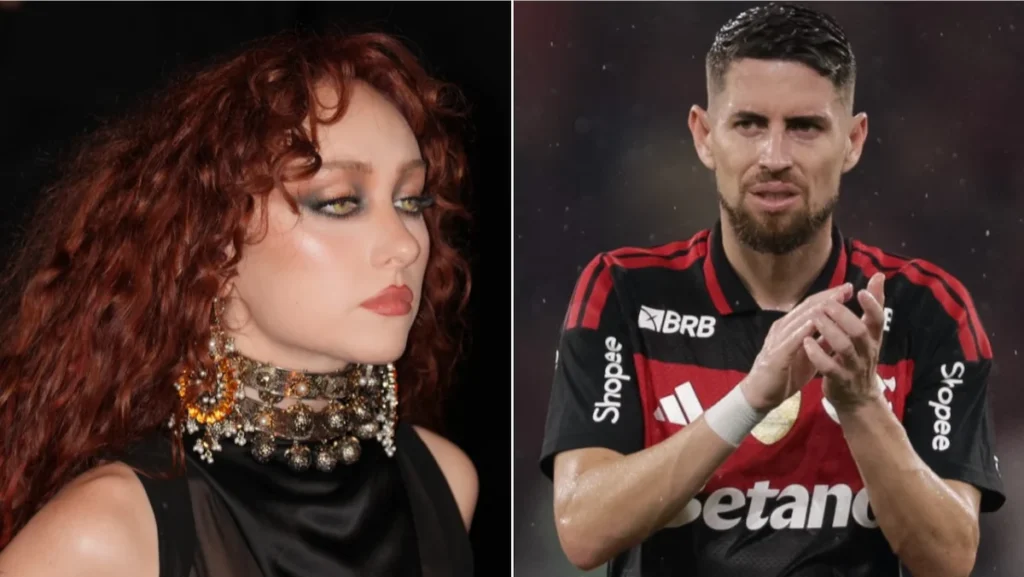

Italian international footballer Jorginho Frello has publicly accused American pop sensation Chappell Roan and her security team of causing his 11-year-old stepdaughter significant distress during an incident at a São Paulo hotel. The esteemed midfielder took to social media to express his outrage, detailing how his stepdaughter was allegedly left "extremely shaken" and in tears after a confrontational encounter with Roan’s security personnel, despite her merely observing the artist from a distance. The incident, which reportedly occurred during Lollapalooza Brasil, has ignited a fresh debate on celebrity boundaries, fan interaction, and the responsibilities of public figures and their security detail, especially when children are involved.
A Detailed Account of the Alleged Incident
The controversy unfolded in São Paulo, Brazil, where both Chappell Roan, whose real name is Kayleigh Amstutz, and Jorginho’s family were present for Lollapalooza Brasil, a major music festival. Jorginho’s stepdaughter, a fan of Roan’s, was reportedly staying at the same hotel as the artist. According to Frello’s detailed account, the incident transpired during breakfast.
"During breakfast, [Roan] walked past their table," Frello recounted on social media. "My daughter, like any child, recognised her, got excited, and just wanted to make sure it was really her. And the worst part is she didn’t even approach her. She simply walked past the singer’s table, looked to confirm it was her, smiled, and went back to sit with her mum. She didn’t say anything, didn’t ask for anything." This initial interaction, as described by Frello, was entirely passive and non-intrusive, typical of a young fan recognizing an idol. The child’s excitement was expressed through a simple glance and a smile, a common reaction from admirers, particularly minors, who might be hesitant or respectful enough not to directly approach a celebrity.
However, what followed, Frello claims, was a disproportionate and aggressive response from Roan’s security. "What happened next was completely disproportionate," Frello wrote. "A large security guard came over to their table while they were still having breakfast and began speaking in an extremely aggressive manner to both my wife and my daughter, saying that she shouldn’t allow my daughter to ‘disrespect’ or ‘harass’ other people… He even said he would file a complaint against them with the hotel, while my 11-year-old daughter was sitting there in tears."
The severity of the security guard’s alleged actions—accusing an 11-year-old of "disrespect" and "harassment" for a mere glance, threatening a hotel complaint, and causing the child to cry—is at the heart of Jorginho’s public condemnation. The footballer, who is married to Catherine Harding (the mother of the child, whose biological father is actor Jude Law), highlighted the distress his stepdaughter experienced, emphasizing the emotional impact on a vulnerable child.
Jorginho’s Public Condemnation and Experience with Public Life
Jorginho Frello, a seasoned professional athlete accustomed to intense public scrutiny and interactions, articulated his profound disappointment and frustration through his social media post. His statement was not merely an emotional outburst but a considered critique rooted in his extensive experience with fame and fan culture.
"I’ve lived with football, public exposure, and well-known people for many years, and I understand very well what respect and boundaries are. What happened there was not that," Frello asserted. His perspective carries weight given his career trajectory, having played for top-tier clubs like Chelsea and Arsenal, and representing the Italian national team. Such a career inevitably involves constant interaction with fans, media, and security protocols, providing him with a unique vantage point on the dynamics of celebrity and public engagement. He has navigated countless situations involving enthusiastic fans, autograph requests, and photo opportunities, developing an understanding of acceptable and unacceptable interactions.
He further elaborated, "It was just a child admiring someone. It’s sad to see this kind of treatment coming from those who should understand the importance of fans. At the end of the day, they are the ones who build all of this." This statement underscores a common sentiment among many public figures who recognize the symbiotic relationship between artists and their audience. Fans, through their support, loyalty, and engagement, are often seen as foundational to a celebrity’s success and sustained career. To have a young fan, particularly one acting with innocent admiration, subjected to such an aggressive response, struck Frello as a fundamental misunderstanding of this relationship. His criticism implicitly calls into question the judgment of Roan’s security team and, by extension, the artist herself, for the perceived lack of empathy and proportionality.
The involvement of his stepdaughter, whose biological father is renowned actor Jude Law, adds another layer of public interest to the incident, although Frello’s focus remained squarely on the child’s distress and the principle of respectful interaction.
Chappell Roan’s Known Stance on Fan Boundaries
In contrast to Jorginho’s call for understanding and appreciation of fans, Chappell Roan has previously been vocal about her need to establish clear boundaries with her audience, particularly in public settings. Her statements on fan interactions provide crucial context to the current controversy. In a 2024 TikTok video that gained significant traction, Roan explicitly addressed her discomfort with certain fan behaviors and expectations.
"I don’t want whatever the f you think you’re supposed to be entitled to whenever you see a celebrity," Roan stated emphatically in the video. "I don’t give a f if you think it’s selfish of me to say no for a photo or for your time or for a hug. That’s not normal. That’s weird. It’s weird how people think that you know a person just ‘cause you see them online or you listen to the art they make. That’s f***ing weird. I’m allowed to say no to creepy behavior, okay?"
Roan’s previous comments highlight a growing sentiment among celebrities who feel a sense of invasion of privacy and an erosion of personal space due to heightened fan access, often fueled by social media. Her use of strong language ("creepy behavior," "entitled," "weird") indicates a deep-seated frustration with what she perceives as inappropriate demands from fans. This perspective is not unique to Roan; many public figures have expressed similar sentiments, navigating the delicate balance between appreciating their fanbase and protecting their personal well-being and privacy.
While Roan’s stance on boundaries is clear, the alleged incident in São Paulo presents a complex scenario. The key difference, as articulated by Jorginho, is the nature of the interaction: a child’s non-verbal admiration versus direct, intrusive approaches or requests. The question that arises is whether the security team’s response was aligned with a reasonable interpretation of Roan’s stated boundaries, or if it overstepped, especially given the age and actions of the child involved.
The Broader Context: Celebrity Privacy vs. Fan Engagement in the Digital Age
The incident involving Jorginho, Chappell Roan, and his stepdaughter is not an isolated event but rather a flashpoint in the ongoing tension between celebrity privacy and fan engagement, a dynamic significantly reshaped by the digital age. The setting of Lollapalooza Brasil, a massive international music festival, inherently amplifies these tensions. Such events draw tens of thousands of attendees and numerous high-profile artists, creating an environment where close proximity between celebrities and their public is almost inevitable, whether on festival grounds, at hotels, or in local establishments.
The Lollapalooza Environment: Festivals like Lollapalooza are crucibles of fan culture. Attendees travel great distances, often at significant expense, to see their favorite artists perform. For many, catching a glimpse of a celebrity outside of a performance setting is an added thrill, a personal moment that can feel incredibly significant. Hotels that host performing artists often become de facto secondary venues for fan encounters, making security protocols paramount. However, these protocols must also be adaptable and proportionate, especially when the lines between genuine threat and innocent admiration become blurred.
Evolution of Fan Culture: Decades ago, fan interactions were largely limited to concerts, fan mail, or chance encounters that often involved requests for autographs. The advent of social media has fundamentally altered this landscape. Fans now feel a greater sense of connection and access to celebrities, often tracking their movements, engaging with their posts, and feeling a more personal relationship with them. This "parasocial relationship" can sometimes lead to fans feeling a sense of entitlement to a celebrity’s time or attention, blurring the traditional boundaries of public and private life.
The Role of Security: Celebrity security teams are tasked with ensuring the safety and privacy of their clients. This often involves proactive measures to deter potential threats and manage fan interactions. However, the efficacy and appropriateness of security responses are frequently debated. A security guard’s primary directive is protection, but this must be balanced with discretion, de-escalation tactics, and an understanding of varying social contexts. The alleged aggression described by Jorginho, particularly towards a child, raises questions about training, judgment, and the potential for overzealous enforcement of boundaries. The distinction between a genuine security threat and a child’s innocent curiosity is critical for security personnel to discern.
The "Entitlement" Debate: Chappell Roan’s previous statements about fans feeling "entitled" to her time resonate with many celebrities who grapple with the constant demands on their personal space. The expectation that a public figure is always "on" or available for interaction can be exhausting and lead to feelings of being commodified. However, the counter-argument, often voiced by fans and by figures like Jorginho, is that without the audience’s support, the celebrity status itself would not exist. This creates a delicate ethical tightrope: how to protect personal boundaries without alienating the very people who contribute to one’s success. The incident in São Paulo highlights this tension, pitting a celebrity’s right to privacy against a child’s simple act of admiration.
Implications and Discussion Points
The public spat between Jorginho Frello and Chappell Roan’s team carries several significant implications, extending beyond the immediate individuals involved.
Impact on Chappell Roan’s Public Image: While Roan has cultivated a strong, outspoken persona that resonates with her fanbase, an incident involving a child’s distress could potentially impact her public perception. Her previous firm stance on fan boundaries might be viewed differently when juxtaposed with an account of a security team’s alleged aggression towards an 11-year-old. While some fans might defend her right to privacy and the actions of her security, others might find the alleged treatment of a child unacceptable, regardless of her past statements. This could lead to internal debate within her fanbase and potentially affect her broader appeal, particularly among demographics sensitive to issues of child welfare and celebrity conduct.
The Use of Social Media for Disputes: Jorginho’s decision to air his grievances on social media is increasingly common in the digital age. While it allows for immediate public discourse and potential accountability, it also bypasses traditional channels of communication and negotiation. This public call-out mechanism can quickly escalate situations, turning private grievances into widespread public debates, often without a full picture of all sides of the story immediately available. It underscores the power and pitfalls of social media as a platform for conflict resolution or, in this case, public shaming.
Parental Perspective and Protection: Jorginho’s passionate response is fundamentally rooted in his role as a protective parent. For a father (or stepfather) to witness his child being reduced to tears and allegedly humiliated by an adult, particularly a security professional, elicits a powerful and instinctive defensive reaction. His willingness to leverage his own public platform to advocate for his stepdaughter highlights the deep emotional stakes involved for parents when their children are perceived to be mistreated, regardless of the other party’s celebrity status.
Children and Celebrity Encounters: The incident brings to the forefront the unique vulnerability of young fans in celebrity encounters. Children often lack the social nuance or self-awareness to navigate complex interactions with public figures. Their admiration is often pure and unadulterated, making them particularly susceptible to emotional distress from negative encounters. This places a higher responsibility on celebrities and their teams to exercise extreme caution, empathy, and proportionality when dealing with minors, understanding that a simple glance from a child is vastly different from an adult’s persistent intrusion.
Lack of Official Response (as of writing): As of the time of this report, there has been no official statement or direct response from Chappell Roan or her management regarding Jorginho’s allegations. The absence of a counter-narrative or an apology leaves Jorginho’s account as the primary public record of the incident, allowing public opinion to form largely based on his detailed testimony. Should a response emerge, it would undoubtedly reshape the ongoing conversation.
In conclusion, the alleged confrontation in São Paulo serves as a poignant reminder of the complex and often fraught relationship between celebrities and their fans. It highlights the tension between an artist’s right to privacy and the innocent admiration of their audience, particularly when mediated by security protocols that may, at times, overstep their bounds. As the digital age continues to blur the lines of public and private life, incidents like this underscore the critical need for empathy, clear communication, and proportionate responses from all parties involved, especially when the well-being of a child is at stake.