
Fifty years ago, on March 21, 1976, ABC aired a television event that, in retrospect, stands as a significant marker in broadcast history. The network presented a double feature of made-for-television movies, Most Wanted and Charlie’s Angels. While both pilots were intended to gauge audience interest for potential series pickups, the outcome was anything but equal. One of these films would launch a cultural phenomenon and irrevocably alter the landscape of television programming, etching its stars into the annals of popular culture. The other, a more conventional crime drama, has largely receded into obscurity, a footnote in the shadow of its more illustrious companion. The success of both, however, was undeniable on that March evening, with both films securing impressive ratings that paved the way for their inclusion in ABC’s 1976 fall lineup.
The Night of the Pilots: A Tale of Two Debuts
The strategy of airing made-for-television movies as pilots was not uncommon in the 1970s. It offered networks a cost-effective way to test concepts and gauge audience reception before committing to a full series production. On March 21, 1976, ABC deployed this strategy with a double bill that promised action and intrigue.
Most Wanted: A Familiar Formula
Most Wanted, starring the seasoned Robert Stack, represented a more traditional approach to crime drama. Stack, a veteran actor known for his commanding presence and his own successful ABC series The Untouchables in the late 1950s and early 1960s, was cast as a retired detective who, along with a team of former law enforcement officers, takes on dangerous assignments. The film was a pilot for a series that aimed to tap into the public’s enduring fascination with law and order narratives, featuring gritty investigations and the pursuit of criminals. The premise was grounded in a familiar genre, promising a blend of suspense and moral clarity, typical of the era’s police procedurals. The inclusion of Robert Stack, a recognizable and respected figure, was intended to lend gravitas and appeal to a broad demographic.
Charlie’s Angels: A Bold Departure
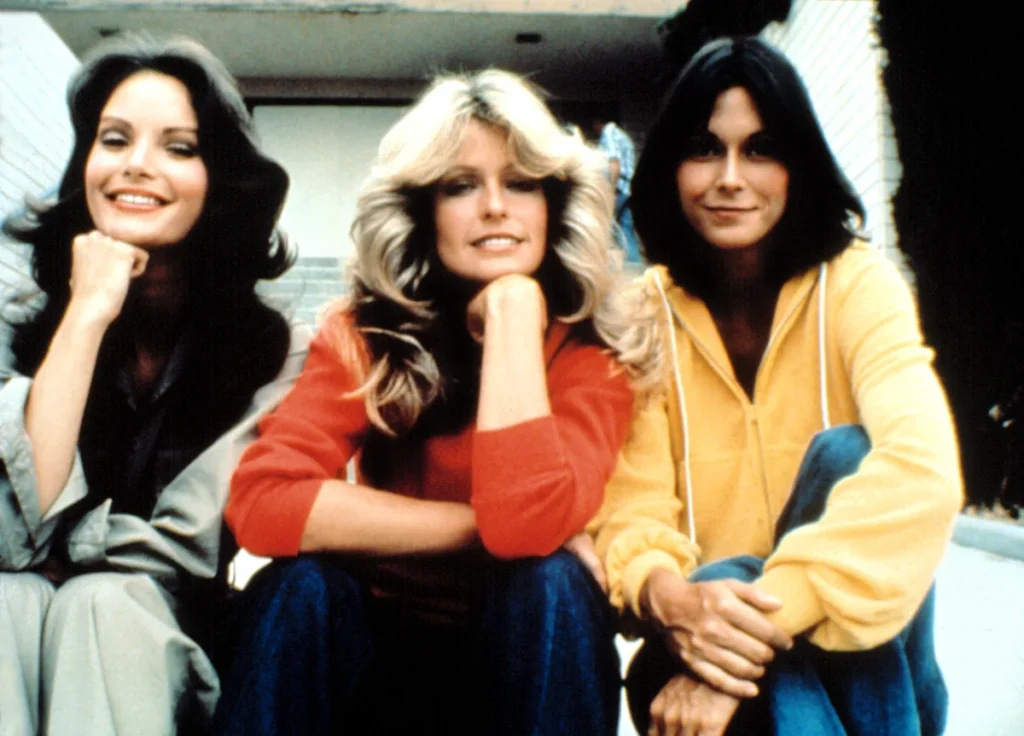
In stark contrast, Charlie’s Angels presented a distinctly different vision. The pilot film introduced audiences to three attractive female private investigators working for an unseen boss, Charlie Townsend. Starring Kate Jackson as the intelligent and resourceful Sabrina Duncan, Farrah Fawcett as the vivacious and glamorous Jill Munroe, and Jaclyn Smith as the elegant and street-smart Kelly Garrett, the film was a departure from the predominantly male-dominated action and crime dramas of the time. The concept, developed by Ivan Goff and Ben Roberts, with Aaron Spelling as executive producer, was designed to appeal to a younger, more modern audience. It blended elements of espionage, action, and fashion, showcasing its protagonists not just as capable detectives but also as stylish and independent women. The casting was crucial; Jackson brought an intellectual sensibility, Fawcett a captivating sex appeal and infectious energy, and Smith a grounded, relatable presence. Together, they formed a dynamic trio that promised a fresh take on the private detective genre.
The Ratings Revelation: A Clear Mandate
The broadcasting of these two pilot films was more than just a programming choice; it was a high-stakes gamble for ABC. The network needed to identify potential hits to bolster its fall schedule and compete with established programming on rival networks, CBS and NBC. The ratings that emerged from the March 21st broadcast provided a clear, albeit surprising, mandate.
Both films performed exceptionally well, exceeding network expectations. However, Charlie’s Angels garnered significantly higher viewership, capturing the public’s imagination in a way that Most Wanted did not. The numbers indicated a strong audience appetite for the unique blend of action, glamour, and female empowerment that Charlie’s Angels offered. Most Wanted also performed admirably, earning a place in the fall lineup, but its success was overshadowed by the cultural seismic shift initiated by the Angels.
The success of Charlie’s Angels was not merely about ratings; it was about a cultural resonance. The film tapped into a burgeoning feminist movement while simultaneously playing into prevailing notions of female allure. This duality proved to be a potent combination, attracting a wide audience that included both men and women. The show’s premise, where women were empowered to solve crimes that often baffled male authorities, resonated deeply.
The 1976 Fall Lineup: A New Era Dawns
Buoyed by the overwhelming success of the pilot films, ABC confidently slotted both Most Wanted and Charlie’s Angels into its 1976 fall television season.
Most Wanted premiered on September 18, 1976, and while it garnered respectable ratings initially, its run proved to be relatively short-lived. The series, despite the star power of Robert Stack, struggled to maintain audience interest against more compelling competition and perhaps a less innovative premise. It was canceled in December 1976, completing a brief 13-episode season.
Charlie’s Angels, on the other hand, premiered on September 22, 1976, and immediately became a sensation. The series was an instant hit, becoming one of the highest-rated shows of the 1976-1977 television season. It consistently ranked in the top 10, captivating audiences with its stylish presentation, engaging storylines, and the undeniable charisma of its lead actresses. The show’s popularity extended far beyond its initial broadcast, becoming a global phenomenon.
The Enduring Legacy of Charlie’s Angels
The impact of Charlie’s Angels on television history cannot be overstated. It shattered conventions and opened doors for female-led action and crime dramas.
Cultural Impact and Representation
Charlie’s Angels became a cultural touchstone of the late 1970s. The show’s title sequence, featuring the three Angels running in slow motion, became iconic. Farrah Fawcett, in particular, became a global superstar, her feathered blonde hair and radiant smile adorning magazine covers worldwide. The show’s success highlighted the commercial viability of programming centered around strong, capable women, challenging the traditional narrative that such shows would not appeal to a broad audience. It inspired a generation of women to pursue careers in fields traditionally dominated by men and demonstrated that female characters could be both intelligent and desirable.
The "Angel Effect" and Casting Shifts
The show’s immense popularity also led to significant cast changes. Farrah Fawcett, seeking a more diverse career path, departed after the first season, though she made guest appearances later. Her departure was a major blow, but the show managed to maintain its appeal by introducing new "Angels." Cheryl Ladd joined as Kris Munroe, Jill’s younger sister, and proved to be a popular replacement. Later, Shelley Hack and Tanya Roberts also joined the cast, demonstrating the franchise’s ability to evolve and adapt. This revolving door of talent, while sometimes a point of criticism, also showcased the strength of the show’s core concept and its ability to attract and nurture new stars.
The Most Wanted Counterpoint
The story of Most Wanted serves as a crucial counterpoint, illustrating that even a well-executed pilot with a veteran star could not replicate the lightning-in-a-bottle success of Charlie’s Angels. While Most Wanted explored themes of justice and the fight against crime, it lacked the innovative spark and cultural relevance that propelled Charlie’s Angels to stardom. Its more conventional approach, while appreciated by some viewers, did not capture the zeitgeist in the same way. The series’ relatively short run underscores the unpredictable nature of television and the delicate balance of factors that contribute to a show’s enduring success.
Broader Implications and the Evolution of Television
The success of Charlie’s Angels had far-reaching implications for the television industry. It demonstrated that networks could achieve massive success by investing in diverse and inclusive storytelling. The show’s influence can be seen in subsequent series that featured strong female leads in action-oriented roles, paving the way for franchises like Wonder Woman (1975-1979), The Bionic Woman (1976-1978), and later, shows like Buffy the Vampire Slayer and Alias.
The double feature on March 21, 1976, was more than just a night of television; it was a watershed moment. It showcased the power of a compelling concept and the ability of well-cast actors to capture the public imagination. While Most Wanted faded into relative obscurity, Charlie’s Angels not only became a massive hit but also left an indelible mark on popular culture and the television industry, proving that sometimes, the most unexpected shows can change the course of history. The legacy of those three women, fighting crime under the watchful eye of their unseen boss, continues to resonate, a testament to the enduring power of groundbreaking television. The choices made by ABC that night, and the audience’s enthusiastic response, reshaped what was possible on the small screen.