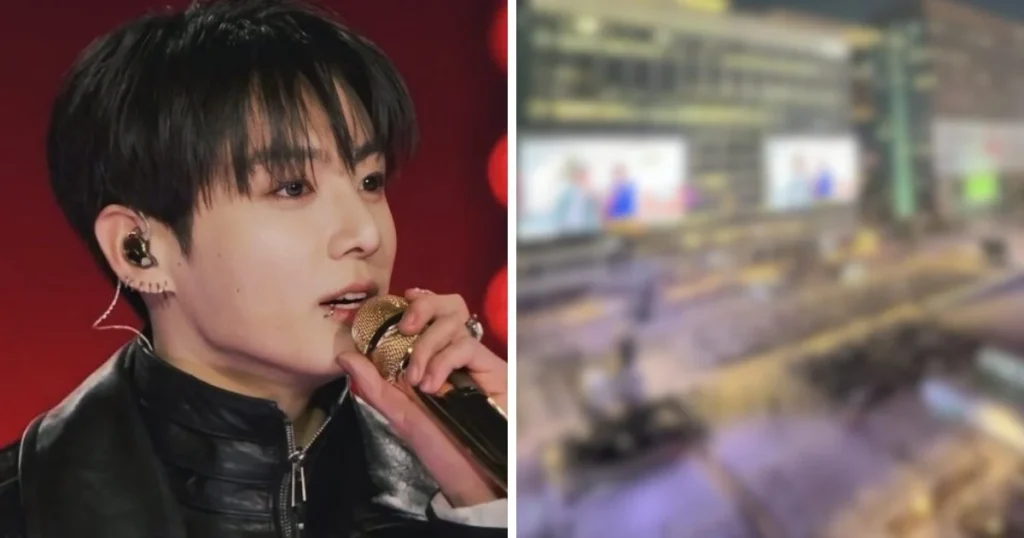

The highly anticipated return of global icons BTS to the live stage in Seoul has become a focal point of public debate, not for the performance itself, but for a significant discrepancy between projected attendance and the actual turnout. On March 21, 2026, a free comeback concert held at Gwanghwamun Square, the historic heart of South Korea’s capital, drew a crowd that was notably smaller than the massive surge anticipated by local authorities. While the Seoul Metropolitan Police Agency and city officials had prepared for a peak attendance of 260,000 people, data recorded just hours before the event indicated a much more modest gathering, sparking a wave of discussion regarding the necessity and scale of the security measures deployed.
The event, which marked a milestone in the group’s post-military service era, was expected to be a monumental cultural moment, drawing fans from across the globe to the streets of Seoul. However, three hours prior to the 8:00 PM KST start time, reports indicated that only approximately 30,000 individuals had gathered in the designated areas. This figure stood in stark contrast to the quarter-million attendees that security forces had spent weeks preparing for, leading to questions about the accuracy of crowd-prediction models and the allocation of public resources.

A Highly Anticipated Reunion and the Weight of Expectation
The concert was framed as a "gift" to the fans, a free-to-attend event following the completion of the members’ mandatory military duties. Given BTS’s history of drawing hundreds of thousands of people to various "Festa" events and special performances—such as the 2022 "Yet to Come" concert in Busan—the expectation for a massive turnout was not without precedent. Gwanghwamun Square, capable of holding vast numbers of people and often the site of major national celebrations and demonstrations, was selected specifically to accommodate the predicted influx.
In the weeks leading up to the event, the Seoul Metropolitan Government and the National Police Agency issued several warnings regarding public safety and traffic congestion. The 260,000-person estimate was used as the baseline for a massive security operation. This figure likely accounted for not only those with secured seating but also the "overflow" crowd of fans expected to gather in the surrounding streets to hear the music or view the performance on large outdoor screens.
Detailed Attendance Data and Venue Capacity
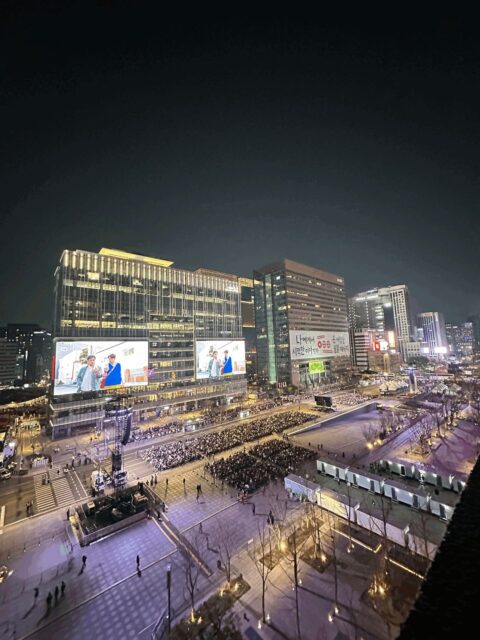
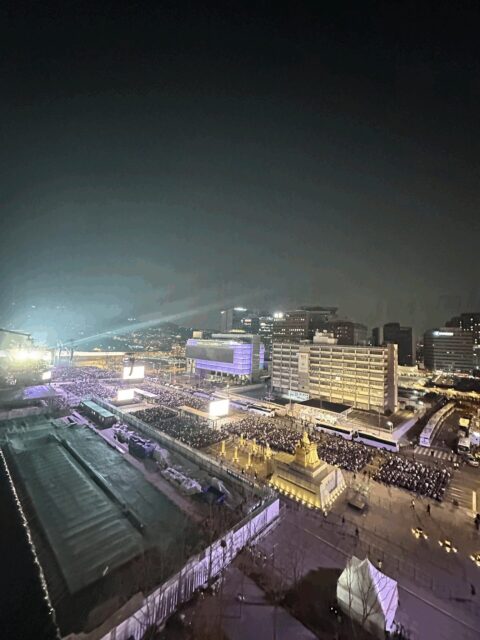
As the 8:00 PM start time approached, official city data provided a clearer picture of the actual attendance. According to reports from the Seoul Metropolitan Government’s real-time crowd management systems, approximately 26,000 to 28,000 people were situated in the vicinity of Gwanghwamun and Deoksugung Palace. Specifically, Gwanghwamun Square itself saw a turnout of between 6,000 and 6,500 people.

The venue had been configured with 22,000 designated seats, which were filled through a lottery system. While these seats were occupied, the expected "sea of fans" in the peripheral areas did not materialize to the extent predicted. By 5:00 PM, a time when many expected the area to be impassable, the density remained manageable, and the atmosphere was described by some onlookers as surprisingly calm.
The Scope of Security and Traffic Management
In preparation for the 260,000-person peak, the Seoul Metropolitan Police Agency executed one of the most comprehensive security plans for a cultural event in recent history. Thousands of police officers, including specialized riot police and crowd control units, were deployed across the Jongno and Jung districts. The measures included:
- Full-Scale Inspections: Every entrance point to the main square was equipped with security checkpoints. Attendees were subjected to bag searches and metal detector screenings to ensure the safety of the high-profile performers and the public.
- Traffic Restrictions: Major thoroughfares, including Sejong-daero, were partially or fully closed to vehicular traffic. Public transportation routes were diverted, and several subway exits at Gwanghwamun Station and City Hall Station were intermittently restricted to manage the flow of pedestrians.
- Physical Barriers: Kilometers of interlocking barricades were installed to create "safety corridors" and prevent overcrowding in narrow alleyways, a lesson learned from previous urban tragedies.
- Emergency Personnel: Hundreds of medical staff and firefighters were stationed at various intervals, with temporary medical tents erected to handle potential cases of heat exhaustion or injury.
Public Reaction and the "Excessive Policing" Debate
The disparity between the police estimate and the actual turnout quickly became a trending topic on South Korean social media platforms and online communities such as TheQoo. While many fans expressed relief that the event was safe and well-organized, a significant segment of the public began to criticize the scale of the police response as "excessive" and "over-the-top."
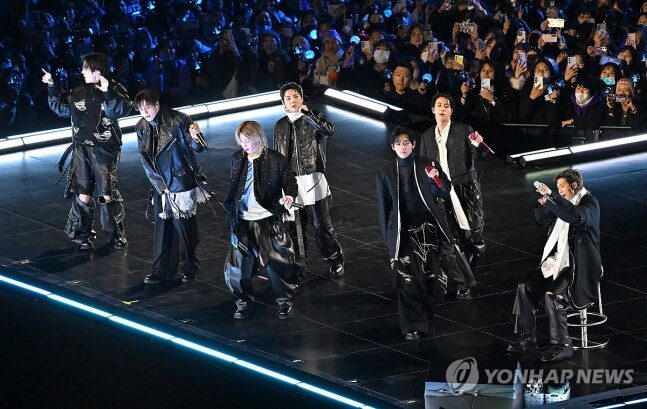
Netizens pointed out that the heavy police presence and the extensive road closures caused significant inconvenience to local residents and commuters, which, in hindsight, seemed disproportionate to the actual crowd size. Comments on social media highlighted a sense of "shock" at how empty the streets appeared compared to the dire warnings issued by authorities. "The police made it sound like the city was going to be paralyzed," one user noted, "but I could walk through the area without any trouble."
Some analysts suggest that the heavy-handed warnings may have actually discouraged fans from attending. The prospect of extreme crowds, combined with the convenience of high-quality live streaming—reportedly hosted on platforms like Netflix and Weverse—may have led many "ARMY" members to choose the comfort of their homes over the potential chaos of Gwanghwamun.
Analyzing the Prediction Discrepancy
The question remains: why was the police estimate so far off the mark? Experts in urban planning and crowd dynamics suggest several factors may have contributed to the overestimation:
- The "Safety-First" Posture: Following the tragic Itaewon crowd crush in 2022, South Korean authorities have adopted a "zero-risk" approach to large-scale events. This involves planning for the "worst-case scenario" in terms of attendance. In this context, predicting 260,000 people and having 30,000 show up is seen by officials as a much better outcome than predicting 30,000 and having 260,000 show up.
- The Digital Shift: BTS has a massive global digital footprint. With the concert being streamed live in high definition, the necessity of being physically present at a free outdoor event has diminished for many fans, particularly those concerned about security and comfort.
- Economic Factors: While the concert was free, the cost of travel and accommodation in Seoul during a major comeback week remains high. This may have limited the number of international and domestic travelers from outside the capital.
- The "Lottery Effect": Because only 22,000 seats were guaranteed, many fans who did not win the lottery may have assumed they would not be able to see the stage and thus decided not to congregate in the overflow areas.
Broader Implications for Future Events
The fallout from the Gwanghwamun concert is likely to influence how future K-pop events and large-scale cultural festivals are managed in South Korea. The incident highlights the difficulty of balancing public safety with the efficient use of municipal resources.
For the entertainment industry, the event serves as a case study in the evolving nature of fandom. The "physical vs. digital" divide is becoming more pronounced, and even for a group as globally dominant as BTS, the assumption that a free event will automatically result in record-breaking physical crowds may need to be re-evaluated in the age of seamless global streaming.
For the police and city government, the challenge lies in refining their predictive algorithms. While the desire to avoid another tragedy is paramount, the social and economic costs of over-policing and unnecessary traffic shutdowns are not negligible. Moving forward, there may be a push for more dynamic security plans that can scale up or down based on real-time data, rather than relying solely on static, high-end projections.
Conclusion
Despite the controversy surrounding the attendance figures, the concert itself was a technical and artistic success, reaffirming BTS’s status as the leading force in global music. The members delivered a high-energy set that spanned their decade-long career, much to the delight of the 30,000 fans in attendance and the millions watching online.
The "shock" expressed by the public regarding the 260,000-person prediction serves as a reminder of the unique pressure placed on both the artists and the authorities when dealing with a phenomenon of this magnitude. As Seoul returns to its normal rhythm following the event, the discussion will undoubtedly continue on how to better predict the movements of modern crowds in a world where the virtual and physical stages are increasingly intertwined. For now, the Gwanghwamun comeback stands as a testament to the group’s enduring appeal, even if the "sea of people" was more of a controlled tide.