
The global music landscape witnessed a historic milestone on March 20, 2026, as BTS officially marked their return to the industry as a full seven-member ensemble. The release of their latest studio album, ARIRANG, ends a nearly four-year hiatus from group activities, a period defined by the members’ mandatory military service and a highly successful foray into individual solo careers. While the transition from a unified group to seven distinct soloists led to intense speculation regarding the future of the septet, the members have recently provided a definitive answer. In a candid interview with Bloomberg, BTS addressed the tensions between solo success and group identity, offering a blunt affirmation of their commitment to the collective over their individual trajectories.
The Convergence of Seven Paths: The Release of ARIRANG
The arrival of ARIRANG at midnight KST on March 20 was more than a standard album release; it was a cultural event that signaled the formal conclusion of BTS’s "Chapter 2." Since the group announced a temporary break from collective activities in June 2022, the music industry has watched closely to see if the most successful boy band in history could successfully reintegrate.
During their time apart, each member—RM, Jin, Suga, J-Hope, Jimin, V, and Jungkook—cemented their status as a powerhouse soloist. Their individual projects topped the Billboard 200, secured high-profile fashion ambassadorships, and broke streaming records previously held by the group itself. This unprecedented level of individual success naturally prompted questions from industry analysts and fans alike: Would the members, having tasted the creative freedom and financial rewards of solo stardom, still find value in the constraints of a group dynamic?
The Bloomberg Interview: Addressing the Solo vs. Group Dilemma
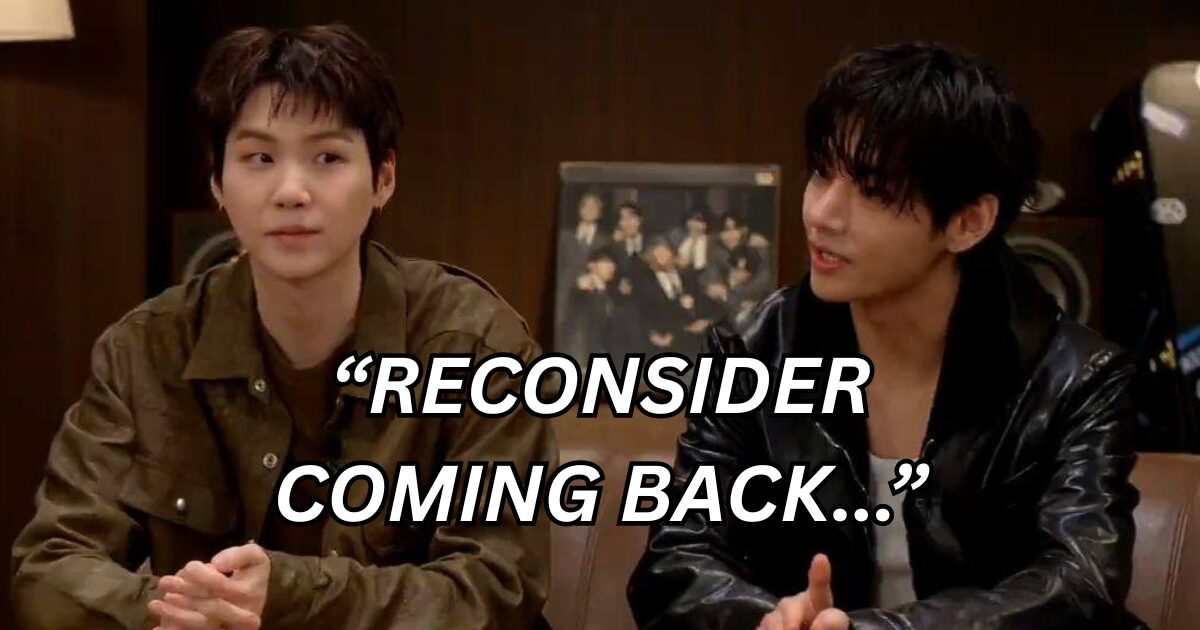
In an exclusive sit-down with Bloomberg to promote ARIRANG, the members were asked directly whether their solo achievements had altered their perspective on returning to BTS. The interviewer pointedly inquired if the success of their solo work had caused any of them to reconsider the group comeback, perhaps preferring to remain solo acts permanently.
The response from the members was both immediate and uncharacteristically blunt. V (Kim Taehyung), known for his often-enigmatic persona, provided the most striking rebuttal to the suggestion of a solo preference. "If anyone was that shameless, I would hit them," he remarked, a statement that served as a humorous but firm defense of the group’s integrity. His comment underscored a shared sentiment among the seven: that the group is the foundation upon which their individual successes were built.
Jin and Suga further elaborated on this stance, clarifying the hierarchy of their professional priorities. Jin emphasized that the performance of their solo albums relative to group albums was an irrelevant metric for the members. "It’s less of whether our solo albums do better or the group albums do better," Jin stated. "We just love doing group promotions more."
Suga, the group’s pragmatic producer, contextualized their solo era as a necessity rather than a preference. He noted that the solo activities were a strategic response to the reality of their staggered military enlistments, which prevented them from working as a full unit. "It was only because we couldn’t be as a full group that we did our solo activities," Suga explained, effectively framing "Chapter 2" as a bridge to their eventual reunion rather than a departure from it.

A Chronology of the Hiatus: From 2022 to 2026
To understand the weight of these statements, one must look at the timeline that led to the release of ARIRANG. The hiatus began in earnest following the release of the anthology album Proof in June 2022. Shortly thereafter, the members began their mandatory service in the South Korean military, a legal requirement that had long been a point of contention and speculation in the international media.
- Late 2022 – Mid 2023: Jin became the first member to enlist in December 2022, followed by J-Hope in April 2023. During this period, RM, Jimin, and Suga released their respective solo albums—Indigo, Face, and D-DAY—each achieving significant critical and commercial success.
- Late 2023: Suga commenced his alternative service in September 2023. V and Jungkook rounded out the year with their solo debuts, Layover and Golden, with the latter achieving historic sales figures in the United States and Europe.
- Late 2023 – Early 2024: The remaining members, RM, Jimin, V, and Jungkook, enlisted simultaneously in December 2023 to ensure the group’s hiatus would be as short as possible.
- 2024 – 2025: While the members were serving, BIGHIT MUSIC maintained the group’s presence through pre-recorded content, documentaries, and solo singles, ensuring that the "ARMY" (the group’s fanbase) remained engaged.
- June 2024 – Late 2025: The members began their discharges, starting with Jin in June 2024. By late 2025, all seven members had completed their service and returned to the HYBE headquarters to begin production on what would become ARIRANG.
This disciplined adherence to a timeline reflected a collective agreement made years prior: that the group’s longevity was the ultimate goal.
The Economic and Industrial Impact of the Reunion
The return of BTS as a septet carries profound implications for the global music economy. According to data from the Hyundai Research Institute, BTS was estimated to contribute over $3.6 billion annually to the South Korean economy during their peak years. Their hiatus saw a shift in HYBE’s revenue streams, which successfully diversified through the growth of other acts like SEVENTEEN, NewJeans, and LE SSERAFIM. However, the "BTS effect" remains unparalleled in terms of stock market influence and tourism.
Market analysts observe that the group’s decision to prioritize collective activities over solo careers is a strategic move that secures their brand’s value for the next decade. While solo acts often face volatile market cycles, BTS as a brand has demonstrated "super-brand" resilience. The Bloomberg interview confirms that the members are aware of this synergy; they are not seven individuals competing for a spotlight, but a single entity that amplifies the individual strengths of its parts.

Furthermore, the bluntness of their responses serves as a powerful piece of communication for shareholders and partners. By dismissing the notion of solo permanence, BTS has stabilized market expectations, signaling that the group is entering a "Chapter 3" characterized by maturity and long-term stability.
Supporting Data: The Success of the Solo Era
The interviewer’s question was grounded in the very real possibility that solo success could have eclipsed the group’s appeal. The "solo era" was not merely a placeholder; it was a period of record-breaking achievement:
- Jungkook’s "Seven" spent multiple weeks at number one on the Billboard Hot 100, becoming one of the most-streamed songs globally in 2023.
- Jimin’s "Like Crazy" made him the first South Korean solo artist to reach number one on the Billboard Hot 100.
- V’s Layover dominated the jazz and R&B charts, showcasing a sophisticated musicality that appealed to a different demographic than typical idol pop.
- Suga’s D-DAY World Tour was one of the highest-grossing tours by a solo artist in 2023, proving he could sell out arenas independently.
Despite these accolades, the members’ insistence that they "love doing group promotions more" suggests that the emotional and professional satisfaction they derive from the septet outweighs the prestige of solo records.
Fan Reaction and Cultural Significance
The reaction from the global ARMY has been one of overwhelming relief and validation. For years, fans defended the group against rumors of disbandment or permanent solo transitions. V’s comment about "hitting" anyone who would selfishly choose solo fame over the group has been widely circulated on social media platforms as a testament to the group’s "real-life bonding."

From a cultural perspective, ARIRANG represents a homecoming. The title itself refers to a traditional Korean folk song that is often considered the unofficial anthem of Korea, symbolizing themes of longing, resilience, and reunion. By choosing this title, BTS is framing their return not just as a business move, but as a reconnection with their roots and their audience.
Conclusion: A New Era of Group Longevity
The Bloomberg interview and the subsequent release of ARIRANG have effectively silenced the debate regarding the future of BTS. By bluntly choosing the group over solo paths, the members have set a new precedent for the K-pop industry. They have demonstrated that it is possible to achieve the pinnacle of solo success without sacrificing the collective identity that brought them to the world stage.
As BTS embarks on their world tour in support of ARIRANG, the narrative has shifted from "Will they return?" to "How far can they go?" With their military service behind them and their commitment to one another reaffirmed, the septet appears poised to maintain their position as the preeminent figures in global music. Their choice was not just about music; it was a definitive statement on loyalty, legacy, and the enduring power of a shared vision.