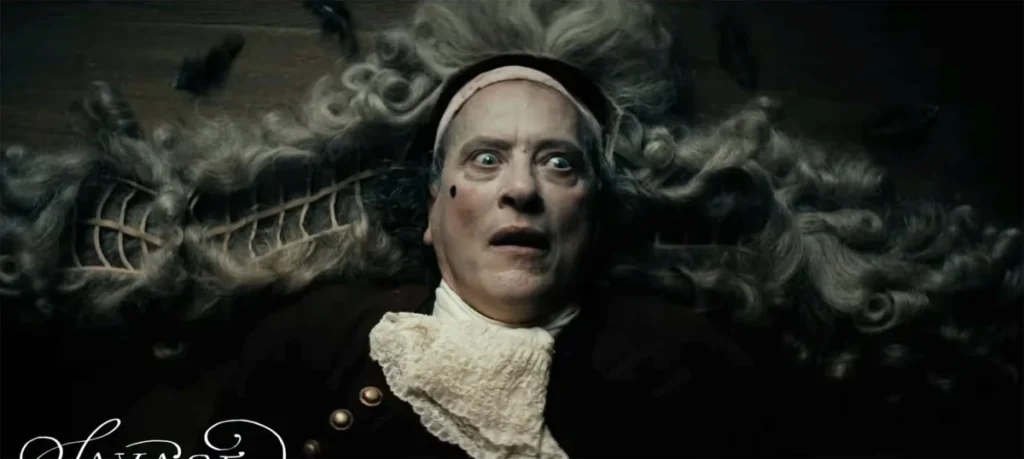

Paramount UK has unveiled the first official trailer for "Savage House," a darkly satirical comedy from filmmaker Peter Glanz, set to grace UK cinemas on June 5th, 2026. Starring the distinguished Richard E. Grant as Sir Chauncey Savage and the acclaimed Claire Foy as Lady Savage, the film promises a rollicking and brutal exploration of ambition, class, and survival amidst the turmoil of 18th-century England. While a US release date remains unannounced, the trailer offers a tantalizing glimpse into a world of decadent absurdity and sudden violence, suggesting a film that will resonate with audiences seeking sophisticated, albeit anarchic, entertainment.
A Glimpse into the Savage Household
The trailer, released via YouTube, immediately immerses viewers in the opulent yet precarious world of the Savages. Set against the backdrop of a devastating pox outbreak and the simmering political unrest of the Jacobite Uprising, the narrative follows Sir Chauncey and Lady Savage as they relentlessly pursue social advancement and a better life. Their journey, however, is anything but conventional. The trailer showcases a series of increasingly chaotic and violent encounters, from duels erupting with the suddenness of thunderstorms to fragile alliances disintegrating over lavish, candlelit dinners. The Savages’ stately home itself appears to transform into a stage for both high-society absurdity and brutal pragmatism, reflecting the volatile nature of their era.
Richard E. Grant, known for his distinctive dry wit and aristocratic portrayals, imbues Sir Chauncey with a compelling blend of ambition and perhaps a touch of desperation. Claire Foy, a performer celebrated for her nuanced portrayals of strong female characters, brings a formidable presence to Lady Savage, suggesting a woman who is not merely a passive participant in her husband’s schemes but an active architect of their fate. The supporting cast further bolsters the film’s pedigree, featuring notable talents such as Bel Powley, Kila Lord Cassidy, Jack Farthing, Richard McCabe, Vicki Pepperdine, and Pip Torrens, each likely to contribute to the film’s rich tapestry of characters.

Historical Context: A Turbulent Era
The setting of "Savage House" is crucial to understanding its thematic underpinnings. The 18th century in England was a period of significant societal flux and political intrigue.
The Pox Outbreak
The mention of a "pox outbreak" points to the pervasive threat of infectious diseases during this era. Diseases like smallpox were a constant danger, particularly in densely populated areas, and could decimate communities. This historical reality would have instilled a sense of existential dread and perhaps a desperate urge to secure one’s lineage and social standing, providing a potent backdrop for the Savages’ ambition. The fear of contagion could have also served as a catalyst for social upheaval and the breakdown of established order, mirroring the film’s implied narrative of chaos.
The Jacobite Uprising
The "Jacobite Uprising" refers to a series of rebellions that aimed to restore the Stuart dynasty to the British throne. The last major Jacobite rising, the Forty-Five Rebellion led by Bonnie Prince Charlie, occurred in 1745-1746. While the film is set in the 18th century broadly, the inclusion of this specific political backdrop suggests themes of loyalty, betrayal, and the struggle for power at the highest levels of society. The uncertainty and potential for conflict generated by these uprisings would have created a volatile environment where fortunes could be made or lost swiftly, adding another layer of precariousness to the Savages’ pursuit of success. The fragmented political landscape could have also offered opportunities for those willing to play both sides or exploit the prevailing chaos.
Peter Glanz: A Vision of Satirical Absurdity
"Savage House" marks the latest directorial effort from British-American filmmaker Peter Glanz, who also penned the screenplay. Glanz previously directed the 2014 romantic comedy-drama "The Longest Week," starring Olivia Wilde and Jason Bateman. While "The Longest Week" explored themes of social aspiration and romantic entanglements within a contemporary urban setting, "Savage House" appears to represent a significant stylistic and thematic departure, delving into historical satire with a darker, more overtly comedic edge. Glanz’s return to filmmaking after a hiatus suggests a deliberate choice to tackle a project with ambitious scope and unique artistic vision. The film’s production is credited to Peter Glanz himself, alongside Mark Hopkins, Dylan Maranda, Oliver Roskill, and Phillip Thomas.

The trailer’s assertion that "this looks bonkers! An all-out wacky comedy like The Favourite" draws a direct comparison to Yorgos Lanthimos’s critically acclaimed 2018 period piece. "The Favourite," also set in a historical court, was lauded for its sharp wit, unconventional visual style, and unflinching portrayal of power dynamics and personal ambition within an aristocratic setting. This comparison suggests that "Savage House" will likely eschew conventional period drama tropes in favor of a more audacious and perhaps even grotesque comedic sensibility, focusing on the absurdity and brutality that often lie beneath the veneer of civility.
Chronology of Release
- January 2026: "Savage House" premiered in Ireland.
- June 5th, 2026: The film is scheduled for release in UK cinemas.
- Date TBD: A US release date has not yet been announced.
The early release in Ireland suggests a strategic rollout for the film, potentially allowing for critical reception and audience feedback to inform subsequent marketing efforts in larger markets like the UK and the US. The staggered release schedule is a common practice for independent and international films, aiming to build momentum and gauge market viability.
Supporting Data and Industry Trends
The decision to produce and distribute a period comedy with a dark satirical bent reflects a growing interest in genre-bending narratives within the film industry. Audiences have shown a strong appetite for historical settings infused with contemporary sensibilities, as evidenced by the success of films like "The Favourite," "Bridgerton" (television series), and "Dickinson" (television series). These productions often find success by subverting traditional historical portrayals and exploring universal themes of power, desire, and social maneuvering through a fresh, often irreverent, lens.
The casting of established British actors like Richard E. Grant and Claire Foy, both highly respected for their dramatic and comedic talents, further signals the film’s ambition to attract a discerning audience. Their presence lends an air of gravitas and proven performance capability, essential for a film that aims to balance broad comedy with sharp social commentary. The ensemble cast, featuring emerging and seasoned actors, suggests a well-rounded and dynamic performance ensemble.

Potential Implications and Audience Reception
"Savage House" appears poised to tap into the market for intelligent, character-driven comedies that are not afraid to be provocative. The film’s focus on class, power, and the often-bloody consequences of unchecked ambition in a historical context could resonate with contemporary audiences grappling with similar issues in the modern world. The dark humor and satirical elements suggest a film that will spark conversation and debate, inviting viewers to reconsider historical narratives and the enduring nature of human foibles.
The success of "Savage House" in the UK could pave the way for a wider international release, including a much-anticipated US debut. If the film captures the anarchic spirit suggested by the trailer and the comparison to "The Favourite," it could become a sleeper hit, generating critical acclaim and a devoted following. The absence of a confirmed US release date, however, may indicate a cautious approach from distributors, perhaps awaiting the UK box office performance or seeking a strategic festival premiere to build buzz.
The film’s ability to navigate the delicate balance between historical authenticity and comedic exaggeration will be key to its reception. Audiences often appreciate period pieces that offer a fresh perspective, but a misstep in tone could alienate viewers. Glanz’s directorial approach, coupled with the strong cast, suggests a commitment to delivering a film that is both entertaining and thought-provoking, offering a unique and memorable cinematic experience. The trailer’s tagline, "You’re an acquired taste, sir," could be interpreted as a meta-commentary on the film itself, suggesting a taste for the unconventional that promises to reward those willing to embrace its peculiar charms. The inclusion of the Jacobite Uprising adds a layer of political and social commentary that could elevate the film beyond mere comedic escapism, offering a biting critique of societal structures and the often-brutal machinations of power. The film’s exploration of a pox outbreak further grounds it in the harsh realities of the era, providing a stark contrast to the Savages’ pursuit of luxury and status. This juxtaposition of the grim realities of the time with the Savages’ decadent and often violent pursuits is likely to be a central element of the film’s dark comedic tone.