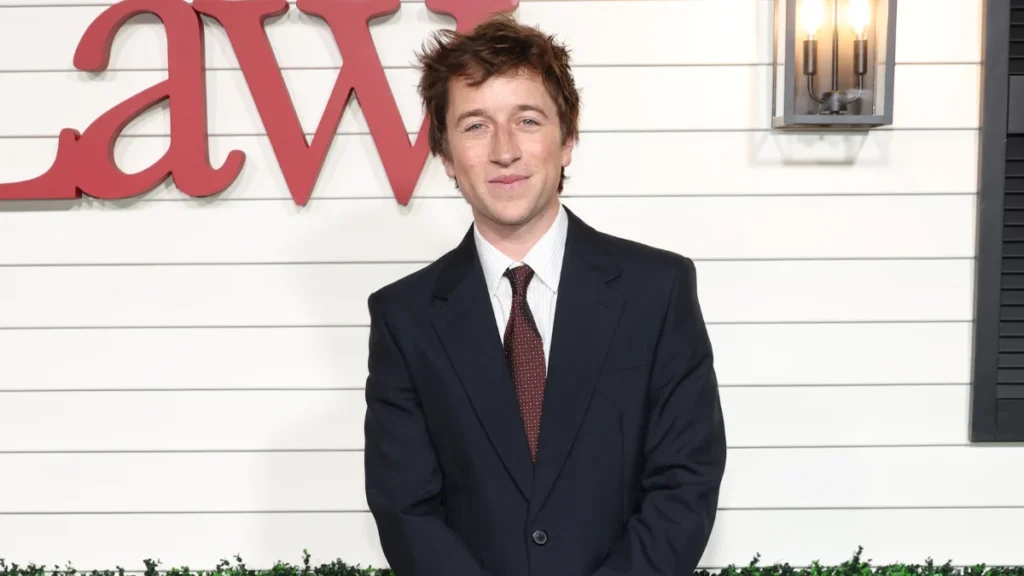

The landscape of modern superhero cinema experienced a seismic shift earlier this month when DC Studios co-CEOs James Gunn and Peter Safran announced their departure from their leadership positions. Among the many industry professionals, creatives, and performers impacted by the sudden executive shake-up is actor Skyler Gisondo, who recently broke his silence regarding the leadership transition. Gisondo, widely recognized for his portrayal of the iconic Daily Planet photographer Jimmy Olsen in the upcoming slate of DC Universe projects, expressed profound gratitude for the creative opportunities afforded to him by the departing executives while acknowledging the emotional weight of their exit.
In a recent and extensive interview with entertainment publication The Hollywood Reporter, Gisondo offered candid reflections on his time working under the direct supervision of Gunn and Safran. The actor did not mince words when describing the personal and professional impact of their stewardship, noting that their vision and leadership fundamentally altered the trajectory of the cast and crew involved in the studio’s ambitious reboot. As the entertainment industry continues to dissect the administrative realignment at DC Studios, Gisondo’s remarks provide a poignant window into the human element of corporate restructuring within major Hollywood franchises.
Skyler Gisondo Reflects on the Legacy of Gunn and Safran
Reflecting on the news of the departure, Gisondo emphasized the collaborative and supportive environment that Gunn and Safran fostered during their tenure at the helm of DC Studios. "It’s really sad to see them go," Gisondo stated during his interview with The Hollywood Reporter. "They really changed all of our lives. I’m just immensely grateful for the opportunity that they’ve given me."
Gisondo made his highly anticipated entry into the DC cinematic ecosystem under Gunn’s direct direction, stepping into the oversized shoes of Jimmy Olsen—a role steeped in rich comic book history. His performance serves as a cornerstone for the new continuity that Gunn and Safran meticulously designed to revitalize the cinematic brand. Beyond his artistic contributions, Gisondo highlighted the ethical and professional standards maintained by the studio chiefs. "They just do everything the right way," the actor remarked. "It’s a joy to work with them. I have so much love for them both, and I hope I get to keep working with them in some capacity."
The actor’s sentiments underscore a broader sentiment shared by many within the newly minted DC universe. Gunn and Safran were tasked with the monumental challenge of streamlining fragmented cinematic properties into a cohesive, interconnected storytelling vehicle spanning multiple mediums, including feature films and television series. Their approach prioritized auteur-driven storytelling combined with strict narrative continuity, a strategy that earned them considerable respect from the talent they recruited.
The Genesis of the Leadership Shake-Up: A Chronology of Events
To fully understand the weight of Skyler Gisondo’s comments, it is essential to examine the sequence of events that led to Gunn and Safran stepping down from their co-CEO posts. The dramatic leadership transition unfolded rapidly in early November, catching many industry analysts and insiders entirely by surprise.
The catalyst for the departure occurred during a high-stakes executive meeting held on November 6. According to industry reports, Gunn and Safran met with prominent Skydance executives, including Skydance co-CEO David Ellison and Ynon Kreiz. During this summit, the studio heads were reportedly informed that corporate leadership had altered its long-term strategic plans regarding their administrative and creative oversight roles. Despite earlier assurances and multi-year contractual commitments intended to stabilize the fledgling DC Studios division, the sudden pivot by corporate decision-makers left Gunn and Safran with little alternative but to step away from their executive duties.
Just days after this pivotal meeting, an official announcement was made public confirming that Gunn and Safran would be relinquishing their co-CEO titles, effective at the close of the transition period. The suddenness of the announcement sent immediate ripples through Hollywood, particularly given that several flagship productions—including Gunn’s own directorial efforts—were actively in production or post-production phases.
The corporate hierarchy wasted little time in naming a successor to navigate the transition. Former Marvel executive Jeremy Latcham has been formally appointed to step into the role of DC Studios president and chief creative officer, with his official tenure set to commence on December 1. Latcham brings a wealth of blockbuster franchise experience to the table, having previously contributed significantly to the foundational years of the Marvel Cinematic Universe. However, transitioning a massive cinematic enterprise from one creative philosophy to another inherently introduces a degree of administrative uncertainty.
Future Projects and Continuity Amid Administrative Uncertainty
Despite the abrupt departure of the architects of the new DC Universe, Skyler Gisondo’s immediate professional future within the franchise appears secure, though clouded by the standard questions that accompany any major executive turnover. Gisondo is officially slated to reprise his role as the affable, intrepid Daily Planet photographer Jimmy Olsen in upcoming cinematic and television endeavors.
Most notably, Gisondo is attached to star in Man of Tomorrow, the eagerly awaited sequel to Gunn’s foundational Superman film. The project represents a critical pillar in the studio’s ongoing narrative roadmap. Furthermore, Gisondo’s iteration of Jimmy Olsen will transcend the silver screen, as the actor is scheduled to bring the character to the small screen in the HBO Max streaming series The People v. Gorilla Grodd. This cross-platform integration was a key tenet of the Gunn-Safran strategy, designed to ensure that supporting characters received deep, meaningful exploration across various viewing formats.
When questioned about how the transition of power under incoming chief Jeremy Latcham might impact these ongoing projects and his future within the overarching franchise, Gisondo maintained a grounded perspective. Acknowledging the natural information gaps that occur during executive restructuring, Gisondo admitted, "I think there’s a lot I still don’t know."
Moreover, the actor revealed that in the immediate aftermath of the news, personal communication channels had been exceptionally busy. When asked whether he had managed to connect directly with either James Gunn or Peter Safran to discuss their exit, Gisondo noted, "I haven’t had a chance to connect with them directly." Nevertheless, his enduring loyalty to the filmmakers remains unshakeable. Reiterating his hope for future creative partnerships outside or alongside the DC framework, Gisondo concluded simply, "I hope we get to keep making movies together."
Broader Implications for the DC Studios Strategy
The exit of James Gunn and Peter Safran and the subsequent ascension of Jeremy Latcham mark the end of a very specific chapter for DC Studios. When Warner Bros. Discovery originally formed DC Studios in late 2022, appointing Gunn and Safran as co-CEOs, the move was hailed as a bold course correction. The studio sought to emulate the structured, producer-led success of rival comic book empires by placing creative visionaries at the very top of the corporate ladder.
Gunn and Safran’s blueprint—often referred to simply as Chapter 1: Gods and Monsters—was designed to purge the lingering continuity issues of previous iterations and establish a unified universe where movies, television shows, animation, and video games shared a single canon. Their personal involvement in casting, writing, and directing key properties instilled confidence in actors like Gisondo, who praised their hands-on, collaborative methodology.
With Latcham taking over on December 1, industry watchers are intensely focused on whether the incoming administration will maintain the precise roadmap laid down by Gunn and Safran or institute its own distinct creative adjustments. While projects currently deep in production, such as Gisondo’s commitments to Man of Tomorrow and The People v. Gorilla Grodd, are largely expected to proceed as planned to protect financial investments, the long-term trajectory for subsequent phases of the DCU remains subject to executive review.
The situation also highlights the delicate balance between corporate oversight and creative autonomy in Hollywood. The sudden reversal by Skydance executives demonstrates that even high-profile filmmakers entrusted with billion-dollar intellectual property are ultimately beholden to shifting corporate priorities and board-level strategies.
As the calendar ticks down to December 1 and the formal transition of power, the primary concern for fans, investors, and talent alike is stability. Actors like Skyler Gisondo represent the frontline of this cinematic universe, translating abstract executive visions into tangible, audience-engaging performances. While Gisondo navigates the transitional period with cautious optimism and deep-seated loyalty to his former mentors, the wider entertainment industry will be watching closely to see how DC Studios manages its latest identity evolution under Jeremy Latcham’s leadership.