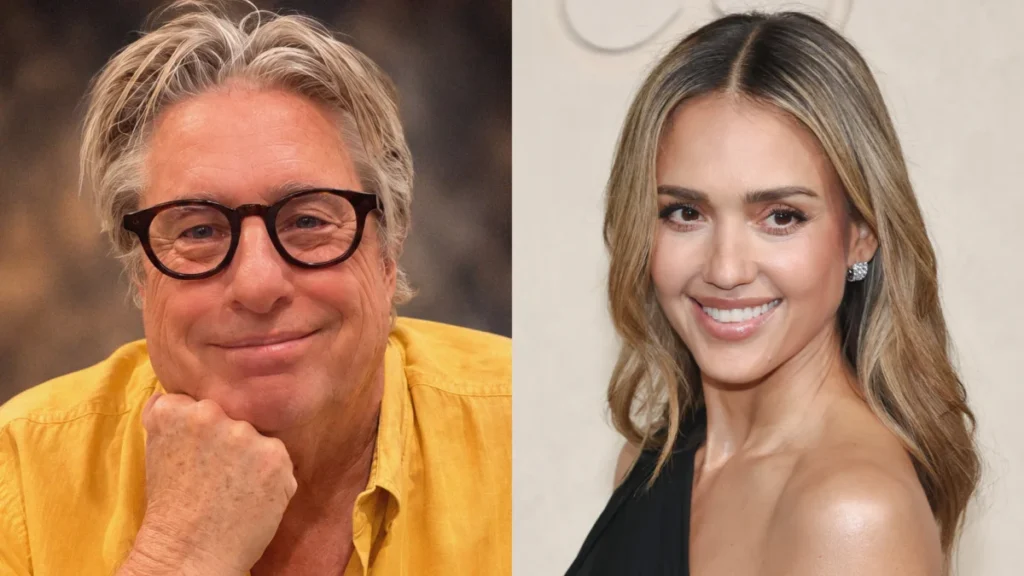

Veteran filmmaker Andy Tennant has built a celebrated Hollywood career defining the romantic comedy genre, directing modern classics such as 2002’s Sweet Home Alabama starring Reese Witherspoon and 2005’s Hitch starring Will Smith. Across a filmography that also includes Fool’s Gold (2008) and The Bounty Hunter (2010), Tennant has consistently gravitated toward character-driven narratives anchored by complex female leads. Now, the seasoned director is preparing to helm his next feature, The Fun Lady, a project that adapts one of the most unconventional true stories to emerge from the American sex-toy industry. Produced by Highland Film Group and co-produced by Jessica Alba under her Metalmark Entertainment banner, the film is slated to begin production early next year and is currently heading to the American Film Market (AFM) for international sales.
The Real-Life Inspiration Behind the Screenplay
The narrative of The Fun Lady is drawn from the remarkable life of Linda Brewer, a woman whose journey captured national attention in the early 2000s. In 2004, The New York Times Magazine published a widely read feature titled Everything a Happily Married Bible Belt Woman Always Wanted to Know About Sex but Was Afraid to Ask. The article chronicled Brewer’s improbable transformation from an Arkansas high school dropout into a top-performing sales representative for Passion Parties, a California-based direct-sales enterprise specializing in adult novelties, edible lotions, erotic games, luxury lingerie, and vibrators.
Operating within the socially conservative environment of the American Bible Belt, Brewer achieved staggering commercial success, generating up to $140,000 in annual sales. More significantly, her enterprise served as a vehicle for dismantling cultural taboos surrounding female pleasure. By hosting intimate gatherings in living rooms across rural communities, Brewer engaged with women who had long experienced sexual repression, marital dissatisfaction, and a general lack of agency regarding their own bodies. Her work challenged institutionalized norms, providing a safe space for open dialogues about intimacy, desire, and emotional fulfillment.
Casting and Character Dynamics
In the cinematic adaptation written by Mark Steilen—whose previous writing credits include Tag and Shameless—the character loosely inspired by Brewer is named Mora. Golden-globe-recognized superstar Jessica Alba has signed on to portray the protagonist, bringing both her acting acumen and her entrepreneurial expertise to the production. Mora’s arc begins when her seemingly picture-intact life in the city collapses, forcing her to retreat to her parents’ small, gossipy Arkansas hometown. Faced with a stagnant local economy and limited employment prospects, Mora stumbles into the business of selling adult novelties.
The comedic and dramatic tension of the film hinges on Mora’s initial complete ignorance of sexual pleasure, having never experienced an orgasm herself. As she navigates her new career as "The Fun Lady," she encounters resistance from traditional church groups and skeptical locals. However, her home-party business gradually evolves into a transformative movement, sparking a localized sexual revolution among women who have spent decades masking their dissatisfaction behind societal facades.
Tennant, who read Steilen’s script prior to boarding the project, admitted that the material immediately resonated with him due to its rare blend of humor, empathy, and social commentary. Unlike conventional broad comedies, Tennant views The Fun Lady as structurally adjacent to Sweet Home Alabama, relying heavily on emotional truth rather than cheap gags.
Directorial Vision and Thematic Depth
For Tennant, the attraction to female-centric stories is rooted in what he perceives as a fundamental limitation in traditional male character arcs within cinema. In interviews, the director has noted that male protagonists in Hollywood features frequently fail to undergo meaningful internal transformations. In contrast, he argues that female characters are permitted by narrative convention to exhibit greater vulnerability, curiosity, and eagerness to learn, making their journeys inherently more compelling.
Rather than approaching The Fun Lady as a straightforward comedy with capital letters, Tennant views the film as an exploration of the human condition, relational dynamics, and the systemic suppression of female sexual identity. The filmmaker emphasizes that the underlying themes of the script touch upon marital selfishness, communication barriers, and the challenges of articulating personal needs within long-term commitments.
The production’s thematic ambition was a primary draw for Alba, who evaluates projects through both a creative lens and a seasoned business perspective. Having successfully founded and scaled consumer goods enterprise The Honest Company, Alba approached her discussions with Tennant with rigorous preparation and an insistence on addressing substantive social issues. Tennant noted that working with an actress and producer of Alba’s caliber required heightened preparation, praising her dedication to ensuring the film’s social commentary remains prominent.
Production Timeline and Orchestration of Talent
With principal photography scheduled to commence in the early months of next year, the pre-production phase has centered on meticulous casting and character development. Tennant employs a collaborative directing style, likening his role on set to that of an orchestra conductor aiming to achieve harmony among diverse musical instruments. Rather than imposing rigid control, the director focuses on establishing a secure environment that encourages actors to explore their characters’ fears, uncertainties, and emotional motivations.
The script itself required minimal structural revision, a rarity in Tennant’s decades-long career. The filmmaker confirmed that Steilen’s original draft required virtually none of the heavy triage, script doctoring, or writer replacements typical of studio-backed feature development, citing the innate strength of the source material.
Although the real-life Linda Brewer passed away prior to the film’s active development, her contributions to the project occurred during the writing phase through extensive consultations with screenwriter Mark Steilen. Furthermore, Brewer’s family has maintained an active interest in seeing her legacy brought to the screen. To honor that legacy, Tennant and his creative team have deliberately expanded the narrative scope to include a diverse ensemble of women attending the passion parties, ensuring that viewers encounter a spectrum of relational struggles that transcend the specific time period in which the events occurred.
Broader Industry Implications and Legacy
The positioning of The Fun Lady at the American Film Market underscores a growing commercial appetite for mid-budget features that blend comedy with substantive sociological themes. As major studios increasingly pivot toward high-cost intellectual property and franchise-driven content, independent productions distributed through entities like Highland Film Group continue to occupy a vital space for character-driven adult dramas and comedies.
By aligning veteran direction with established star power and a true story centered on female empowerment, the production team aims to replicate the cross-demographic appeal of classic romantic comedies and social satires. Tennant has frequently cited foundational works such as Sydney Pollack’s Tootsie and the directorial output of Mike Nichols as benchmarks for his own filmmaking ethos. These classic titles succeeded not merely through comedic timing, but by embedding vital social commentary and emotional warmth beneath surface-level entertainment.
As The Fun Lady prepares for its upcoming production cycle, its ultimate measure of success will depend on its ability to balance humor with genuine emotional resonance. If Tennant and Alba achieve their stated objective, the film will function not only as an entertaining cinematic experience, but as a cultural touchstone that encourages audiences to re-evaluate communication, intimacy, and the ongoing evolution of personal relationships in contemporary society.