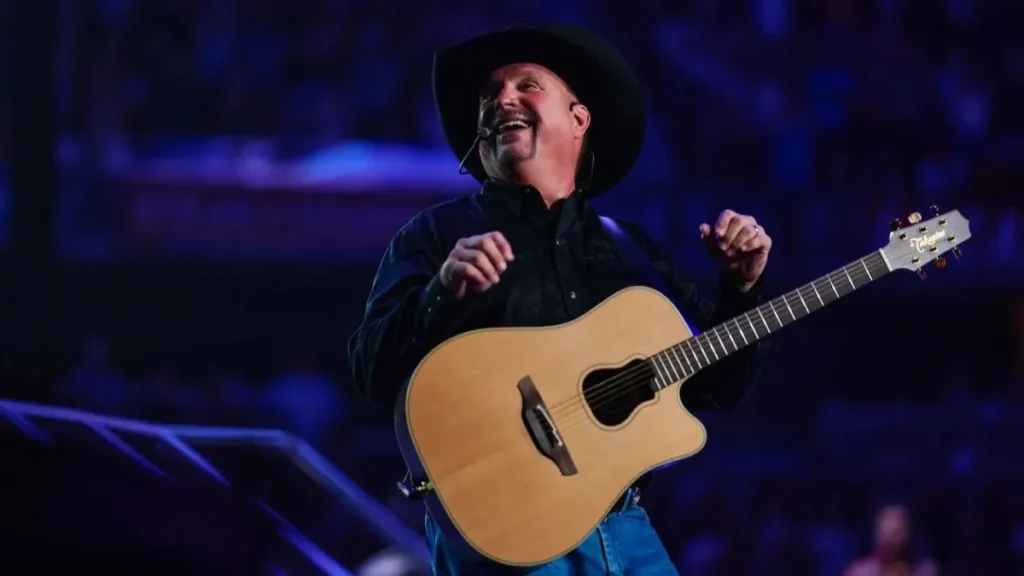

In a significant shakeup to the Nashville media landscape, country music icon Garth Brooks has moved to solidify his footprint in the terrestrial radio market. Through his media entity, Sevens Network LLC, the Grammy-winning superstar has reached a definitive agreement to acquire 100.1 FM, the frequency currently occupied by WRLT-FM, widely known as Lightning 100. The acquisition, which remains subject to customary Federal Communications Commission (FCC) regulatory approval, signals a pivot for Brooks as he seeks to establish a new, comprehensive country music radio hub in the heart of the industry’s capital.
For listeners in Middle Tennessee, the transaction marks the end of an era for the 100.1 dial position, which has long served as a bastion for independent, adult album alternative (AAA) programming. While the deal represents a major expansion for the Sevens Network, it necessitates a structural shift for Lightning 100, which has announced plans to transition its broadcast operations to 106.3 FM and 102.5HD3.
The Strategic Shift for Sevens Network
The acquisition of the 100.1 frequency follows a period of recalibration for Brooks’ media ambitions. In September 2026, the Sevens Network officially concluded a three-year strategic partnership with TuneIn. During that collaboration, which began in 2023, Brooks launched several digital-first initiatives, most notably the country-focused station "The BIG 615." The partnership was designed to bridge the gap between traditional broadcast sensibilities and digital streaming accessibility.
By moving into terrestrial radio ownership, Brooks is attempting to circumvent the limitations of purely digital platforms. In recent statements, Brooks characterized the move as a long-term investment in Nashville’s evolving demographic. "This is an opportunity to bring the entire family of Country Music together in one spot—the legends, the greats, and the future greats," Brooks noted. "Nashville is being called ‘The Newest City in America,’ and we want to bring a new kind of communication, combining terrestrial and digital radio, built to grow with this city."
Industry analysts suggest that this move allows Brooks to secure a physical "anchor" for his brand. While digital audio continues to grow, terrestrial radio remains a powerful tool for localized community engagement and real-time cultural influence in Nashville, a city where the radio dial is often considered the heartbeat of the local music industry.
Lightning 100: A Legacy of Independent Broadcasting
For decades, Lightning 100 (WRLT) has been more than a radio station; it has functioned as a cultural institution. Operating under an adult album alternative format, the station gained a loyal following by curating a diverse mix of indie rock, Americana, singer-songwriter tracks, and deep-cut country. Unlike the highly formatted corporate stations that dominate the airwaves, Lightning 100 prioritized local curation.
The station’s programming schedule became synonymous with Nashville’s music scene. Shows such as "Nashville Sunday Night," a weekly broadcast of live concert performances, and "The 615," which exclusively features local musicians, have provided a platform for artists to gain exposure before achieving national recognition. Furthermore, the station’s "Music Business Radio" has long served as an educational resource for industry professionals.
In a statement released via social media, the station sought to reassure its listeners that the transition would not result in a loss of their core content. "Lightning 100 is turning the page, but the music we love isn’t going anywhere," the station’s management stated. Despite the relocation to different frequencies, the station intends to maintain its identity and programming slate. The transition is also occurring alongside the station’s broader business strategy, which includes the highly anticipated return of the "Live on the Green" music festival in 2027.
Regulatory Context and Financial Implications
The transfer of a broadcast license is a complex legal process overseen by the FCC. Under the Communications Act of 1934, the FCC must determine that the transfer of the license serves the "public interest, convenience, and necessity." This process involves a public comment period and a review of the buyer’s technical and legal qualifications.
While the financial terms of the Sevens Network’s purchase have not been publicly disclosed, the acquisition of a high-value signal in a major market like Nashville involves significant capital expenditure. Beyond the purchase price, Brooks will need to invest in signal infrastructure and branding to transition the frequency from its current AAA format to his proposed country format.
For the existing station, the move to 106.3 FM and 102.5HD3 presents both a challenge and an opportunity. While moving from a primary 100.1 signal—which covers a substantial portion of the Nashville metropolitan area—to a secondary frequency requires a marketing campaign to ensure current listeners follow the station, it also allows the owners of WRLT to streamline their assets.
Market Impact and the "Newest City" Narrative
The change on the 100.1 dial comes at a time of rapid demographic and economic shifts in Nashville. As the city experiences unprecedented population growth, media companies are vying to capture the attention of new residents while retaining the loyalty of long-term inhabitants.
Brooks’ emphasis on "The Newest City in America" reflects a broader trend of major entertainment entities moving to capitalize on Nashville’s status as a top-tier destination for remote workers and young professionals. By integrating terrestrial and digital radio, the Sevens Network is betting that a hybrid model—one that respects the traditional radio habits of the older country demographic while offering the connectivity required by younger, digitally-native audiences—will provide a sustainable business model.
However, the acquisition has sparked conversations among local music advocates about the importance of independent media. The displacement of a long-standing indie station by a celebrity-backed network underscores the ongoing tension between independent curation and corporate-scale broadcasting. The success of this transition will likely be measured by whether the Nashville community embraces the new programming on 100.1, and whether the migrating Lightning 100 can successfully retain its audience on its new frequencies.
Looking Ahead: The Future of Nashville Radio
As the transition progresses, industry observers will be watching to see how Brooks integrates his current touring schedule with his media operations. Brooks is currently engaged in his 2026 "Blame It All on My Roots Tour," a massive undertaking that keeps him in the public eye even as he expands his corporate reach.
For listeners, the coming months will be a period of adjustment. While the station management has promised continuity, the shift to a new frequency is rarely seamless. Technical challenges, such as signal strength and reception in peripheral areas, will be critical factors in the station’s ability to maintain its listener base.
The Sevens Network has not yet released a definitive date for when the station’s format switch will occur, noting that the timeline is dependent on the speed of regulatory approvals. Until that time, WRLT will continue to operate as usual, providing the alternative programming that has defined its reputation for years.
In conclusion, the purchase of the 100.1 frequency by Garth Brooks is a defining moment for Nashville radio. It represents the intersection of the city’s traditional identity as the capital of country music and its modern identity as a growing, influential urban hub. Whether this change heralds a new, more integrated era of broadcasting or highlights the loss of a unique independent voice remains to be seen. What is clear is that the Nashville radio dial, much like the city itself, is undergoing a profound transformation. As the community waits for the finalization of the deal, the focus remains on how these two entities—the titan of country music and the champion of local indie—will navigate their respective paths in the shifting landscape of 2026.