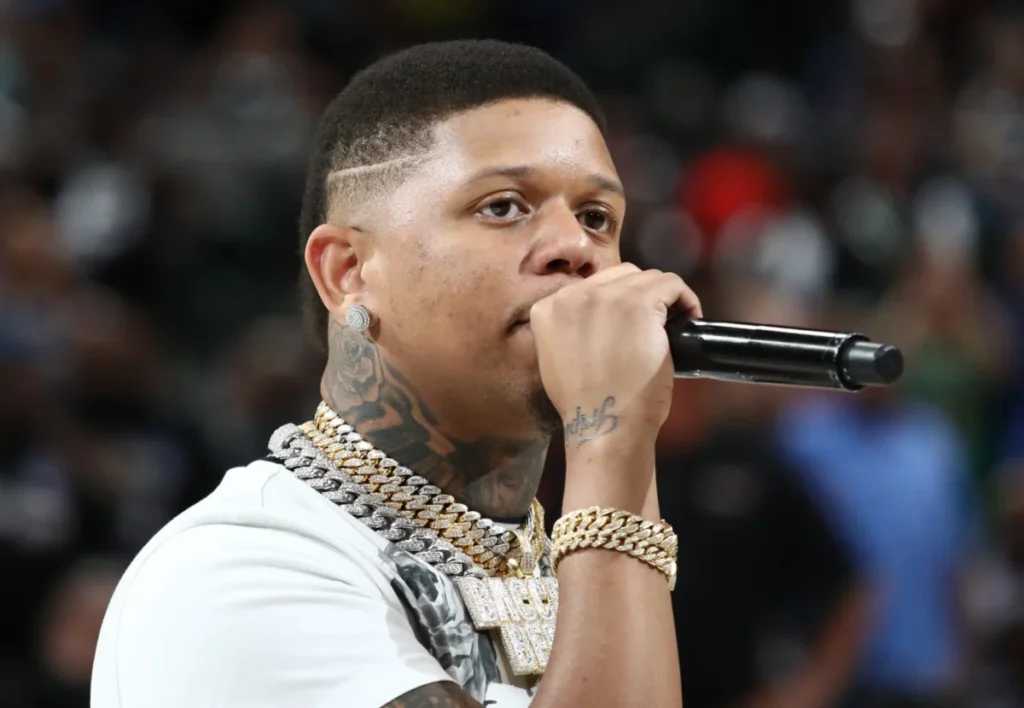

Markies Conway, widely recognized in the hip-hop community by his stage name Yella Beezy, has been sentenced to life in prison without the possibility of parole following a unanimous capital murder conviction handed down by a Dallas County jury. The verdict concludes a high-profile, six-year legal investigation into the daylight assassination of Melvin Noble, the Dallas-born rapper known professionally as MO3, who was gunned down on a busy Texas interstate in November 2020.
The courtroom proceedings concluded on Wednesday, November 11, after jurors deliberated on evidence presented by state prosecutors who alleged that Conway orchestrated a murder-for-hire plot, paying an associate $40,000 to eliminate his rival. Alongside Conway, co-defendant Kewon White was also unanimously convicted of capital murder and sentenced to life imprisonment without parole. Prosecutors identified White as the gunman who pursued and ultimately killed Noble in a brazen attack that shocked the Texas music scene and brought national attention to the escalating dangers of localized rap rivalries.
The Verdict and Immediate Aftermath
The delivery of the verdict brought an end to one of the most complex and heavily contested homicide investigations handled by the Dallas County District Attorney’s office in recent years. Lead prosecutor Tommy Adams addressed the media following the sentencing, acknowledging the immense hurdles the state faced while building the case.
“We don’t know what turned it for the jurors. We appreciate the verdict,” Adams stated to reporters outside the courtroom. “We think they got it right today. It’s been one of the most challenging cases over the last six years.”
Inside the courtroom, the reading of the verdict triggered an emotional response from the gallery. Friends and family members of Conway wept openly and embraced one another as the lifetime sentence without parole was formally entered. According to courtroom documentation and broadcast footage captured by CBS News, Conway requested to kiss a relative before being led away by bailiffs—a request that was denied. He was subsequently escorted out of the room to begin serving his sentence in the Texas Department of Criminal Justice.
Legal representation for the defense maintained that the state’s case relied heavily on circumstantial evidence and narrative rather than direct proof of a conspiracy. Addressing the jury during closing arguments, defense attorney John Gussio asserted, “This is capital murder, and the state has brought you a lot of speculation.” Despite these arguments, the jury remained unpersuaded, ultimately returning a unanimous guilty verdict across all counts of capital murder.
Chronology of a Highway Tragedy
The events leading to Conway’s conviction trace back to November 11, 2020, a date that permanently altered the landscape of the Texas hip-hop community. According to police reports and trial testimony, Melvin Noble, 28, was driving on Interstate 35 in South Dallas, near the Dallas Zoo, when a vehicle driven by Kewon White pulled up alongside him.
Realizing the danger, Noble attempted to flee, crashing his vehicle into a barrier on the highway. White pulled his car over, exited the vehicle, and pursued the injured rapper on foot. White then opened fire with a pistol, discharging more than 40 rounds. Despite emergency medical intervention and transport to a local hospital, Noble succumbed to multiple gunshot wounds.
Investigators subsequently pieced together cellular data, financial transactions, and witness testimonies that pointed toward a targeted hit. Prosecutors argued that Conway, operating out of personal and professional grievances within the local music ecosystem, financed the assassination by channeling $40,000 to White to carry out the shooting.
The legal fallout developed steadily over the subsequent years. Following an extensive multi-agency investigation, a Dallas County grand jury formally indicted Conway, leading to his high-profile arrest in March 2025. Following his arrest, Conway briefly secured a $750,000 bond—reduced from an initial $2 million—allowing him to remain out of custody for less than two weeks before returning to the judicial process that ultimately culminated in his conviction.
Background and Prior Legal History
The 2025 arrest and subsequent trial were not Conway’s first brushes with the criminal justice system or violent crime. The 35-year-old artist had previously been arrested in 2021 on multiple felony charges, including sexual assault, abandonment or endangerment of a child, and the unlawful carrying of a weapon. However, those charges were ultimately dismissed due to insufficient evidence or lack of prosecution.
Furthermore, Conway himself was a survivor of high-profile gun violence years prior to his indictment. In October 2018, the rapper was wounded in a drive-by shooting while driving along a highway in a Dallas suburb. He sustained three gunshot wounds during the incident but successfully recovered, later speaking publicly about the pervasive nature of street violence in the entertainment industry.
Musical Career and Industry Impact
Before his legal troubles derailed his professional trajectory, Yella Beezy achieved notable commercial success within the mainstream hip-hop industry. Hailing from Dallas, he emerged as a prominent figure in the southern rap scene during the mid-2010s, earning regional acclaim before crossing over to national charts.
His most notable commercial breakthrough occurred with the release of the 2017 single "That’s On Me," which steadily climbed the Billboard Hot 100 chart, ultimately peaking at No. 56 in 2018. The track’s success was amplified by a subsequent remix featuring prominent hip-hop artists including 2 Chainz, T.I., Snoop Dogg, Rich The Kid, Jeezy, and Lil Boosie.
Conway followed up this success with the 2019 single "Bacc at It Again," a collaboration with heavyweight rap stars Quavo and Gucci Mane, which secured a peak position of No. 78 on the Billboard Hot 100. Even as his legal battles unfolded through the mid-2020s, Conway maintained an active release schedule, dropping singles such as "Where I Been," "Let Me Vent," and "Sweet Nothings" alongside artist K Camp.
Meanwhile, the victim, MO3, was experiencing a significant upward trajectory in his own career at the time of his death. Best known for his emotive vocal delivery and gritty street narratives, MO3 gained widespread recognition through his collaboration with artist Boosie Badazz, notably on the 2019 track "Touchdown," which garnered tens of millions of streams. His posthumous releases continued to resonate with a dedicated fanbase, solidifying his legacy as one of the most influential voices to emerge from the Texas underground rap scene.
Broader Implications for the Hip-Hop Community
The conclusion of the Yella Beezy trial marks a watershed moment for the Dallas music community, bringing formal closure to a chapter defined by loss, violence, and judicial reckoning. Legal analysts note that the case underscores the growing willingness of prosecutors to utilize digital forensics, financial tracking, and conspiracy statutes to dismantle alleged murder-for-hire networks within the entertainment industry.
For years, critics and advocates have raised concerns regarding the intersection of street affiliations and commercial rap music, where personal conflicts can occasionally escalate into lethal violence. The life-without-parole sentences handed down to both Conway and White serve as a stark reminder of the legal consequences associated with retaliatory violence, effectively ending the careers of two figures intertwined with the tragedy.
As the legal proceedings conclude, the focus within the Dallas music landscape shifts toward addressing the systemic issues that continue to impact artists navigating fame, geography, and historical grievances. While Conway begins serving his life sentence, the legacy of MO3 remains preserved through the catalog of music he left behind, continuing to influence a new generation of southern hip-hop artists.