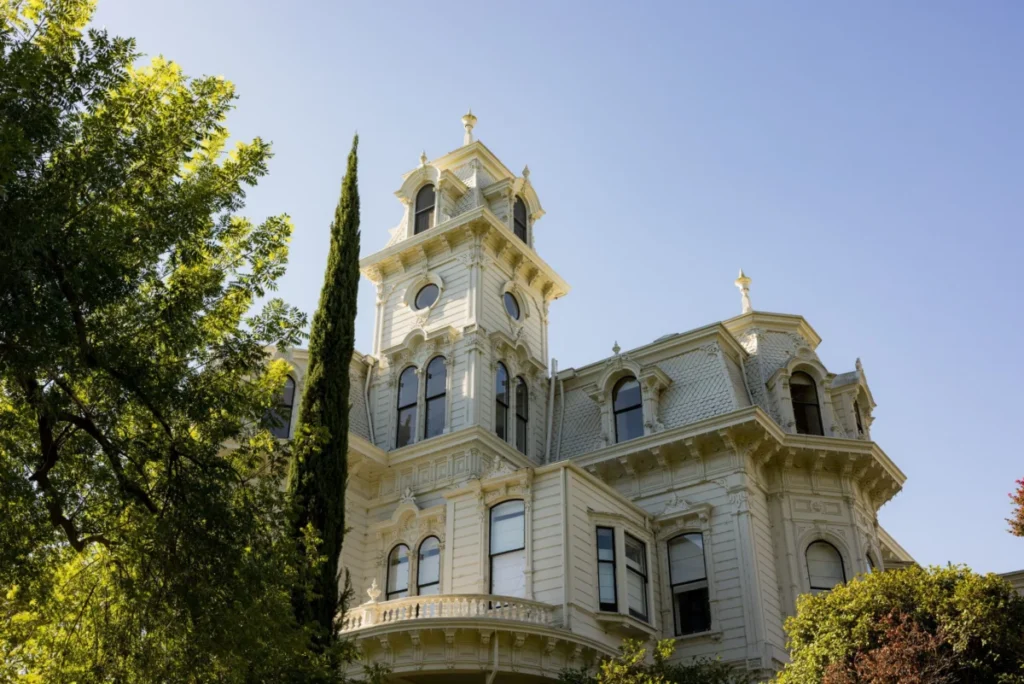

As January approaches, the political landscape of the United States undergoes a significant transformation with the inauguration of 19 newly elected governors. Beyond the pomp and ceremony of the swearing-in process, these incoming state leaders face a more pragmatic logistical challenge: the transition into their respective executive residences. While the office of the governor is defined by policy and administrative power, the physical space these leaders inhabit serves as a unique intersection of history, public service, and domestic life. Of the 50 states, 45 maintain official governor’s mansions, leaving Arizona, Idaho, Massachusetts, Rhode Island, and Vermont as the notable exceptions where executive housing is not provided.

The tradition of the gubernatorial residence is deeply embedded in American history, representing a symbolic "seat of power" within each state capital. However, the modern reality of these structures is complex. Some serve as meticulously preserved historical landmarks, while others face the encroaching challenges of aging infrastructure, high maintenance costs, and shifting security requirements.
A Historical Perspective on Executive Housing
The practice of providing an official residence dates back to the early years of the Republic, modeled loosely after the White House. Virginia boasts the oldest continuously inhabited executive residence in the country; every governor of the Commonwealth has resided in the Governor’s Mansion since its completion in 1813. This continuity highlights a long-standing American tradition of creating a public-facing space where the governor can entertain dignitaries, host legislative functions, and represent the dignity of the office.

Conversely, many states have struggled to maintain these buildings as they have aged. Nebraska, for instance, has not utilized its official governor’s residence for over a decade, reflecting a broader trend where some state leaders find these grand, often drafty, and difficult-to-secure properties ill-suited for 21st-century families. In Montana, the governor’s mansion currently sits vacant and in states of disrepair, highlighting a growing debate over whether taxpayer funds should be diverted toward the restoration of historic estates or if states should divest from these properties entirely.
The Modern Transition: Privatization and Preference
The decision to move into an official residence is no longer a given. Many contemporary governors, wary of the loss of privacy or the burden of living in a "fishbowl," choose to maintain their private homes. A prominent example is California Governor Gavin Newsom, who recently listed his $7.5 million Fair Oaks estate for sale. His preference for private housing highlights a modern friction: while the state owns a historic Victorian mansion in Sacramento, many leaders find that their personal real estate holdings offer a level of comfort and security that the state-run alternatives cannot match.

However, for those who do choose to move in, the experience is one of living in a high-security, multi-purpose facility. These homes are rarely purely residential; they are hybrid spaces designed for both governance and private family life. The constant presence of security details, the public nature of the grounds, and the necessity of hosting events mean that the "governor’s mansion" is perhaps one of the most demanding residential assignments in public office.
State-by-State Profiles of the New Executive Residences
The following profiles illustrate the architectural diversity and historical significance of the homes awaiting the incoming class of governors:

Alabama: The Neoclassical Seat
Governor-elect Tommy Tuberville will soon take up residence in the Alabama Governor’s Mansion in Montgomery. Completed in 1907 by architect T. Weatherly Carter, this 17-room neoclassical structure is defined by its commanding Corinthian columns and a grand bifurcated staircase. It remains a focal point for Alabama’s political life.
California: The Victorian Landmark
Democrat Xavier Becerra will be expected to utilize the Governor’s Mansion in Sacramento, a 20,000-square-foot Victorian masterpiece built in 1877. The home features Italian marble fireplaces and original wood flooring. Its history is marked by a period of abandonment; Ronald and Nancy Reagan notably deemed it uninhabitable in 1967, leading to a long stint as a state museum until its major renovation and reopening as a residence in 2015.

Colorado: The Colonial Revival Hub
Phil Weiser, the incoming governor of Colorado, will occupy the "Colorado’s Home" in Denver. Built in 1908 and serving as the official residence since 1960, this 27-room Colonial Revival estate sits on one acre of gardens. The residence has gained a reputation for being remarkably accessible, famously featuring rotating taps of local craft beers—a tradition established by former Governor John Hickenlooper.
Florida: The Greek Revival Standard
Byron Donalds, having made history as Florida’s first Black governor, will reside in the state’s Greek Revival mansion in Tallahassee. Built in 1956 on the site of a predecessor that had fallen into irreparable decline, the home offers extensive amenities including a screened swimming pool and rose gardens, serving as a center for Florida’s executive social life.

Georgia: The 30,000-Square-Foot Estate
Keisha Lance Bottoms, the first Black woman elected governor in U.S. history, will move into the Georgia Governor’s Mansion in Atlanta. Designed by A. Thomas Bradbury in 1967, the Greek Revival structure is a massive 30,000-square-foot facility spread across three levels, emphasizing the scale required for modern gubernatorial functions.
Iowa: The Terrace Hill Legacy
Democrat Rob Sand will occupy Terrace Hill, a sprawling 18,000-square-foot Second Empire-style mansion in Des Moines. Dating back to 1869, the estate functions as both a private home and a public museum, with the first two floors open for educational tours and events.

Maine: The Blaine House
Hannah Pingree will take over the Blaine House in Augusta. Built in 1833 and serving as the official residence since 1919, the home is a fusion of Federal and Colonial architectural styles. With 28 rooms and a private tennis court, it is a testament to the longevity of New England’s political traditions.
Michigan: The Dual Residence System
Jocelyn Benson faces a unique logistical situation: Michigan maintains two official residences. The primary home is a ranch-style residence in Lansing, while the state also owns an Arts-and-Crafts-style summer mansion on Mackinac Island, a property that has hosted dignitaries for over a century.

Minnesota: The Tudor-Beaux-Arts Blend
Senator Amy Klobuchar, the newly elected governor, will move into the 16,000-square-foot mansion in St. Paul. Designed by William Channing Whitney in 1912, the home’s English Tudor and Beaux-Arts aesthetic makes it one of the most distinctive governor’s residences in the Midwest, boasting 10 bathrooms and nine fireplaces.
Nevada: The Classical Revival Mansion
Democrat Aaron Ford will reside in the Carson City mansion designed by George A. Ferris in 1909. As the state’s first Black governor, his residency marks a new chapter for the Classical Revival home, which contains the formal study and reception rooms essential for state governance.

New Mexico: The People’s House
Deb Haaland, the first Native American woman to serve as governor, will reside in the Santa Fe mansion known as "The People’s House." This midcentury-modern structure, completed in 1955 by architect W.C. Kruger, represents a departure from the traditional colonial aesthetics found in older eastern states.
Ohio: The Tudor Gardens
Democrat Amy Acton will move into the 1925 Tudor-style residence in Bexley. Beyond the architecture, the estate is famous for its three acres of gardens, which include a unique "Storybook Trail" inspired by the works of Beatrix Potter, illustrating the state’s efforts to make the grounds accessible to the public.

Oklahoma: The Dutch Colonial
Mike Mazzei will inhabit the 14,000-square-foot Dutch Colonial in Tulsa. Built in 1928, its limestone facade complements the State Capitol building. The estate is notable for its historical quirks, including a swimming pool shaped like the state of Oklahoma and a tennis court located on a former helipad.
South Carolina: The Federal-Style Relic
Alan Wilson will occupy the Federal-style mansion in Columbia, which has served as the official residence since 1868. Originally constructed as officers’ quarters for a military academy in 1855, the home serves as a bridge between the state’s pre-Civil War history and its modern executive functions.

Tennessee: The Far Hills Estate
Marsha Blackburn will move to the 10-acre Far Hills estate in Oak Hill. The Georgian-style mansion, built in 1931, provides the governor with panoramic views of the Nashville area and has been the site of significant Tennessee policy discussions since it became the official residence in 1949.
Texas: The Greek Revival Symbol
Gina Hinojosa, the first Latina governor of Texas, will move into the 10,000-square-foot Greek Revival mansion in Austin. The property has been the official residence since 1856, serving as a constant presence through the various political shifts in the Lone Star State.

Wisconsin: The Classical Revival Estate
David Crowley, the first Black governor of Wisconsin, will reside in the Madison executive residence. This 16,000-square-foot Classical Revival home, completed in 1928, contains 10 distinct gardens and seven fireplaces, serving as a hub for Wisconsin’s executive branch.
Wyoming: The Evolving Frontier
Eric Barlow will occupy the executive residence near Frontier Park in Cheyenne. While the current structure dates back to 1976, there is ongoing discussion regarding the potential for a modernized residence, as current facilities struggle with the security and functional demands of the modern era.

Analysis: The Future of Executive Living
The trend toward "privatization"—where governors opt for their own homes—speaks to a broader discomfort with the costs associated with maintaining these historic assets. In many cases, the state-run mansion is no longer seen as a necessity but rather a liability, both in terms of security risks and maintenance backlogs. However, these buildings serve as vital touchstones of state identity. When a governor moves into the mansion, they are participating in a multi-generational narrative of service.
The implications for the future are clear: states will likely continue to face the dilemma of "restore or replace." As security requirements increase due to the heightened political climate, many of the older mansions—often built with public accessibility in mind—may become increasingly difficult to secure without significant structural alterations that could compromise their historical integrity.

Ultimately, the governor’s mansion remains a powerful, if complicated, symbol. Whether they are moving into a historic 19th-century Victorian or a midcentury-modern estate, the 19 newly elected governors will be stepping into buildings that have witnessed the triumphs and failures of their predecessors. These homes are more than just architecture; they are the physical manifestation of the state’s executive authority, demanding a delicate balance between public duty and private life. As the term begins, the focus for many will shift from the campaign trail to the domestic realities of these storied halls, marking the start of a tenure that will be measured not just in policy, but in the stewardship of these historical legacies.