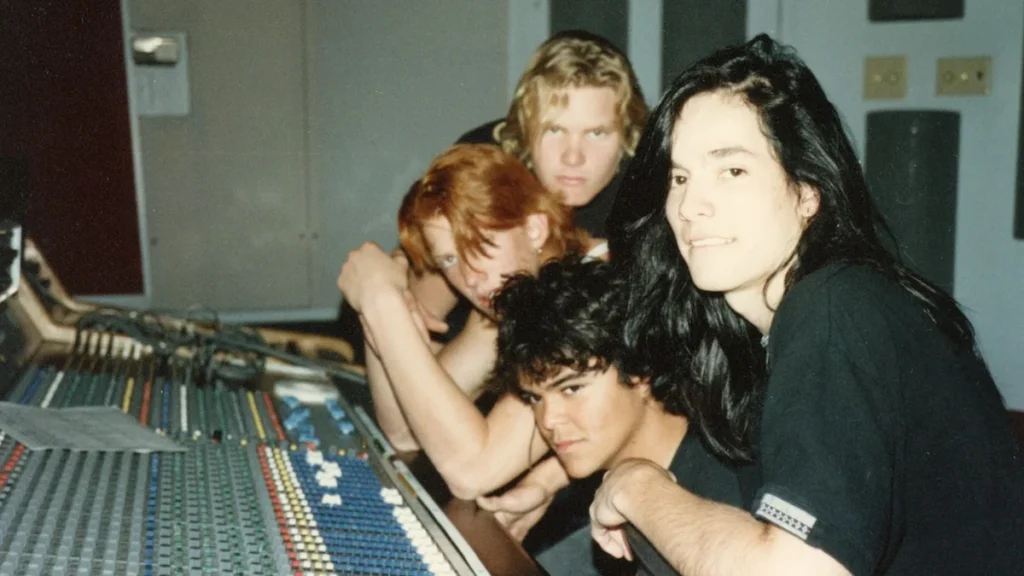

The seminal documentary Desert Age: A Rock and Roll Scene History, which chronicles the birth and evolution of the California desert rock movement, is celebrating its tenth anniversary with a comprehensive re-release. Originally funded through a successful IndieGogo campaign and released to critical acclaim in 2016, the film serves as a definitive archive of a subculture that redefined heavy music. The anniversary edition, scheduled for a digital release on November 20th, arrives with expanded content, including previously unseen audio recordings and photographs from the legendary 1981 Black Flag performance in Palm Springs.
To commemorate the milestone, a special premiere screening is scheduled for this Saturday, November 7th, at the Festival Theaters in Palm Springs, California. The event will feature a panel discussion and Q&A session with key figures from the scene, including Mario Lalli, Brant Bjork, Sean Wheeler, Sophia Possidon, director Jason Georgiades, and producer Trevar Cushing. The discussion will be moderated by writer and anthropologist Natasha Berenek, aiming to contextualize the historical significance of the desert sound within the broader landscape of American rock music.
The Genesis of a Scene: A Historical Context
The "desert rock" scene, often synonymous with "stoner rock," emerged from the isolated expanses of the Coachella Valley in the mid-1970s and early 1980s. Unlike the bustling punk or hardcore scenes in Los Angeles or New York, the desert scene was defined by geography, isolation, and a DIY ethos. Bands like Yawning Man, led by guitarist Gary Arce, became foundational pillars, creating a psychedelic, heavy, and sprawling sound that would eventually influence globally recognized acts like Kyuss and Queens of the Stone Age.
The documentary traces this trajectory, starting with the formative years when teenagers in the desert began experimenting with equipment in garages and remote outdoor locations. This isolation necessitated a self-reliant approach; without access to traditional venues, the musicians performed in unconventional spaces, creating a grassroots community that operated entirely outside the commercial music industry’s radar for nearly a decade.
Chronology of the Desert Sound
The development of the desert rock movement can be categorized into three distinct eras, all of which are explored in the archival footage featured in the 10th anniversary edition of the film:
- The Formative Era (1975–1981): The period marked by the initial experiments of local musicians and the integration of punk rock influences. The inclusion of new materials surrounding Black Flag’s 1981 Palm Springs show highlights the intersection of the burgeoning hardcore punk scene with the emerging desert aesthetic.
- The Expansion Era (1982–1990): This era saw the solidification of the desert sound, characterized by heavy, down-tuned riffs and psychedelic textures. Bands like Across the River and early iterations of Kyuss began to formalize the sonic identity that would become the genre’s signature.
- The Global Recognition Era (1991–1996): Following the release of seminal albums, the scene moved from regional obscurity to international attention. The documentary captures this transition, featuring interviews with Josh Homme, Dave Grohl, and Nick Oliveri, who articulate how the desert environment shaped their creative output.
Archival Preservation and Director’s Perspective
Director Jason Georgiades has described the production of the documentary as an act of cultural preservation. In the years leading up to the film’s initial 2016 release, Georgiades dedicated himself to assembling what is arguably the most extensive digital archive of desert rock artifacts in existence.
"I scanned band flyers that were disintegrating as I held them," Georgiades noted regarding the project’s archival phase. "I uncovered photographs of bands that had been tucked away in dusty photo albums, waiting to be exhumed and brought back to life."
The director’s personal connection to the project began with a pivotal phone call to Gary Arce. Reflecting on the emotional weight of the project, Georgiades shared, "My grandmother passed away the same evening Gary Arce called me on the phone. I didn’t have the heart to tell him what was happening. Looking back, I’m reminded that the day I lost one of my best friends was also the day I began making new ones. I like to think my grandmother had something to do with that."
This emotional resonance underscores the film’s narrative arc: it is not merely a music documentary but a study of how a localized creative community fosters lifelong bonds and a collective, enduring artistic vision.
Data and Impact: The Significance of the Desert Rock Movement
The influence of the desert rock scene on modern music cannot be overstated. According to industry analysis, the sound pioneered in the Coachella Valley served as a critical precursor to the evolution of stoner metal, sludge, and modern hard rock. By combining the raw energy of hardcore punk with the expansive, spacey jams of early 70s rock, these bands created a template that was later refined by groups such as Queens of the Stone Age, which achieved massive commercial success while maintaining the experimental spirit of their predecessors.
The documentary’s role in archiving this history is significant. Many of the original artifacts—flyers for early shows in the desert, cassette demos, and private photographs—were at risk of permanent loss. By digitizing these items, the production team has ensured that the "creative testimonials" of the movement remain accessible to future music historians and fans. The inclusion of new materials in the 10th-anniversary release provides a more nuanced look at the 1981 Black Flag performance, an event that served as a catalyst for many local musicians to pursue professional careers in music.
Broader Implications and Future Accessibility
The re-release of Desert Age arrives at a time when there is a renewed academic and cultural interest in regional music scenes. The documentary serves as a masterclass in independent filmmaking and music journalism, demonstrating how a small, dedicated group of individuals can document a subculture that shaped the trajectory of a global genre.
By moving beyond simple performance footage and focusing on the personal narratives of the artists, the film bridges the gap between technical music history and human-interest storytelling. The decision to make the documentary available via the director’s personal platform, Jgeorgiades.com, starting November 20th, signals a commitment to independent distribution, mirroring the DIY ethics of the subjects the film portrays.
The 10th-anniversary edition is expected to be a benchmark for music documentaries in the coming year, providing a comprehensive look at a movement that proved that a scene does not need a major city or a corporate infrastructure to achieve lasting cultural significance. As audiences revisit the footage of a young Josh Homme and the early days of Kyuss, the documentary serves as a reminder that the most authentic art often flourishes in the most unlikely and isolated environments.
For those interested in the history of rock and roll, the Desert Age re-release provides a rare, unfiltered look into the formative years of a sound that continues to influence contemporary music production, performance, and fan culture worldwide. Tickets for the Palm Springs premiere are currently available through official event channels, and fans are encouraged to secure their seats early given the limited capacity and the historical weight of the event.