
Four years ago, Terrell Brown, a college student in Wheaton, Illinois, discovered a modest, oversized ashtray at a local Goodwill store. Adorned with a cartoonish illustration of a fierce-looking girl smoking a cigarette and the bold text "Too Young to Die," the object was priced at a mere $10. Brown, unaware of the creator’s identity, turned to Reddit for answers. He soon discovered that the piece was an authentic work by the internationally acclaimed Japanese artist Yoshitomo Nara. The discovery proved lucrative; the ashtray, still in its original packaging, was later resold on eBay for $2,860. This transaction serves as a microcosmic example of the enduring, cross-generational, and often volatile market surrounding Nara’s work—a career that has transcended the traditional boundaries of the gallery space to become a fixture of global popular culture.

A Career Defined by Paradox
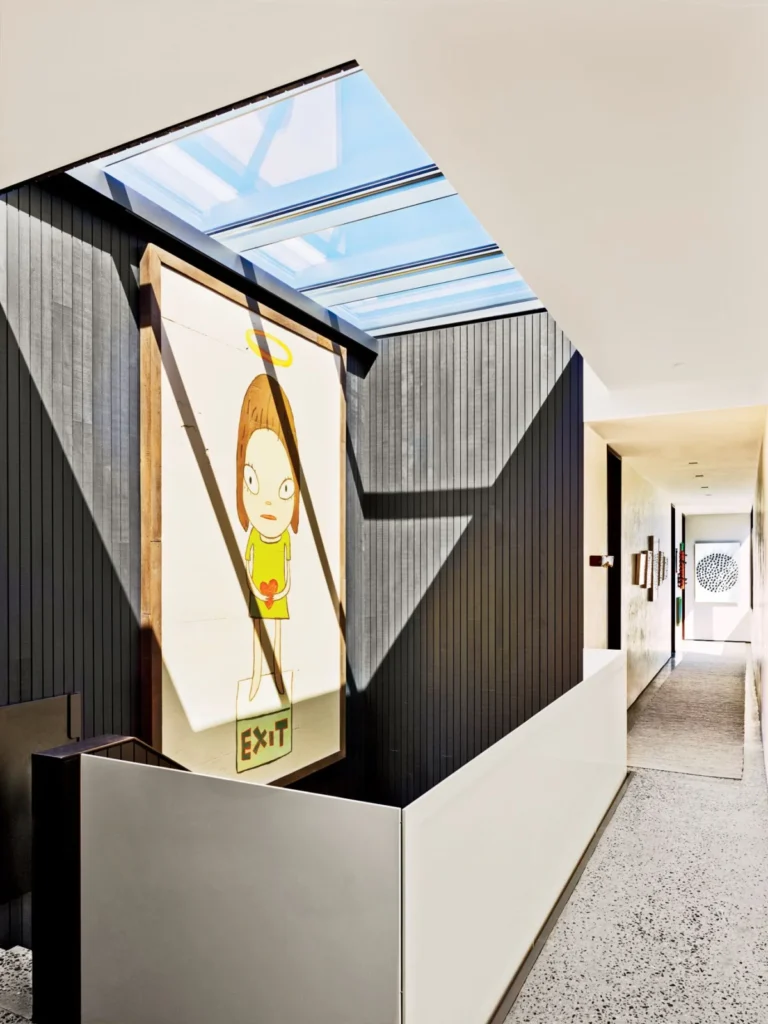
Born in 1959 in Aomori Prefecture, Japan, Yoshitomo Nara has spent decades cultivating a visual language that is as recognizable as it is complex. His signature figures—round-headed children with enormous, glassy eyes—often convey a profound sense of duality. They are simultaneously innocent and world-weary, oscillating between mischief, defiance, and deep-seated melancholy. These characters are frequently accompanied by poignant, counter-cultural slogans like "No nukes" or "Rock ’n’ roll is not dead."

Nara emerged on the international art scene in the 1990s, becoming a key figure in the "Superflat" movement. His work is heavily influenced by his youth in rural northern Japan, his time spent living in Germany, and his lifelong passion for punk rock and folk music. This aesthetic, which appears deceptively simple, is what Takako Nagasawa, deputy chairwoman at the Phillips auction house, describes as "two-sidedness." She notes that while the figures appear cute on the surface, they harbor a subversive tension, such as the famous girl who hides a knife behind her back. This duality, Nagasawa argues, is particularly resonant in the modern era, where society struggles to address global crises while simultaneously attempting to mask or ignore them.

The Institutional and Private Market
Nara’s stature in the contemporary art world is cemented by his presence in major museum collections and the portfolios of the world’s most influential collectors. Salesforce founder Marc Benioff, a long-time champion of the artist, has been instrumental in supporting major retrospectives, including the significant exhibition held last year at London’s Hayward Gallery, co-organized by the Guggenheim Museum Bilbao and Museum Frieder Burda.

The market for Nara’s work has seen exponential growth. His auction record stands at $25 million for the 2019 sale of his seven-and-a-half-foot canvas, Knife Behind Back, at Sotheby’s Hong Kong. The scale of the market is evidenced by the upcoming surge in major sales. For instance, the eight-and-a-half-foot painting Milky Lake / Thinking One is estimated at $10 million, while his 2001 painting Candy Blue Night carries an estimate of $5 million at Sotheby’s. Furthermore, a set of his fiberglass sculptures, The Little Pilgrims (Night Walking), is expected to fetch $1.2 million—a significant appreciation considering the sellers, Theodore and Ruth Baum, purchased the set two decades ago for $360,000.

The Democratization of Imagery: Art as Commodity
While blue-chip galleries and auction houses handle the multi-million-dollar transactions, Nara has actively embraced the accessibility of his art. Unlike many of his contemporaries who strictly limit their work to fine art spheres, Nara has collaborated with commercial entities to produce a wide array of goods. This has created a unique "cult currency" where his work circulates through dorm rooms, thrift stores, and social media feeds, often divorced from the context of his gallery exhibitions.

This commercial proliferation includes high-end collaborations, such as the three-part partnership with fashion designer Stella McCartney, featuring items ranging from $100 shoelaces to $7,900 knit scarves. The MoMA Design Store in New York remains a primary hub for this accessibility, offering items like $12 band-aids, $85 snow globes, and $1,200 table lamps. Chay Costello, associate director of merchandising and product development at MoMA, notes that Nara is consistently among the most searched artists on the museum’s website, highlighting a demand that spans from serious art collectors to Gen Z consumers who may be discovering the artist’s aesthetic through digital platforms.

The David Zwirner Exhibition: A Return to Form
This week marks a pivotal moment for the artist as David Zwirner unveils a major solo exhibition in New York. This show represents the first major solo presentation of Nara’s work in the city in over a decade and his first at the gallery since his departure from Pace. Curated by the artist himself, the exhibition features a comprehensive selection of paintings, drawings, and sculptures across two Chelsea locations.

The exhibition is intentionally structured to showcase the evolution of Nara’s practice, pairing early works from his student days in Düsseldorf during the 1980s and 1990s with contemporary pieces. A highlight of the show is the inclusion of 13 oversized bronze heads, which have been scaled up from the small, palm-sized clay models Nara originally created. These sculptures draw inspiration from the "snow monsters" (juhyo) of his childhood winters in northern Japan, providing a tactile, grounded counterpoint to his two-dimensional works. This exhibition coincides with the recent reopening of the Hirshhorn Museum’s Sculpture Garden in Washington, D.C., where three larger aluminum versions of these heads are now on permanent display.

Implications of the Nara Effect
The breadth of Nara’s reach—from $25 million auction lots to $12 band-aids—presents an intriguing case study in the contemporary art market. For most artists, maintaining such a wide gap between their institutional prestige and their commercial presence would prove difficult. However, Nara’s work remains cohesive because the underlying themes of isolation, quiet rebellion, and existential search are present in every medium he touches.

As Benioff aptly summarizes, Nara is "one of the most important artists of our time." The ability of his work to function as both a high-status asset and an accessible, everyday object is not merely a byproduct of his fame, but a central component of his artistic philosophy. He speaks to a generation that feels both connected and alienated, providing images that serve as mirrors for the complex, often contradictory emotions of youth and adulthood alike.

Chronology of Influence
- 1959: Yoshitomo Nara is born in Aomori, Japan.
- 1980s–1990s: Nara studies in Düsseldorf, Germany, during which time he begins developing his signature style of minimalist, emotive portraiture.
- 1999: Creation of The Little Pilgrims (Night Walking), a series that becomes a hallmark of his sculpture work.
- 2001: Execution of Candy Blue Night, reflecting his established status in the global contemporary art scene.
- 2019: Knife Behind Back sells for $25 million, setting a new auction record for the artist.
- 2023: A major retrospective is held at the Hayward Gallery in London.
- 2026: David Zwirner hosts a major solo exhibition in New York; Hirshhorn Museum reopens with permanent Nara installations.
Concluding Analysis
The success of Yoshitomo Nara underscores a shifting landscape in the art world where traditional gatekeeping is increasingly challenged by digital visibility. The fact that content creators like Nick Lowry are now re-evaluating the placement of "merchandise" like ashtrays in their homes—treating them with the same reverence as fine art—indicates that the public perception of art is evolving. Nara’s work serves as a bridge, proving that an object does not need to be exclusive to be significant. As the art world descends on Chelsea for his latest exhibition, the true measure of his success will remain the duality that defines him: the ability to command the attention of the world’s elite while remaining, at his core, a voice for the disaffected and the dreaming. Whether through a monumental bronze head in a sculpture garden or a small, mass-produced souvenir, Nara’s characters have become a permanent fixture in the global cultural consciousness, appearing to belong to everyone, while retaining an identity that is uniquely his own.