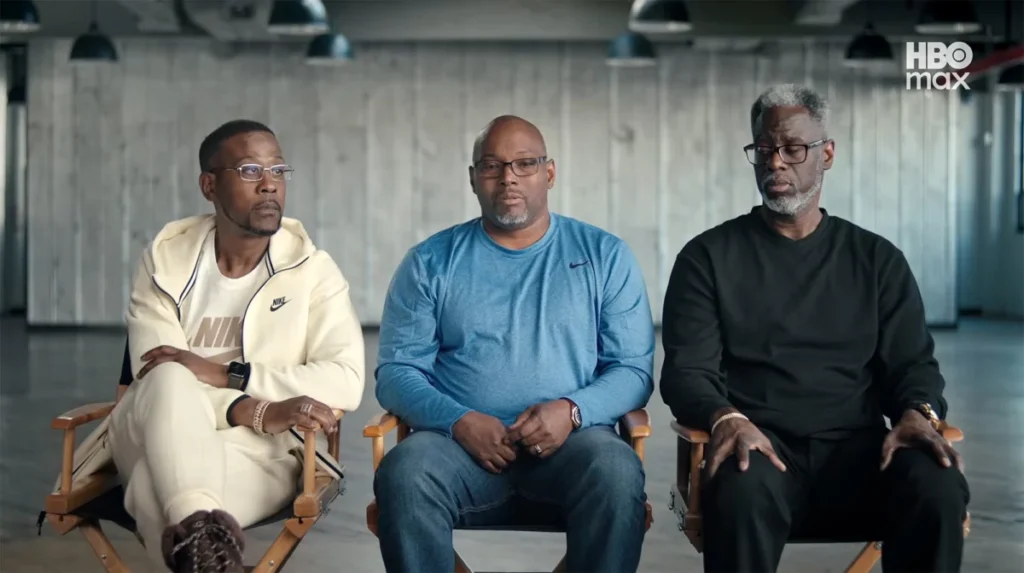

HBO Max has released the official trailer and promotional poster for When a Witness Recants, a hard-hitting, critically acclaimed documentary directed by renowned filmmaker Dawn Porter. The film delves into one of the most glaring miscarriages of justice in modern American legal history: the wrongful conviction and subsequent 36-year imprisonment of three Baltimore teenagers for a murder they did not commit.
Adapted from a widely read and deeply investigated 2021 New Yorker article by journalist Jennifer Gonnerman, the documentary traces the tragic fallout of a 1983 school homicide. It explores how coerced confessions, systemic prosecutorial misconduct, and immense police pressure on young witnesses derailed three lives and fractured a tight-knit West Baltimore community. Following a celebrated festival run that included premieres at the 2026 Sundance Film Festival, Full Frame, Hot Docs, and DC/DOX, the film is scheduled to premiere globally on HBO Max on November 17, 2026.
The 1983 Baltimore Tragedy and the Original Investigation
The origins of the documentary trace back to October 1983, a period marked by rising violent crime rates and aggressive policing strategies in major American urban centers, including Baltimore. A 14-year-old boy was tragically murdered in the corridor of a West Baltimore middle school, sending shockwaves through the local community.

At the time, the pressure on local law enforcement to swiftly solve high-profile violent crimes involving youth was immense. Detectives zeroed in on three teenage boys, extracting statements through aggressive interrogation tactics that would later be exposed as coercive and legally compromised. Despite a lack of physical or forensic evidence linking the boys to the crime scene, prosecutors relied heavily on the testimony of terrified juvenile witnesses who were pressured by authorities to point the finger at the accused.
The trial culminated in swift convictions, sending three innocent teenagers to maximum-security prisons with life sentences. For decades, the young men—who grew up behind bars—carried the burden of a crime they never committed, while the true circumstances of the murder remained obscured by an official narrative built on false testimony and institutional indifference.
A Personal Connection and the Road to Exoneration
The documentary gains a profound layer of narrative depth through the involvement of acclaimed author Ta-Nehisi Coates. Growing up in the same West Baltimore community during the 1980s, Coates vividly remembers the chilling effect the murder and subsequent arrests had on local youth. Revisiting the case decades later as an adult, Coates serves as an executive producer and narrative guide, examining the tragedy not merely as an isolated legal error, but as a symptom of a broader national crisis involving racially charged police misconduct and systemic failure.
The turning point for the case arrived decades later, triggered by a rigorous reinvestigation led by defense attorneys, journalists, and advocates who scrutinized the original trial transcripts. Central to the overturning of the convictions was a devastating confrontation with one of the primary witnesses from the 1983 trial. This witness ultimately recanted the testimony they had given as a teenager, confessing that police pressure and coercion had forced them to fabricate the story that sealed the defendants’ fates.

On November 22, 2019, after enduring 36 years behind bars, the three men—now in their 50s—were officially exonerated and released from prison. When a Witness Recants captures the raw emotional aftermath of their release, detailing the arduous process of rebuilding their lives in a world that had radically transformed while they were institutionalized.
Direction, Production, and Artistic Approach
Dawn Porter, celebrated for her extensive catalog of socially conscious documentaries—including Gideon’s Army, Trapped, John Lewis: Good Trouble, Deadlocked: How America Shaped the Supreme Court, and Luther: Never Too Much—brings her signature journalistic rigor to the project. Porter utilizes a blend of contemporary interviews, archival materials, deposition footage from 2022, and evocative animated sequences to reconstruct the events of 1983 and the subsequent decades of legal battles.
The film is a Maceo-Lyn Production in association with Trilogy Films and Sony Pictures Television-Nonfiction. Alongside Porter, the documentary is produced by Jennifer Oko and Miriam Weintraub. The high-profile executive producer roster features Ta-Nehisi Coates, Kenyatta Matthews, Kamilah Forbes, Eli Holzman, Aaron Saidman, Lisa Heller, Sara Rodriguez, Jennifer Gonnerman, and Nancy Abraham.
Critical Reception and Festival Circuit Acclaim
Since its debut at the 2026 Sundance Film Festival, When a Witness Recants has garnered widespread critical acclaim for its empathetic storytelling, structural clarity, and unflinching examination of systemic flaws. Critics have praised Porter’s ability to balance the macro-level systemic critique of the American judicial apparatus with the micro-level human toll experienced by the wrongfully convicted men and their families.

Screenings at major documentary showcases such as Hot Docs and Full Frame positioned the film as an early contender for prominent accolades ahead of the 2026–2027 awards season. Reviewers have highlighted the emotional resonance of the archival deposition footage and the devastating impact of the witness recantation scenes, which lay bare the mechanics of wrongful convictions driven by state coercion.
Broader Implications and Socio-Legal Impact
The release of When a Witness Recants arrives amid a growing national reckoning regarding systemic flaws in the American criminal justice system, particularly concerning juvenile interrogations, witness tampering, and the long-term consequences of mass incarceration. Legal scholars and civil rights advocates point to cases like the Baltimore school murder as textbook examples of how aggressive prosecution models from the late 20th century disproportionately targeted minority youth and communities of color.
By amplifying the voices of the four surviving men—who spent a combined century behind bars—the documentary serves as both a historical accounting and an urgent call for reform. It challenges institutional actors, including prosecutors, judges, and law enforcement agencies, to adopt more rigorous oversight mechanisms to prevent coerced testimonies and to expedite the review of credible claims of innocence.
As streaming audiences prepare for the film’s November 17, 2026 debut on HBO Max, When a Witness Recants stands poised to spark vital public conversations about accountability, the fragility of memory under duress, and the enduring resilience of individuals who survived decades of state-sponsored injustice.