
The tragic twilight of the House of Braganza continues to captivate historians and monarchy enthusiasts, returning to the cultural forefront as two exquisite emerald and diamond pieces belonging to the final Queen of Portugal head to auction at Sotheby’s in Geneva this November. Queen Maria Amelia, born a French princess in exile, entered a nation sliding toward political collapse and attempted to shield her family from radical republican violence with nothing more than a bouquet of flowers. Her life spanned the dramatic collapse of the Portuguese monarchy, an assassination that stunned Europe, and decades of quiet exile before her eventual return to history’s pages.
Main Facts and the Upcoming Geneva Auction
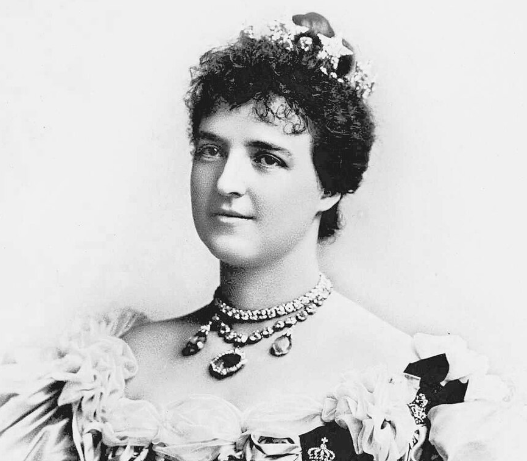
The upcoming Sotheby’s auction in Geneva highlights the enduring fascination with the personal artifacts of Europe’s fallen dynasties. The pieces in question—two magnificent emerald jewels that once adorned Queen Maria Amelia—offer a tangible connection to a turbulent era of European history.
Maria Amelia’s journey to the Portuguese throne began in the late 19th century, a period defined by intense geopolitical jockeying, economic stagnation, and the rise of fierce republican sentiment. As the wife of King Carlos I, she reigned during a time when the traditional foundations of the monarchy were rapidly eroding. Her tenure as queen was marked by both progressive social initiatives and severe economic hardship, culminating in the horrific regicide of 1908. Though she survived the ambush that claimed the lives of her husband and her eldest son, the structural damage to the Portuguese crown proved fatal. Just two years later, the monarchy was abolished, forcing the queen into a permanent, multi-decade exile.
Chronology of a Royal Tragedy: From Twickenham to Lisbon
The life of Maria Amelia was framed by displacement, political ambition, and sudden catastrophe. Tracing her chronology reveals the relentless pressures placed upon the House of Braganza during its final decades:
- September 28, 1865: Born Princess Amélie of Orléans in Twickenham, Middlesex, to Philippe, Count of Paris, and Marie-Isabelle of Orléans, while her family lived in exile due to the fall of Napoleon III.
- 1884–1886: Meets Crown Prince Carlos of Portugal at Chantilly; the couple fall in love, leading to grand engagement celebrations in Paris in February 1886 that inadvertently trigger political backlash against her francophile family.
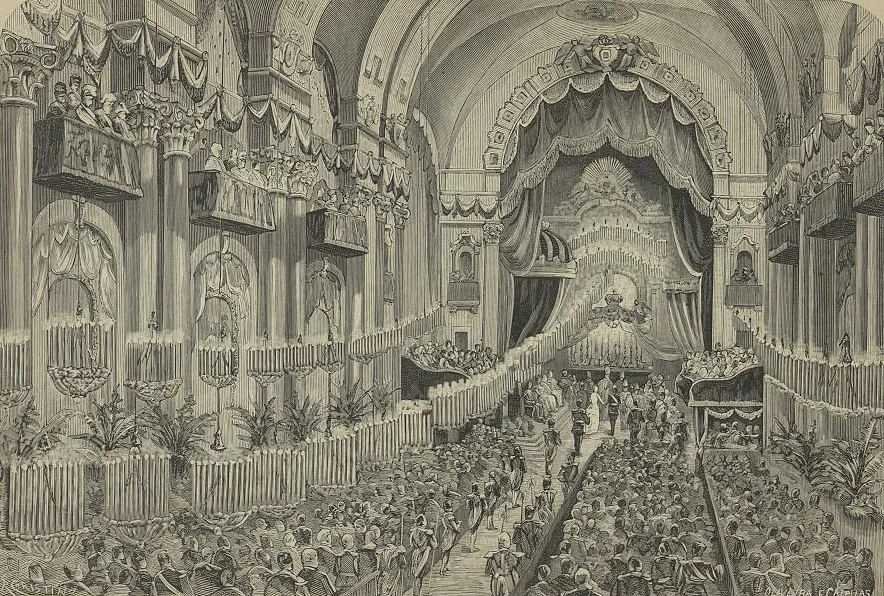
- May 22, 1886: Marries Carlos at St. Dominic’s Church in Lisbon, adopting the Portuguese name Maria Amelia and stepping into her role as Princess Royal.
- March 21, 1887: Gives birth to her first son, Luis Filipe, securing the immediate succession, followed by the birth of her second son, Manuel, on November 15, 1889.
- October 19, 1889: Becomes Queen of Portugal following the death of King Luis I, inheriting a realm burdened by deep political stagnation and mounting financial debt.
- 1907: Amidst severe economic crises and national bankruptcies, Prime Minister Joao Franco dissolves parliament under royal assent, establishing an authoritarian regime that intensifies public fury against the monarchy.
- January 30, 1908: King Carlos signs a decree permitting the imprisonment and deportation of political dissidents, reportedly remarking to his advisors, "I sign my sentence of death, but you, gentlemen, want it that way."
- February 1, 1908: The Lisbon Regicide. As the royal family rides in an open carriage through the Praça do Comércio, assassins open fire. King Carlos is killed instantly, and Queen Maria Amelia desperately attempts to shield her family using a posy of flowers. Crown Prince Luis Filipe is mortally wounded and dies minutes later, while younger son Manuel escapes with minor injuries.
- February 2, 1908: Manuel II is proclaimed King of Portugal, though effective power slips away amid radicalized political factions.
- October 1910: Following a republican revolution, the monarchy is formally overthrown, and Maria Amelia joins her son Manuel in exile, eventually settling in the United Kingdom.
- July 2, 1932: Former King Manuel II dies unexpectedly in Twickenham without issue, extinguishing the direct line and sending his remains back to Portugal for burial in the Pantheon of the Braganzas.
- 1945: Maria Amelia makes a final, emotional return to Lisbon, visiting her former royal residences and inspecting the public health and philanthropic foundations she established decades prior.
- October 25, 1951: Passes away at Le Chesnay, France, at the age of 86, and is subsequently laid to rest alongside her husband and sons in Lisbon.
Supporting Data: Economic Strain and Social Reform
To fully understand Maria Amelia’s tenure as queen, one must examine the socioeconomic realities of late 19th- and early 20th-century Portugal. The nation was grappling with severe structural deficits, an agrarian economy that failed to industrialize at the pace of its northern neighbors, and staggering national debt. During King Carlos I’s reign, Portugal was declared bankrupt twice—in 1892 and again in 1902. These fiscal crises severely undermined public confidence in the parliamentary system and the crown alike.
Despite these overwhelming economic headwinds, Queen Maria Amelia sought to carve out a legacy rooted in public service, healthcare advocacy, and philanthropy. Recognizing the devastating public health toll exacted by poverty, she spearheaded numerous initiatives aimed at combating tuberculosis—then a primary killer among the urban working class. She established sanatoriums, championed maternal and child health programs, and actively supported the arts and historical preservation.
However, her philanthropic efforts frequently collided with public perceptions of royal excess. In a nation suffering from acute financial distress, the lavish lifestyle of the court and the queen’s personal expenditures provided fertile ground for republican agitators. Critics weaponized her spending to paint the House of Braganza as out of touch with the daily struggles of ordinary Portuguese citizens, accelerating the ideological shift toward republicanism.
Official Responses and Political Implications of the 1908 Regicide
The assassination on the Praça do Comércio sent shockwaves across European capitals and paralyzed the Portuguese administration. In the immediate aftermath, the government implemented strict security measures, rounded up suspected conspirators, and sought to project an image of institutional continuity by quickly elevating the 18-year-old Manuel II to the throne.
Reactions from European monarchs, including the British royal family and the French political elite, were characterized by profound shock and condemnation of political terrorism. Diplomats recognized that the assassination was not merely a random act of violence, but a calculated blow designed to decapitate the regime.
Politically, the regicide proved to be the death knell for the constitutional monarchy. Rather than rallying the public around the grieving young king and queen mother, the tragedy exposed the complete vulnerability of the state. Moderate politicians lost control of the narrative as radical republicans and anti-royalist factions capitalized on the vacuum. The authoritarian measures introduced by João Franco had already alienated the middle class; the bloodshed in the streets of Lisbon convinced the military and moderate liberals that the Braganza dynasty was no longer viable as a stabilizing force. The events of 1908 directly paved the way for the 5 October 1910 revolution, which dismantled the centuries-old kingdom and established the First Portuguese Republic.
Broader Impact and Historical Legacy
The legacy of Queen Maria Amelia extends far beyond her role as a tragic figure in European royalty. Her life encapsulates the agonizing transition of Southern Europe from traditional monarchical systems to modern, often volatile, republican states.
The upcoming auction of her emerald and diamond jewelry by Sotheby’s serves as a powerful reminder of how material culture preserves the memory of these lost eras. These jewels, worn during the gilded galas of late 19th-century Europe, survived the chaos of the 1908 regicide, the ignominy of exile, and the passing of more than a century. They stand today as silent witnesses to a queen who navigated immense political perils with courage, striving to protect an ancient crown that was ultimately undone by the relentless march of history.