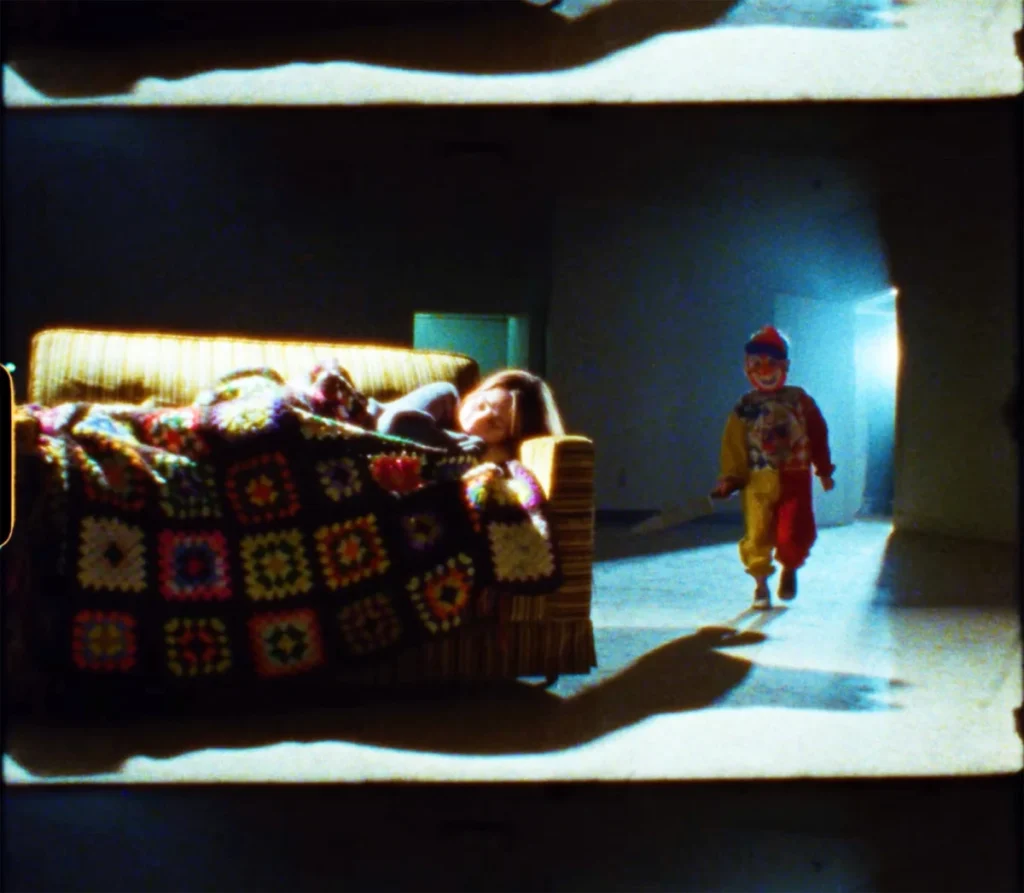

The landscape of modern horror cinema has long been fascinated by the concept of the origin story, seeking to humanize or scientifically explain the unknowable evils that haunt the silver screen. In a striking contribution to this cinematic discourse, acclaimed Canadian filmmaker Jason Eisener has released a covertly surfaced, five-minute short film titled Project Shamrock. Framed through the found-footage trope as a recently recovered 1960s film reel, the short posits a chilling alternative history for the iconic slasher villain Michael Myers. Rather than portraying the character solely as the embodiment of pure, motiveless evil as originally envisioned by John Carpenter in 1978, Project Shamrock links the young Myers to the sinister, corporate-backed scientific experiments of the infamous Silver Shamrock Corporation—a direct and clever homage to Tommy Lee Wallace’s cult-classic sequel, Halloween III: Season of the Witch.
Shot on location in Dartmouth and Halifax, Nova Scotia, over a rigorous two-day production schedule using authentic 16mm and 8mm film stock, the not-for-profit fan film has quickly generated significant attention across online horror communities. Featuring Dave Brunt as "The Janitor" and grounded in a gritty, tactile aesthetic, the project blends franchise lore with a satirical jab at contemporary horror trends that continuously demand exhaustive, and often unnecessary, backstories for legendary cinematic monsters.
Main Facts and Production Overview
Project Shamrock operates under the guise of an archival discovery, presented to the public with a manufactured sense of urgency and danger. According to the framing narrative accompanying its online release, a lost film reel dating back to Halloween 1960 contains disturbing footage indicating that a young Michael Myers was subjected to top-secret behavioral conditioning and experimentation overseen by the Silver Shamrock Corporation.

Despite its fan-film classification, the short boasts a pedigree of established genre talent behind the camera. Written and directed by Jason Eisener—whose previous feature-length and short-form credits include the exploitation-action homage Hobo with a Shotgun, the sci-fi adventure Kids vs. Aliens, the holiday slasher short Treevenge, and contributions to the horror anthologies The ABCs of Death and V/H/S/2—the production maintains a remarkably high standard of craftsmanship.
The core creative team features producers Jen Yamato, Jason Eisener, and Ian Matheson. Cinematography was handled by Andy Appelle, who also served as co-producer, lending the footage its authentic, degraded archival texture. The meticulous production design, props, wardrobe, and special effects supervision were managed by Katie McQueston, while Andrew Gordon Macpherson crafted the atmospheric music and sound design. Additionally, genre stalwart Steven Kostanski contributed a specialized prosthetic head effect, anchoring the short’s visceral visual identity.
Chronology of the Release and Found-Footage Framing
The rollout of Project Shamrock was designed to mimic the distribution of genuine archival leaks, capitalizing on internet-age myth-making.
- October 1960: The fictional timeline of the recovered film reel places the events during the early childhood of Michael Myers, prior to the canonical murders depicted in John Carpenter’s original 1978 masterpiece.
- Late October 2026: A cryptic film reel surfaces online via YouTube, accompanied by warnings that the footage reveals top-secret psychological testing conducted under the codename Project Shamrock.
- October 28, 2026: Industry outlets and horror film platforms, including FirstShowing, formally highlight the short film, bringing Eisener’s project to a broader mainstream audience and sparking widespread discussion regarding its narrative implications.
This release strategy mirrors modern viral marketing campaigns that rely on digital remediation, where grainy textures and framed warnings ("Watch it before it’s taken down!") serve to heighten viewer engagement and blur the boundaries between fiction and historical reality within the cinematic universe.

Supporting Context: Franchise Lore and Cinematic Homages
To fully understand the cultural weight of Project Shamrock, one must examine the dual cinematic pillars it engages with: the foundational mythology of the Halloween franchise and the polarizing legacy of Halloween III: Season of the Witch.
John Carpenter’s original 1978 film deliberately avoided giving audiences a neat psychological profile for Michael Myers, famously referring to him in the script simply as "The Shape." Dr. Samuel Loomis’s iconic monologues described his patient as possessing a blank, pale, emotionless face and blackest eyes—the Devil’s eyes. Subsequent sequels, television cuts, and Rob Zombie’s 2007 remake attempted to unpack this trauma through troubled family dynamics, institutional abuse, and socioeconomic hardship. Project Shamrock sidesteps standard familial melodrama by introducing a corporate-conspiracy angle, leaning heavily into the corporate dystopia established by Halloween III (1982).
In Halloween III, the Silver Shamrock Corporation—led by the megalomaniacal Conal Cochran—uses microchips embedded in Halloween masks to trigger mass casualties via an ancient Celtic ritual broadcast on television. By retrofitting this lore onto Michael Myers’ childhood, Eisener’s short playfully bridges two previously disconnected eras of the franchise: the slasher continuity of Myers and the sci-fi/horror satire of the standalone third installment.
Furthermore, industry analysts note that Project Shamrock arrives at a time when legacy horror franchises are increasingly obsessed with granular origin stories. The timing coincides closely with the development and marketing of high-profile prequel projects, such as the Crystal Lake series exploring the origins of Jason Voorhees from the Friday the 13th franchise. Eisener’s short functions simultaneously as a love letter to analog filmmaking techniques and a pointed commentary on the industry’s tendency to over-explain legendary monsters, stripping away the primal fear of the unknown.

Artistic Execution and Technical Merits
Despite being completed within a condensed two-day shoot, Project Shamrock distinguishes itself through a rigorous commitment to period-accurate aesthetics. The choice to shoot on 16mm and 8mm film stock rather than relying entirely on digital post-processing effects gives the short an organic grit that digital cameras struggle to replicate. The natural grain, light leaks, and gate weaving contribute to the illusion that the audience is peering into a forbidden, long-suppressed historical document.
The sound design by Andrew Gordon Macpherson plays a pivotal role in maintaining tension over the brief five-minute runtime. Utilizing low-frequency drones, distressed analog audio artifacts, and unsettling ambient noise, the audioscape evokes the clinical coldness of 1960s psychiatric and corporate research facilities.
The performances, led by Dave Brunt as The Janitor, ground the high-concept premise in a tangible, gritty reality. Rather than relying on sweeping exposition, the narrative communicates its dark implications through unsettling visual cues, claustrophobic framing, and the oppressive atmosphere of institutional confinement.
Broader Impact and Implications for the Horror Community
The reception of Project Shamrock highlights several ongoing trends within contemporary independent horror filmmaking:

- The Rise of High-Concept Fan Films: Talented, established directors are increasingly utilizing short-form, non-profit fan films as creative sandboxes. These projects allow filmmakers to experiment with established intellectual properties without the creative constraints or financial pressures of studio oversight.
- Analog Nostalgia and Tactile Filmmaking: The enthusiastic response to the short’s 16mm and 8mm aesthetic underscores a broader viewer fatigue with glossy, overly polished digital video. Audiences continue to demonstrate an appetite for physical media textures, practical special effects, and artisanal craftsmanship.
- Meta-Commentary on Franchise Fatigue: By weaponizing the trope of the unnecessary origin story, Eisener offers a meta-textual critique of Hollywood’s fixation on demystifying classic villains. By giving Michael Myers a corporate-scientific genesis that feels absurd yet strangely compelling, the short invites viewers to question whether knowing why a monster exists diminishes or enhances the terror of the unknown.
As Project Shamrock continues to circulate among cinephiles and horror enthusiasts online, it cements Jason Eisener’s reputation as a filmmaker who deeply understands the grammar, history, and playful subversion of genre cinema. Whether viewed as an elaborate piece of fan service, a technical showcase for analog cinematography, or a sharp satirical commentary on franchise expansion, the short stands as a memorable and inventive entry in the ever-expanding cultural mythos of Halloween.