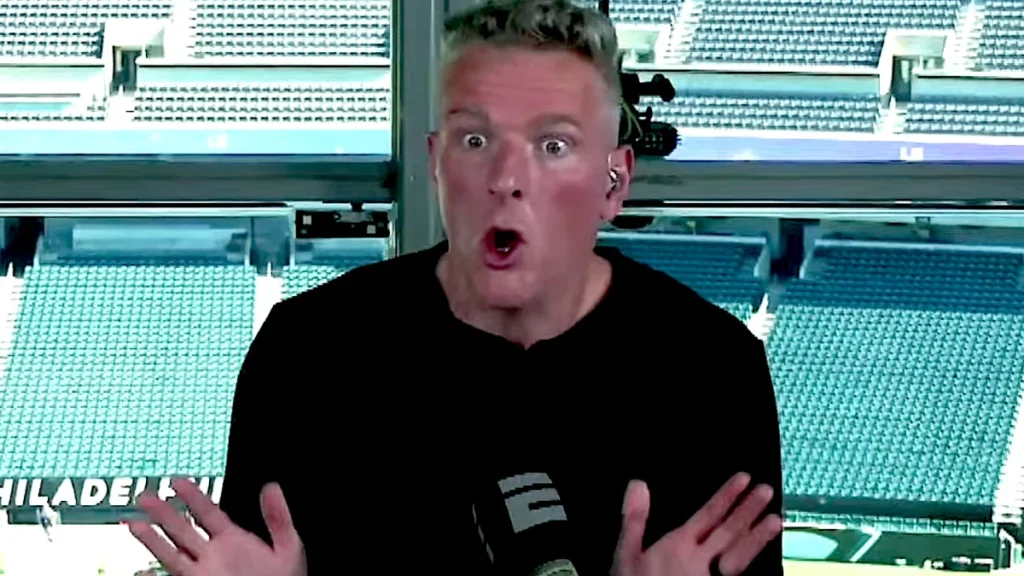

The recent visit of ESPN’s College GameDay to the University of Utah has spiraled into a significant public relations crisis, exposing the volatile intersection of celebrity culture, social media governance, and the intensifying security risks facing high-profile media personalities. What was intended to be a celebration of collegiate athletics in Salt Lake City transformed into a flashpoint for debate after Pat McAfee, one of the network’s most recognizable faces, openly criticized the university for its role in fostering an environment he described as both hostile and physically threatening.
The controversy centers on a promotional video posted by the University of Utah’s official social media channels in the lead-up to the Utes’ game against Houston. The footage featured students impersonating McAfee, mocking his signature on-air style, and criticizing his penchant for removing his shirt during broadcasts. While such skits are often viewed as harmless, lighthearted ribbing in the context of college football, McAfee—citing a climate of rising hostility toward public figures—viewed the institution’s official endorsement of the content as a reckless incitement of negative sentiment.
A Chronology of the Confrontation
The sequence of events began late last week as the College GameDay crew prepared for their Saturday broadcast in Salt Lake City. The university, eager to lean into the viral nature of McAfee’s personality, released the social media clip on Friday. The video aimed to bridge the gap between the school and the broadcast team; however, the tone was perceived by many observers as bordering on mockery.
By Saturday morning, the atmosphere on the ground was reportedly strained. During the live broadcast, McAfee was seen engaging with the crowd, but his interactions were marked by visible agitation. During a recurring segment involving a field-goal challenge, a student contestant openly questioned why the prize money offered in Utah was lower than that provided at Brigham Young University the previous week. This public interrogation, combined with the earlier social media post, culminated in an uncomfortable experience for the former NFL punter.
On Monday, during his own program, The Pat McAfee Show, the host addressed the situation with uncharacteristic gravity. He questioned the strategic logic of a major university utilizing its platform to amplify ridicule against a guest it had invited to promote its own athletic program. The situation escalated when McAfee connected these frustrations to the broader landscape of violence against public figures, specifically referencing the September 2025 assassination of political commentator Charlie Kirk.
Security Concerns and the "Bulletproof" Reality
The gravity of McAfee’s reaction is rooted in an environment of legitimate safety concerns that are often obscured by the entertainment value of his broadcast. According to reports from Front Office Sports, the former Indianapolis Colts punter has been the subject of numerous death threats. The report further indicates that, in the wake of the 2025 security incident involving Charlie Kirk, federal authorities—specifically the FBI—advised McAfee to incorporate protective measures into his daily routine, including the recommendation to wear a bulletproof vest.
This context transforms McAfee’s grievances from a simple spat over a social media video into a broader conversation about the safety of sports journalists and television personalities. When a university amplifies content that paints a guest as a target of derision, the impact is magnified in an era where parasocial relationships between fans and media figures can quickly devolve into tangible harassment.
The University’s Response and Damage Control
Recognizing the intensity of the backlash and the potential for a long-term breakdown in relations with ESPN, the University of Utah moved quickly to contain the situation. By the middle of the week, the original video had been removed from all official channels.
In a formal statement provided to Deseret News, a university spokesperson acknowledged the failure of the engagement strategy. "Our goal during the visit was to create lighthearted engagement regarding Pat being back on campus, but we missed the mark," the statement read. The university expressed regret for any perception that McAfee was unsafe or unwelcome, emphasizing that the institution values its relationship with ESPN and the national exposure provided by College GameDay.
Representatives from the university also confirmed that they reached out to McAfee directly to express their apologies, hoping to mitigate the damage caused by the post. Despite this, McAfee remained resolute in his discomfort, stating on his show, "I’ve never been more uncomfortable, honestly, in my life, walking in front of a group of people after watching their university put out a post basically dogging me just moments before."
ESPN’s Institutional Stance
ESPN, the network that employs McAfee, issued a clear defense of its personality, reinforcing the idea that the security of their staff is a non-negotiable priority. A company spokesperson noted, "The safety and security of our on-air team, crew and fans is paramount at College GameDay. We are committed to ensuring a safe environment, and given the very real threats that members of our team face, we take issues involving their safety seriously."
This support from the network is significant. It underscores a shift in how media companies are handling the public treatment of their stars. By aligning with McAfee’s "valid concerns," ESPN is signaling to other universities and event hosts that the "theatrical" nature of sports broadcasting does not negate the necessity of ensuring a safe and professional environment for the talent.
Analysis: The Changing Landscape of Sports Media
The tension between the University of Utah and Pat McAfee serves as a case study in the evolving relationship between influencers and the institutions that host them. Historically, university athletic departments have utilized their social media presence to cultivate a "home field advantage" that extends beyond the stadium. However, as the lines between professional journalism and entertainment personality-driven content blur, the potential for friction increases.
The incident highlights several critical implications for the future of college sports media:
- The Responsibility of Institutional Platforms: Official university accounts hold a significant amount of power. When those platforms choose to engage in mockery, they implicitly authorize their followers—a group often comprised of tens of thousands of passionate students—to escalate that behavior.
- The Fragility of Security for High-Profile Talent: The revelation regarding FBI security advisories highlights a sobering reality for modern sports personalities. The public-facing nature of these roles exposes them to threats that the average viewer may not fully comprehend.
- The Power of the Talent: McAfee’s ability to use his own platform to call out an institution—and the subsequent apology from that institution—demonstrates the massive leverage that modern media stars hold over traditional athletic departments.
As the sports media landscape continues to integrate more "personality-first" programming, the need for clear communication between networks and host sites will become essential. The University of Utah’s attempt at "lighthearted engagement" was, in this instance, a failure of assessment. It failed to account for the personal safety context that surrounds a high-profile figure like McAfee in an increasingly polarized climate.
While the university has attempted to mend the bridge, the episode leaves a lasting impression on the industry. McAfee’s public declaration that he hopes to avoid the University of Utah in the future suggests that the damage to this specific partnership may be long-lasting. For other universities, the takeaway is clear: in the digital age, the line between "playful banter" and "targeted harassment" is thin, and the stakes for those in the public eye are higher than they have ever been.
The incident serves as a reminder that behind the cameras, the lights, and the millions of dollars in prize money, the individuals involved in these productions are human beings navigating a world of real-world threats. As the collegiate sports industry continues to professionalize its media strategy, it will be forced to balance its desire for virality with a renewed commitment to the safety and respect of the individuals who bring the spectacle to life.