
London — In a landmark moment for British sport, England national team captain Harry Kane has been crowned the best footballer in the world, claiming the prestigious Ballon d’Or at a star-studded gala at the London Palladium. Kane’s victory shatters a 25-year drought for English football on the global individual stage, instantly drawing widespread acclaim from fans, international sports figures, and the highest ranks of the British monarchy.
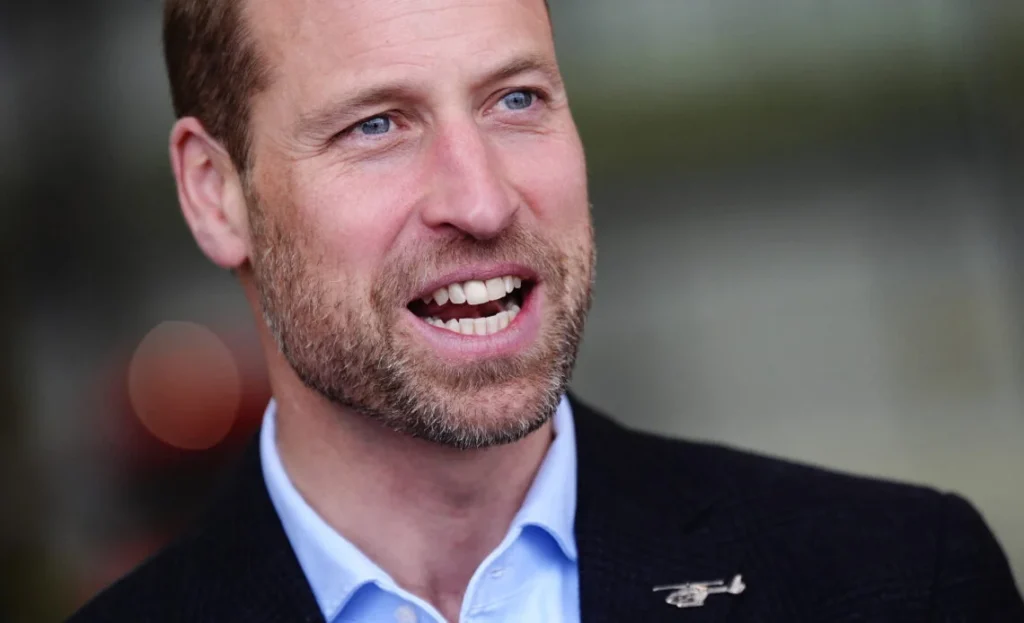
Among the very first to congratulate the prolific striker was the Prince of Wales. Known for his avid support of English football and his role as the President of the Football Association (FA), Prince William took to social media minutes after football legend Ronaldo Nazario announced the winner.
"Huge congratulations to Harry Kane on winning the Ballon d’Or! What a fantastic achievement and so deserved," the Prince wrote in a statement signed simply with his initial, ‘W’. Praising the England skipper further, Prince William added, "A brilliant captain, a remarkable player and someone who has given football fans across the world so many unforgettable moments."
The victory marks a watershed moment not only for Kane’s illustrious career but also for the broader landscape of English football, cementing his legacy alongside the nation’s most revered footballing icons.
A Tightly Contested Race and an Emotional Triumph
The announcement, delivered by Brazilian icon Ronaldo Nazario, capped off one of the most fiercely contested Ballon d’Or campaigns in recent memory. The voting pool weighed standout club performances against monumental international campaigns, creating a tense atmosphere inside the London Palladium.
As Kane’s name was read aloud, the auditorium erupted into a standing ovation. Visibly overwhelmed, the English striker made his way to the stage, taking a moment to absorb the magnitude of the achievement. The honor places him at the absolute pinnacle of world football, rewarding years of relentless goalscoring consistency, elite leadership, and resilience on both domestic and international stages.
Reflecting on the achievement the day after the ceremony, Kane expressed profound gratitude to those who shaped his journey.
"It’s an incredible honour to receive the Ballon d’Or award," Kane said. "Thank you to all the staff and my teammates at England and Bayern Munich, as well as family, friends, and everyone who’s supported me—this wouldn’t be possible without you all."
Ending a 25-Year British Drought
Kane’s victory writes a new chapter in the history books, making him only the third English player to ever win the Ballon d’Or and the first in a quarter of a century.
The last English player to claim the coveted golden ball was Michael Owen, who secured the award in 2001 following a stellar year with Liverpool and the England national team, highlighted by his unforgettable hat-trick against Germany in Munich. Prior to Owen, legendary forward Kevin Keegan won the accolade in back-to-back years in 1978 and 1979 during his tenure with Hamburger SV.
While English football has produced several world-class talents over the decades—many of whom achieved immense team success—individual recognition on this scale has proven remarkably elusive due to the global dominance of elite continental leagues and generational talents from South America and Europe. Kane’s triumph bridges a 25-year generational gap, validating the sustained excellence of English football’s modern golden generation.
The Foundations of Victory: Club and Country Excellence
Kane’s Ballon d’Or win is the culmination of a phenomenal twelve months that showcased his capabilities at both the club and international levels.
Domestically, Kane transitioned seamlessly to the Bundesliga following his high-profile transfer to German giants Bayern Munich. Despite the immense pressure of stepping into a new league and filling massive shoes, he continued to display the ruthless goalscoring efficiency that defined his years with Tottenham Hotspur. His ability to drop deep, orchestrate play, and finish with both feet and his head made him indispensable to Bayern’s tactical schemes, netting goals at a historic rate both in the German domestic league and the UEFA Champions League.
On the international front, Kane’s leadership of the Three Lions remained a cornerstone of his Ballon d’Or resume. This past summer, Kane led England through a grueling international calendar, guiding the national team to a commendable third-place finish at the tournament hosted in the United States. His steady hand under pressure, tactical awareness, and knack for delivering in decisive moments kept England competitive against the world’s elite, narrowly missing a spot in what would have been the country’s first World Cup final appearance in nearly seven decades.
Leadership, Role Models, and Sporting Integrity
The timing of Prince William’s swift and enthusiastic praise aligns with a broader thematic focus the heir to the throne has pursued throughout the week. Speaking publicly on multiple occasions regarding the profound impact of sports leadership, character, and mentorship, the Prince has drawn attention to individuals who transcend their athletic achievements through public service and resilience.
Earlier in the week, Prince William participated in a high-profile television program dedicated to Sir Kevin Sinfield, the revered rugby league and union star. Sinfield has raised over £13 million for motor neurone disease (MND) charities, embarking on grueling endurance feats in honor of his close friend and former Leeds Rhinos teammate, Rob Burrow, who tragically passed away from the condition.
By drawing a parallel between Sinfield’s selflessness and Kane’s dedication on the football pitch, the Prince highlighted a common thread in British sport: the belief that true greatness is defined not merely by trophies and individual accolades, but by character, perseverance, and the ability to inspire future generations.
Broader Impact and Future Implications
Kane’s Ballon d’Or victory carries significant implications for the perception of English football globally. For decades, critics have occasionally questioned whether players based in or originating from the English football ecosystem receive the necessary global platform to claim individual football’s highest honor, often pointing to the tactical insularity of the Premier League or the immense physical toll of its winter schedules.
By succeeding abroad in Germany while maintaining his talismanic status for the national team, Kane has dismantled those narratives. His victory proves that technical mastery, paired with elite adaptability and professionalism, can transcend borders and capture the imaginations of the international journalists, coaches, and captains who vote for the award.
Furthermore, this accolade serves as a massive psychological boost for the England national team. As the squad looks ahead to upcoming qualification cycles and major international tournaments, having a reigning Ballon d’Or winner wearing the captain’s armband provides an invaluable source of inspiration for younger squad members. Emerging talents like Jude Bellingham, Bukayo Saka, and Phil Foden now share a dressing room with the undisputed best player in the world, setting an unyielding benchmark for excellence.
As the celebrations at the London Palladium fade and the domestic leagues resume their frantic paces, Harry Kane’s name is permanently etched into the history of the sport. From the training grounds of north London to Munich, and all the way to the halls of Buckingham Palace, the recognition of his footballing genius is absolute—a golden milestone for a player who has given the game everything, and a proud moment for a nation celebrating a generational sporting icon.