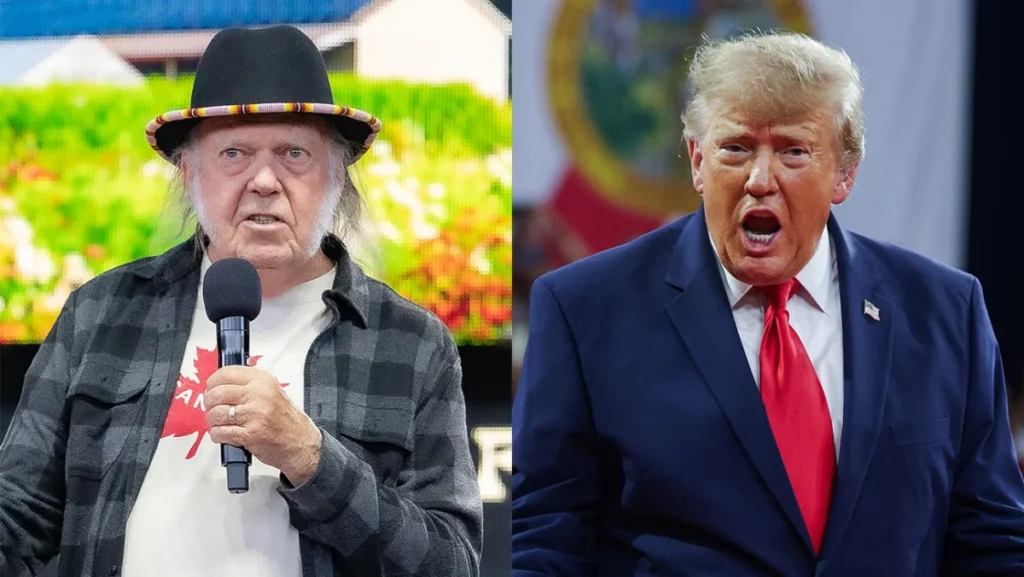

Rock legend Neil Young has initiated a federal lawsuit against the Trump 47 Coalition, Donald Trump’s primary political action committee, alleging copyright infringement stemming from the unauthorized use of his 1989 protest anthem, "Rockin’ in the Free World," at a campaign rally. Filed in federal court on Monday, the legal action marks the second time in recent years that the Canadian-American singer-songwriter has been forced to take legal steps to prevent the Trump campaign from utilizing the iconic track.
The complaint seeks $10 million in statutory damages, asserting that the campaign used the composition willfully and without securing the necessary licensing rights. This latest confrontation highlights a persistent legal and ideological battleground over intellectual property rights at political events, underscoring the friction between prominent recording artists and political campaigns that appropriate popular music for rally environments.
The Legal Arguments and Lyrical Interpretations
At the heart of Young’s lawsuit is a stark philosophical and artistic disagreement over the meaning of the song. In the legal filing, Young’s legal team characterized "Rockin’ in the Free World" as a searing critique of American socio-economic conditions rather than a celebratory patriotic tune.
The complaint details the specific imagery embedded within the song’s verses, noting that the lyrics paint vivid street-level portraits of societal decay. It points to lines referencing a mother abandoning a child, drug addicts consumed by despair, and poverty lingering in the shadows of national wealth. The repeated chorus, according to the lawsuit, delivers a savage irony, celebrating a concept of freedom that is inaccessible to marginalized populations.
"In short, the Song is the opposite of everything that Donald J. Trump stands for," the complaint asserts, arguing that the juxtaposition of the bleak lyrical content with a conservative political rally misleads the public regarding the artist’s personal political endorsements.
Young’s legal team argues that the unauthorized broadcast of the track constitutes direct copyright infringement under U.S. federal law. Because political campaigns typically utilize blanket public performance licenses provided by performing rights organizations (PROs) such as ASCAP or BMI, campaign venues often assume blanket coverage applies. However, copyright holders frequently utilize "political campaign exceptions" or direct opt-out clauses to withdraw their works from political use, requiring campaigns to seek explicit, direct permission—a step Young’s team maintains was never requested nor granted.
A Chronology of Conflict: The 2020 Precedent
This legal challenge is not an isolated incident, but rather the continuation of a multi-year dispute between Young and political organizations supporting Donald Trump.
The history of tension dates back significantly, highlighted by high-profile friction during Trump’s 2015 presidential campaign launch at Trump Tower, where "Rockin’ in the Free World" was played as Trump and his wife, Melania, descended the escalator. At the time, Young’s management issued a statement clarifying that while Trump had initially purchased a general license to use the track through ASCAP, Young did not endorse his candidacy.
The conflict escalated into formal litigation in July 2020, when Young filed a copyright infringement lawsuit against Donald J. Trump for President, Inc. in a Manhattan federal court. In that 2020 filing, Young similarly accused the campaign of using the anthem without permission to soundtrack rallies, arguing that his music should not be used as a "theme song for a divisive, un-American campaign."
That initial lawsuit was ultimately resolved out of court. According to Monday’s complaint, the Trump campaign settled the 2020 action shortly after being served, offering no legal defense and entering into an agreement promising never to use "Rockin’ in the Free World" again without explicit permission and a secured license from Young. Monday’s filing notes that the latest alleged infringement constitutes a direct breach of that historical understanding and ongoing enforcement environment.
Broader Context: Musicians and Political Campaign Music Disputes
Neil Young is far from the only high-profile artist to clash with political campaigns over the unauthorized use of copyrighted music. Over the past decade, a growing number of musicians have publicly rebuked politicians from both sides of the aisle—though predominantly conservative candidates—for using their catalogs at campaign stops.
Prominent artists including Bruce Springsteen, Jack White, Rolling Stones, Adele, Queen, Rihanna, and the estate of Tom Petty have all issued cease-and-desist letters or initiated legal challenges over political event music usage. The legal mechanisms governing these disputes typically involve federal copyright law, the Lanham Act (addressing false association or endorsement), and right of publicity statutes.
For political campaigns, resolving these disputes typically involves quickly removing the contested tracks from future playlists to avoid costly litigation and public relations backlash. However, the recurring nature of these conflicts points to systemic challenges in how campaign event coordinators vet music licensing at venue locations, which often rely on venue-held umbrella licenses that may not satisfy the specific opt-out directives of individual artists.
Political Tensions and Personal Concerns for Neil Young
Beyond the immediate copyright claims, the lawsuit reflects deep-seated political antagonism between Young and the Trump administration. Young, who holds dual citizenship in the United States and Canada, has frequently used his platform, including his online archive and social media, to voice sharp criticism of conservative policies and political figures.
Last year, the political friction crossed into personal anxiety for the veteran rocker. While preparing for an extensive European tour, Young publicly expressed concern that his vocal opposition to Donald Trump could result in immigration scrutiny or difficulties re-entering the United States upon completion of his international dates.
Trump’s complex relationship with the broader entertainment community has also been marked by numerous public disputes with artists who object to his platform. Figures such as Bruce Springsteen and Jack White have repeatedly denounced the administration’s policies and rhetoric, while pop stars including Sabrina Carpenter and Olivia Rodrigo have similarly found themselves at odds with conservative political messaging or event usages.
Potential Implications and Next Steps
As the newly filed federal lawsuit moves forward, legal analysts note that copyright infringement cases involving public performance at political rallies often turn on the specific licensing agreements in place, the exact nature of the venue’s performance rights management, and whether the copyright holder successfully exercised their right to exclude political entities from blanket licenses.
If the Trump 47 Coalition chooses to mount a defense rather than pursue a swift settlement similar to the 2020 case, the proceedings could establish notable precedents regarding the enforceability of direct artist opt-outs against blanket PRO licenses in political contexts.
Representatives for the Trump 47 Coalition and the White House did not immediately respond to requests for comment following the initial filing. As the litigation progresses through the federal court system, it promises to reignite national conversations concerning intellectual property rights, artistic autonomy, and the boundaries of musical usage in the high-stakes arena of American electoral politics.