
The vacancy within the White House communications office, triggered by the abrupt departure of former Press Secretary Katie Zacharia, has entered a surreal new chapter. On Sunday, October 25, 2026, White House Communications Director Steven Cheung publicly floated the name of hip-hop artist Nicki Minaj as a potential successor for the high-profile position. This suggestion, initially presented via social media, gained immediate traction following a series of public appearances alongside President Donald Trump during his campaign stops in Michigan.
The proposal marks an unconventional departure from traditional executive staffing practices, signaling a pivot toward high-visibility cultural figures in the administration’s public-facing operations. While the White House has yet to confirm a formal vetting process or an official offer, the overture has sparked a broader debate regarding the intersection of entertainment, celebrity influence, and formal governance.
Chronology of the Recruitment Speculation
The series of events leading to this unusual announcement began late last week as the administration scrambled to fill the void left by Zacharia’s resignation. Zacharia, who had served as the face of the administration’s policy communications, left the post following a period of internal friction and a series of high-profile legislative setbacks.
On Sunday morning, Steven Cheung shared a video recording taken aboard Air Force One. The footage depicted an informal dialogue between himself and Minaj. In the video, the rapper expressed strong support for the President’s current policy agenda, echoing the sentiments of the administration’s core base. Cheung captioned the post with the suggestive remark: "Ladies and gentlemen, I think we may have found the new White House Press Secretary!"
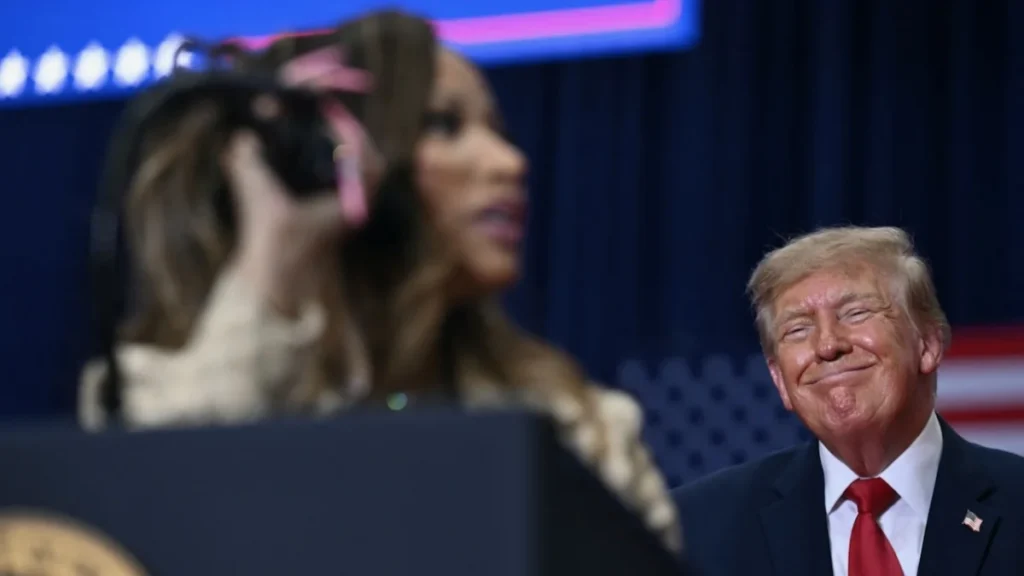
The speculation intensified later that afternoon at a campaign rally in Port Huron, Michigan. Minaj joined President Trump on stage, where the President addressed the audience. During his remarks, the President acknowledged Minaj’s presence by commenting on her physical appearance, specifically referencing her backside in a manner that drew both cheers from the rally crowd and immediate viral attention across digital media platforms. He requested that Minaj stand up to be acknowledged by the attendees, stating, "That’s hard to miss."
Background on the Press Secretary Role
The office of the White House Press Secretary is traditionally held by seasoned political operatives, journalists, or communications strategists. The primary duties include daily briefings, responding to press inquiries, and articulating the President’s policy objectives to the national and international media.
Historically, the role has been defined by a deep understanding of federal procedure and legislative mechanics. The suggestion of a career entertainer for this position represents a significant shift in strategy. It reflects a broader trend of "celebrity politics" that has been a hallmark of the Trump era, where the ability to dominate the news cycle and maintain direct engagement with the public is often prioritized over traditional administrative expertise.
Political analysts suggest that the administration may be looking to bypass the traditional press corps—who have maintained a contentious relationship with the current administration—by appointing a figure with a massive, pre-existing digital following. Nicki Minaj, known for her global influence on social media, boasts a combined following of hundreds of millions across platforms, offering a potential conduit to audiences that traditional news media often fails to reach.
Data and Social Media Reach
The potential appointment of Minaj brings a unique set of metrics to the executive branch. With over 200 million followers across Instagram, X (formerly Twitter), and TikTok, Minaj possesses a reach that rivals, and in some cases exceeds, that of major news organizations.
If the administration’s goal is to maximize direct-to-consumer communication, the utilization of a high-profile influencer could provide a tactical advantage. However, data from public relations experts suggests that while celebrity appointments drive high engagement rates, they often lack the technical depth required to manage the nuances of domestic and foreign policy crises.
A retrospective review of past press secretaries shows that the average tenure of an individual in the role has decreased significantly over the last decade, with increasing pressure to act as both a spokesperson and a surrogate for the President’s personal grievances. By selecting a figure like Minaj, the administration would be opting for a personality-driven communications strategy that prioritizes loyalty and cultural resonance over traditional legislative background.
Official Responses and Political Reactions
As of Monday morning, the White House press office has not provided a formal statement confirming whether an official transition is underway. However, internal sources suggest that the communications team is weighing the benefits of a non-traditional candidate against the potential for political fallout.
The opposition has been quick to criticize the suggestion, characterizing it as a sign of the degradation of institutional standards. Opposition spokespeople have argued that the role of a press secretary requires a level of accountability that is incompatible with the entertainment industry’s culture of performance. Conversely, supporters of the administration have lauded the move, viewing it as a "disruption" of the Washington establishment.
From a policy standpoint, the reaction from the broader GOP establishment has been muted. Some senior officials have expressed concerns privately, fearing that such an appointment would make it difficult to maintain professional rapport with diplomatic counterparts and foreign press agencies.
Analysis: Implications for Institutional Governance
The potential appointment of a celebrity to a cabinet-adjacent role raises fundamental questions about the future of political communications. The transition from the era of the "professional spokesperson" to the "influencer spokesperson" represents a shift in how the government values information dissemination.
- Direct Communication vs. Traditional Gatekeeping: By utilizing a celebrity, the administration effectively bypasses the "gatekeepers" of traditional journalism. This strategy creates a feedback loop where the message is curated by the performer rather than filtered through objective inquiry.
- The "Spectacle" Factor: As evidenced by the rally in Michigan, the focus of the discourse shifted from the administration’s policy goals to the interpersonal dynamics between the President and the guest. This shift underscores the difficulty in maintaining a serious policy narrative when the platform is used for entertainment.
- Credibility and Institutional Trust: The long-term impact on the credibility of the White House press office remains to be seen. Historically, the Press Secretary serves as the "voice of the people." Should that voice be replaced by an artist whose career is built on artistic expression and personal brand, the definition of institutional authority may undergo a permanent transformation.
Future Outlook
The next 72 hours will be critical in determining whether the administration intends to move forward with this nomination or if the remarks were intended as a strategic diversion to dominate the weekend news cycle. Regardless of the outcome, the events of this weekend have already served as a case study in the evolving landscape of American politics.
As the White House navigates this transition, the focus will likely remain on whether the administration can effectively manage the competing demands of policy governance and the relentless requirement for public engagement. Should Minaj be confirmed, the precedent set for future administrations would be profound, essentially blurring the lines between government communication and the global entertainment industry.
For now, the capital remains in a state of speculation, waiting to see if the next press briefing will be conducted from behind the familiar podium by a career diplomat, or if the role has indeed entered a new, unprecedented era of celebrity-driven administration. The move, if realized, would confirm that the current administration remains committed to its unconventional methods, prioritizing cultural dominance and direct-to-base messaging above the traditional norms of Washington’s bureaucratic culture.