
The latest episode of Saturday Night Live (SNL) UK has sparked significant public discussion following a biting satirical opening sequence that targeted the current political and royal landscape. By focusing on the media appearances of Prime Minister Andy Burnham and the Prince of Wales, the sketch program highlighted the increasing intersection between high-level governance, royal public relations, and the demands of modern entertainment television.
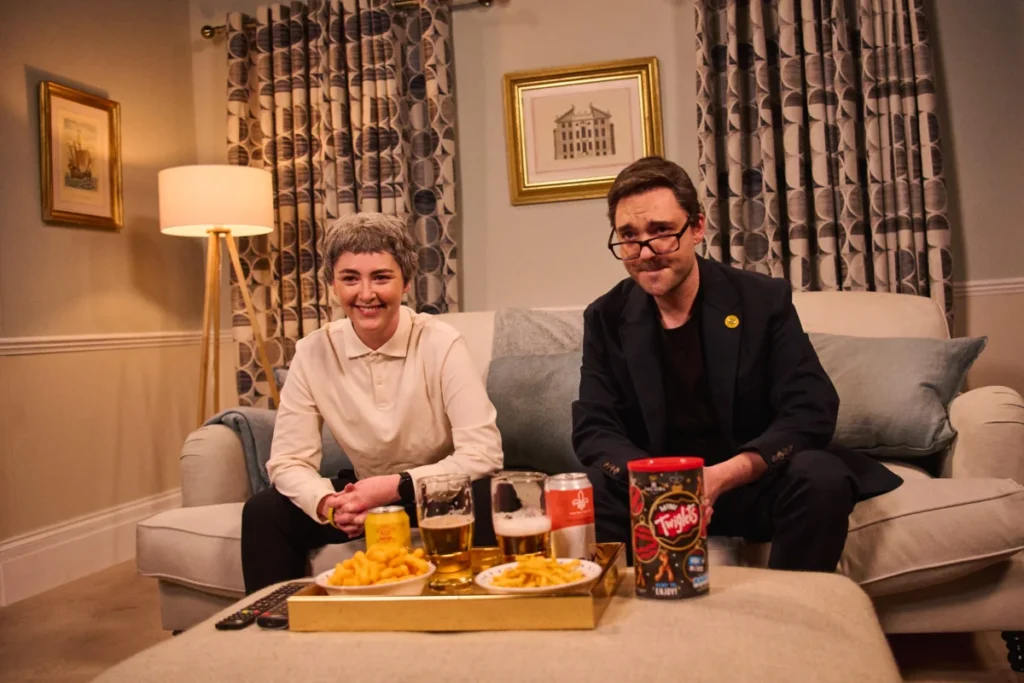
The broadcast, which aired this weekend on Sky and the streaming service Now, utilized caricature to critique the perceived performative nature of contemporary public figures. The segment featured George Fouracres portraying Prime Minister Andy Burnham and Emma Sidi appearing as Liverpool Mayor Steve Rotheram. The pair were depicted mimicking the format of the popular reality television program Celebrity Gogglebox, a setting intended to emphasize the tension between genuine political leadership and the requirement for politicians to appear "relatable" to the electorate.
The Anatomy of the Sketch
The opening sequence established a narrative where the Prime Minister and the Liverpool Mayor were seen lounging on a sofa, surrounded by a curated selection of snacks designed to project an image of an ordinary, approachable citizen. The dialogue specifically lampooned the Prime Minister’s efforts to cultivate an accessible public persona. In one notable exchange, the Burnham character insisted he possessed "all the types of crisps a relatable bloke would have in their house," a clear jab at the carefully managed aesthetics of political branding.
The meta-humor continued as the characters discussed the show itself. When the character of Mr. Rotheram expressed his admiration for SNL UK and suggested he would enjoy being impersonated by the show, the Burnham caricature retorted with skepticism, questioning why a comedy show would bother depicting a figure with such a low public profile. This self-deprecating humor served as a critique of the relevance of local government officials in the national cultural consciousness.
Satirizing the Royal Public Image
Following the Gogglebox parody, the sketch shifted focus to an imagined appearance of the Prince of Wales on The Graham Norton Show. The production featured Jack Shep as the veteran Irish presenter and Freddie Meredith as Prince William. This segment was particularly noteworthy for its pointed commentary on the scrutiny surrounding the Royal Family, particularly regarding the ongoing estrangement between the Prince and his brother, the Duke of Sussex.

In the skit, Norton—a presenter known for his "cheeky" interviewing style—posed a direct question about whether Prince Harry had "reached out" during the week. The fictionalized Prince William responded with a dismissive "shut up," capturing a frustration that the public often suspects lies beneath the stoic veneer of royal engagements. The skit reached its climax when the Prince attempted to discuss men’s mental health, only to be abruptly ejected from his seat via the show’s famous "red chair" mechanism—a device typically reserved for audience members who bore the presenter with their anecdotes. This served as a sharp critique of how serious advocacy work can be overshadowed by the demands of light entertainment.
Political Context and the "Crisis Management" Narrative
The episode also integrated a segment involving the reality series The Traitors, which the Prime Minister’s character used as a metaphor for his own rise to power. The dialogue referenced "spicy backstabbing and plotting," drawing a cynical parallel between the high-stakes game show and the nature of internal party politics and government formation.
This sequence was interrupted by a guest appearance from Paddy Young, who played a "future self" of the Prime Minister. In a science-fiction twist, the future Burnham warned his younger counterpart of an impending national cyber attack. The solution provided by the future self—advising the public to purchase an extra tin of beans—offered a commentary on the perceived simplicity or absurdity of government crisis communications. The sketch concluded with the Prime Minister pledging to the audience, "With god as my witness, I will tell the country to buy some beans," a line that underscores the satirical intent to portray political rhetoric as increasingly detached from substantive reality.
Broader Implications and Media Criticism
Beyond the political sketches, the program’s "Weekend Update" segment turned its attention to the Royal Family once more, addressing the recent news regarding Thomas Markle Sr. The inclusion of such sensitive topics highlights the role of sketch comedy as a medium for testing the boundaries of public discourse. By weaving together allegations of private misconduct with the broader "royal news" cycle, the show positioned itself as an observer of the increasingly blurred lines between private tragedy and public consumption.
The use of satire to address serious societal issues—such as cyber security threats, the mental health of public figures, and royal family tensions—is a tradition in British comedy that dates back to the era of Not the Nine O’Clock News and Spitting Image. However, the modern context of 24-hour news cycles and social media scrutiny provides a different environment for these jokes to land. When political leaders engage in reality television, they open themselves up to a level of scrutiny that traditional press conferences do not permit.
Public and Official Reaction
While there has been no official statement from 10 Downing Street or Kensington Palace regarding the episode, the segment has sparked a broader debate about the role of media in humanizing—or dehumanizing—political figures. Political analysts note that for a Prime Minister, the balance between appearing "human" and appearing "capable" is precarious. By participating in formats like Gogglebox, leaders hope to bypass the filter of traditional news media to reach younger, less politically engaged demographics. Yet, as SNL UK illustrated, this strategy invites parody that can be equally, if not more, damaging to one’s reputation.
The effectiveness of this type of satire is often measured by its ability to tap into the public’s latent skepticism. By presenting the Prince of Wales’s advocacy for mental health as something that could be discarded for a laugh, the show tapped into a vein of cynicism regarding the sincerity of public figures. Whether or not these portrayals influence public opinion, they undeniably contribute to the narrative shaping of the figures involved.
Chronology of Events
- Early October 2026: Initial reports emerge regarding the filming of the SNL UK special featuring various high-profile political and royal caricatures.
- October 25, 2026: The full episode is broadcast on Sky and released via the Now streaming platform.
- October 26, 2026: Social media clips of the "red chair" segment and the "tin of beans" prophecy go viral, generating significant debate regarding the limits of political satire.
- October 27, 2026: Industry observers begin to weigh in on the impact of "reality show politics" and the subsequent satirical backlash.
Analysis: The Evolution of Political Satire
The inclusion of the Thomas Markle Sr. allegations in the "Weekend Update" segment demonstrates that the program is willing to move beyond mere political caricature into the realm of social commentary. This shift is consistent with the global trend of late-night talk shows and sketch programs acting as a "fourth estate" of sorts, where information is disseminated through the lens of comedy.
For the Prime Minister, the "bean" prophecy—while clearly intended for comedic effect—touches on a genuine anxiety regarding national security and the government’s capacity to handle crises. By mocking the potential for a cyber attack, the show reflects a public sentiment that finds government warnings increasingly difficult to take at face value.
The Prince of Wales’s segment, meanwhile, addresses a different issue: the exhaustion of the public with royal controversies. By forcing the character of the Prince to endure the red chair, the showrunners suggest that the public’s patience with royal narratives is limited, and that even the most well-intentioned messaging can be rejected if it is perceived as part of a tiresome media cycle.
Conclusion
The latest SNL UK episode serves as a significant case study in how modern television navigates the intersection of politics, monarchy, and comedy. By utilizing recognizable tropes from popular culture—such as Gogglebox, The Graham Norton Show, and The Traitors—the program successfully held a mirror up to the current political climate. Whether these portrayals will affect the actual public standing of the figures involved remains to be seen, but the broadcast has undoubtedly solidified its place as a relevant, if provocative, voice in the national conversation. As the boundaries between entertainment and governance continue to dissolve, the role of satire in holding power to account—or at least, holding it up to ridicule—will likely remain a vital, albeit contentious, part of the British media landscape.