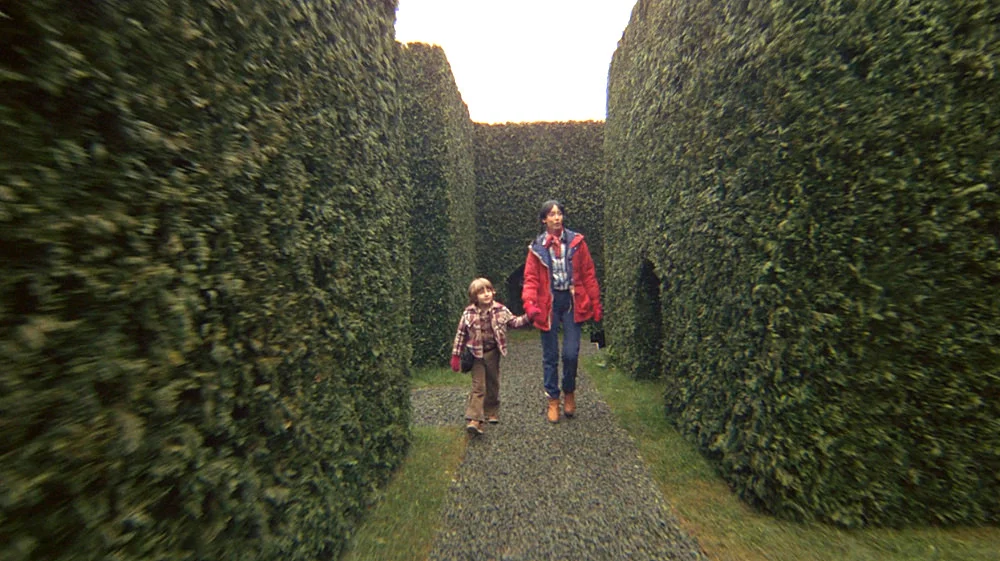

Stanley Kubrick’s 1980 cinematic adaptation of Stephen King’s bestselling 1977 novel, The Shining, remains one of the most culturally enduring, critically scrutinized, and fiercely debated motion pictures in the history of the medium. Starring Jack Nicholson, Shelley Duvall, Scatman Crothers, and Danny Lloyd, the film has achieved a rare dual legacy: celebrated globally as a masterpiece of psychological horror, yet routinely dismissed by its own author as a deeply flawed adaptation. This dichotomy has fueled more than four decades of critical discourse, positioning Kubrick’s film not merely as a horror classic, but as a complex cinematic puzzle box that continues to command analysis across architectural, psychological, and theoretical dimensions.
Chronology and Production Background
The genesis of The Shining dates back to the late 1970s, following the massive commercial and critical success of Stephen King’s novel. Warner Bros. acquired the film rights, and Stanley Kubrick, seeking a project that would allow him to combine commercial viability with rigorous formal experimentation, chose the property. Pre-production began in 1978, with principal photography commencing in May 1979 at Elstree Studios in England, where massive interior sets were constructed.
Kubrick’s notoriously exhaustive and exacting directorial style drastically extended the production schedule, which ran for over a year, wrapping in April 1980. The film premiered in the United States on May 23, 1980. Initial critical reception was mixed; while certain reviewers praised its visual ambition and atmospheric dread, others found it cold, overly ambiguous, and frustratingly detached from the emotional stakes of King’s source material. Over time, however, critical consensus inverted completely. Today, The Shining is universally ranked among the greatest films ever made, serving as a watershed moment in the horror genre.

The Adaptation Divide: Kubrick versus King
At the heart of the film’s contentious legacy is the fundamental creative chasm between Stanley Kubrick and Stephen King. King’s novel is a deeply personal, supernatural thriller rooted in themes of alcoholism, generational trauma, and the literal possession of a father by malevolent external forces. In contrast, Kubrick systematically dismantled King’s plot machinery, discarding the supernatural bombast, changing key character traits, and shifting the narrative focus from external haunting to internal psychological collapse.
Stephen King has expressed his disdain for the adaptation on numerous occasions, arguing that Kubrick created a cold, unfeeling machine where warmth and human empathy should reside. From King’s perspective, Nicholson’s character, Jack Torrance, appears unstable from the very first frame, robbing the narrative of the tragic descent into madness that the novel meticulously constructs. Furthermore, Kubrick’s ambiguous framing of the supernatural elements—leaving the viewer to question whether the ghosts of the Overlook Hotel are genuine apparitions or manifestations of shared psychosis—alienated purists of the original text.
However, film historians and cineastes argue that Kubrick’s departures elevated the material from a conventional ghost story into a timeless cinematic essay on isolation, domestic abuse, and the unreliability of human perception. By refusing to provide definitive answers, Kubrick transformed the text into an open-ended psychological mirror.
Architectural Impossibility and Mise-en-Scène
One of the most remarkable aspects of The Shining is its mastery of spatial disorientation. Production designer Roy Walker and Kubrick meticulously constructed the sets of the Overlook Hotel to be intentionally impossible from an architectural standpoint. Rooms feature windows that could not logically exist given the exterior layout, hallways loop back on themselves in nonsensical geometric configurations, and doors open onto solid walls or non-existent corridors.

Rather than representing careless continuity errors, these meticulous inconsistencies are deliberate stylistic choices designed to induce subliminal unease in the audience. Viewers often experience a creeping sense of dread long before any supernatural occurrences manifest on screen. The expansive, sterile beauty of the hotel lobby, the claustrophobic corridors traversed by young Danny on his Big Wheel, and the deeply depressing aesthetic of the caretaker’s apartment all contribute to an atmosphere of inescapable confinement. Through lighting, unsettling sound design, and unconventional set construction, Kubrick weaponized space itself, making the Overlook Hotel an active participant in the psychological breakdown of the Torrance family.
Reassessing Shelley Duvall’s Performance
Few performances in cinematic history have been as intensely scrutinized, misunderstood, and subsequently re-evaluated as Shelley Duvall’s portrayal of Wendy Torrance. Historically overshadowed by Jack Nicholson’s iconic, scenery-chewing descent into homicidal rage, Duvall’s performance has increasingly been recognized as the emotional anchor and technical triumph of the film.
In traditional horror cinema, maternal figures facing supernatural threats—such as Ellen Burstyn in The Exorcist or JoBeth Williams in Poltergeist—operate as heroic, resilient defenders of their children, serving as the primary point of view for the audience. Duvall’s Wendy subverts this trope entirely. From the outset, Wendy is portrayed not as a warrior mother, but as a woman already deeply unspooled by years of domestic strain, isolation, and emotional abuse. Her interactions are characterized by a defensive masking of her own dread and depression, moving through the hotel with the fatalistic resignation of someone trapped in an untenable reality.
Kubrick’s framing of Wendy aligns closely with the subjective perspective of Jack Torrance: she is depicted as a source of irritation, childlike dependence, and constant interruption. Duvall successfully threads an extraordinarily difficult needle, portraying a woman who lacks agency long before an axe breaks through the door.

Decades of Hollywood lore have surrounded the production, heavily emphasizing tales of psychological distress inflicted upon Duvall by Kubrick to extract such an authentic performance—notably the infamous baseball bat stairwell scene, which reportedly required 127 takes. However, contemporary film analysis seeks to separate these sensationalized accounts from Duvall’s actual artistry, recognizing that her performance was a masterclass in vulnerability, exhaustion, and psychological realism. Duvall herself frequently noted in later interviews that while the shoot was undeniably grueling, she deeply respected Kubrick’s vision and the artistic collaboration they shared.
The Psychological Interpretation and Broader Implications
Beyond the supernatural narrative, The Shining invites a rigorous reading as a purely psychological study of familial breakdown. The film presents three individuals—a struggling, resentful writer prone to alcoholism and domestic violence, a traumatized and emotionally fragile mother, and a young child experiencing severe dissociative episodes—voluntarily sealing themselves inside an isolated environment during the dead of winter.
By deliberately cultivating ambiguity, Kubrick constructs a framework where every terrifying event can be interpreted as the parallel psychological unraveling of the Torrance family. Aside from a few anomalous events—such as Jack’s release from the locked pantry—the narrative functions as a harrowing exploration of cabin fever, mental deterioration, and the cyclical nature of domestic abuse. This clinical realism makes the film arguably more terrifying than a traditional monster movie, grounding its horror in the fragile, breakable nature of the human mind.
As decades pass, The Shining continues to inspire documentaries, academic symposia, and exhaustive visual essays analyzing its set design, color theory, and historical subtexts. Far from exhausting its cultural capital, Kubrick’s masterpiece remains a towering achievement in film history—a testament to the power of cinematic ambiguity, rigorous formal control, and the enduring friction between source material and auteur interpretation.