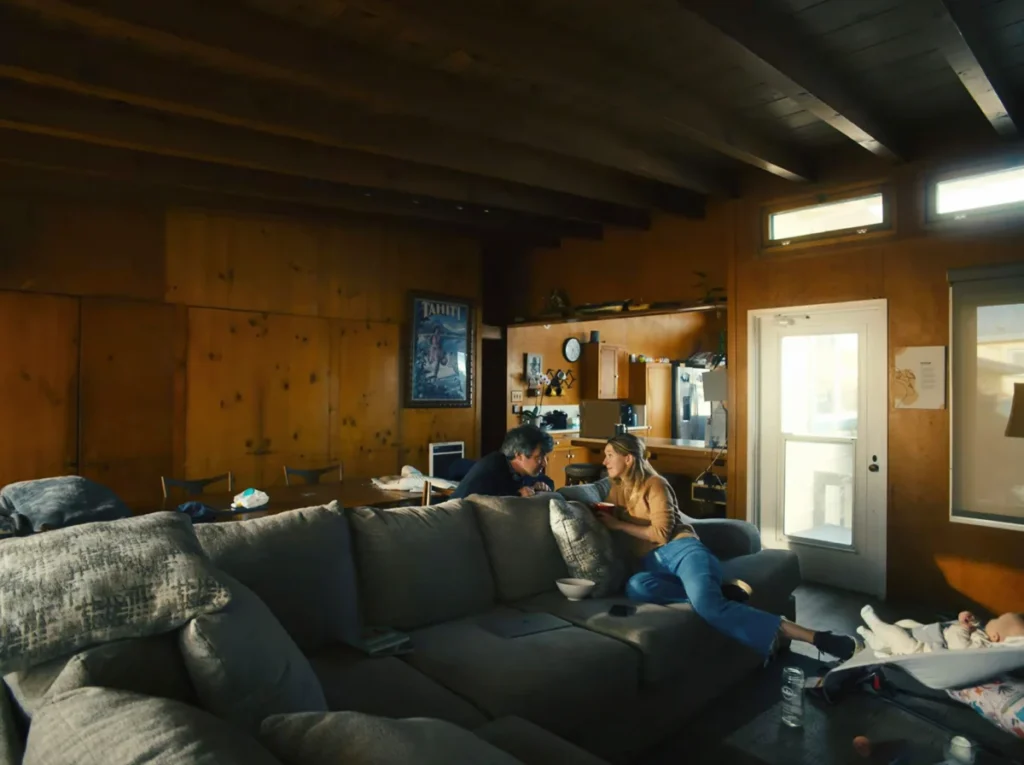

The three-hour documentary You Can See Everything, directed by the acclaimed filmmaking duo Lance Oppenheim and Nathan Fielder, has ignited a fierce debate regarding the boundaries of documentary ethics and the malleability of public image. At its center is Elizabeth Holmes, the disgraced founder of Theranos, whose meteoric rise and subsequent fall from grace remains one of the most significant corporate scandals of the 21st century. The film, which chronicles the final month of Holmes’s freedom before she began an 11-year prison sentence for fraud, presents a paradoxical portrait of a woman who was once the world’s youngest self-made female billionaire. By inviting a camera crew into her domestic life in a modest, rented beach house near San Diego, Holmes appears to be attempting a final, desperate act of narrative reconstruction.
A Chronology of Deception and Relocation
The trajectory of Elizabeth Holmes’s residency history serves as a window into the careful cultivation of her public persona. In 2014, at the height of Theranos’s purported success, Holmes was portrayed in a seminal New Yorker profile as a minimalist ascetic. The narrative insisted she lived in a sparse, two-bedroom condo in Palo Alto, eschewing the trappings of wealth to focus entirely on her mission to revolutionize blood testing. This framing proved to be a critical component of her "visionary" brand.

In reality, however, the truth was far more opulent. Investigations later revealed that Holmes was simultaneously living in a sprawling, 9,000-square-foot French provincial mansion in Atherton, California. Purchased in 2013 for $9 million alongside her partner and former Theranos executive Ramesh "Sunny" Balwani, the property featured crystal chandeliers, extensive formal gardens, and a detached guesthouse. The discrepancy between the "austere" public narrative and the reality of her private life mirrors the broader deception that defined her professional career.
As the legal net tightened around her, Holmes shifted her living situation to the Green Gables Estate in Woodside. Between 2021 and 2022, while facing trial, she resided on the 74-acre property, which houses a 10,000-square-foot historic mansion originally commissioned by Mortimer Fleishhacker in 1911. The estate, featuring multiple pools and a tennis court, stood in stark contrast to the narrative of a woman humbled by the legal system. It was not until the lead-up to her May 2023 incarceration that she relocated to the more "relatable" coastal cottage near San Diego, the primary setting for the Fielder-Oppenheim documentary.
The Anatomy of the Documentary Lens
In You Can See Everything, the viewer is presented with a version of Elizabeth Holmes that is stripped of the black turtlenecks and the manufactured baritone voice that became her signature. Instead, the film offers scenes of a mother rocking her child, performing domestic chores, and maintaining a stance of total innocence. Throughout the three-hour runtime, Holmes consistently asserts that she has never told a lie, a claim that directly contradicts the factual findings of federal prosecutors and the testimonies of former Theranos employees.

The film also captures the presence of Billy Evans, her partner and a hotel heir, whose role in the documentary is frequently that of a handler. Evans is observed micromanaging interactions, intervening when the camera crew’s inquiries touch on sensitive topics, and attempting to steer the narrative away from the criminal conviction. This dynamic has drawn comparisons to the "staged" nature of reality television, leading critics to question whether the documentary serves as a genuine look at a life in transition or as a carefully curated PR exercise.
Supporting Data and Legal Context
The legal fallout from the Theranos collapse remains historic. In November 2022, after a lengthy trial, Holmes was sentenced to 135 months (11.25 years) in federal prison. Her conviction on four counts of wire fraud and conspiracy involved defrauding investors of hundreds of millions of dollars by falsely claiming that her company’s proprietary blood-testing technology could perform comprehensive diagnostic tests from a single drop of blood.
The financial impact of her actions was devastating to investors, including high-profile figures who collectively lost massive sums. The subsequent sentencing of Sunny Balwani to 12 years and 11 months in prison further solidified the judicial conclusion that the fraud was a systematic, top-down operation. Despite this, the documentary highlights the psychological resilience—or perhaps the profound delusion—of the subject. The film’s inclusion of scenes where Holmes is seen as an ordinary, overwhelmed mother acts as a strategic counter-narrative to the "fraudster" label. By placing her in a setting that mimics the domestic lives of millions of Americans, the filmmakers highlight the inherent tension between the public villain and the private individual.

Reactions from Whistleblowers and Industry Observers
The response to the film from those who played a role in the exposure of Theranos has been one of skepticism. Tyler Shultz, a key whistleblower who risked his career to reveal the company’s failures, has noted that the documentary feels like a continuation of the same tactics Holmes used to deceive the media a decade ago.
"She is doing the exact same thing she did with the New Yorker," Shultz stated in a recent analysis. "She constructs an environment that forces the viewer to reconcile their perception of the ‘criminal’ with the ‘human’ they see on screen."
The psychological implications of this are significant. Experts in behavioral science have noted that the "halo effect" and the use of domestic imagery are potent tools in image rehabilitation. By choosing to be filmed in a state of vulnerability, Holmes shifts the focus from the technical details of the fraud to the emotional impact of her impending separation from her family.

Broader Implications and Ethical Questions
The release of You Can See Everything raises profound questions about the responsibilities of documentary filmmakers. Is it the duty of the filmmaker to present an objective reality, or is it acceptable to provide a platform for a subject to spin their own narrative, provided the context remains clear?
Fielder and Oppenheim have remained relatively tight-lipped about their specific intentions, stating that the question of "what her angle is" remains a subject of ongoing debate even among the production team. This ambiguity is perhaps the film’s greatest asset and its most dangerous flaw. By refusing to explicitly judge or narrate the subject, the film leaves the audience to decide whether they are witnessing a sincere reflection or a final, calculated performance.
The implications for future documentaries are clear: as public figures—even those convicted of major crimes—become more adept at using media to reshape their legacies, the role of the investigative journalist becomes increasingly difficult. The "myth of the visionary" that Holmes successfully sold for years is now being replaced by a "myth of the misunderstood," and the media landscape must be prepared to navigate these competing narratives with extreme caution.

Ultimately, the residence in Del Mar, like the Palo Alto condo and the Woodside estate, represents a specific stage in the ongoing story of Elizabeth Holmes. Whether she is in a $135 million mansion or a $9 million beach cottage, the consistent thread remains her ability to command the focus of the public eye. As the documentary continues to draw viewers, it serves as a stark reminder that in the age of the curated self, the truth is often the first casualty of a well-edited frame. The film does not provide closure to the Theranos saga; rather, it extends the narrative, ensuring that the debate over Holmes’s motivations will continue long after the final credits roll.