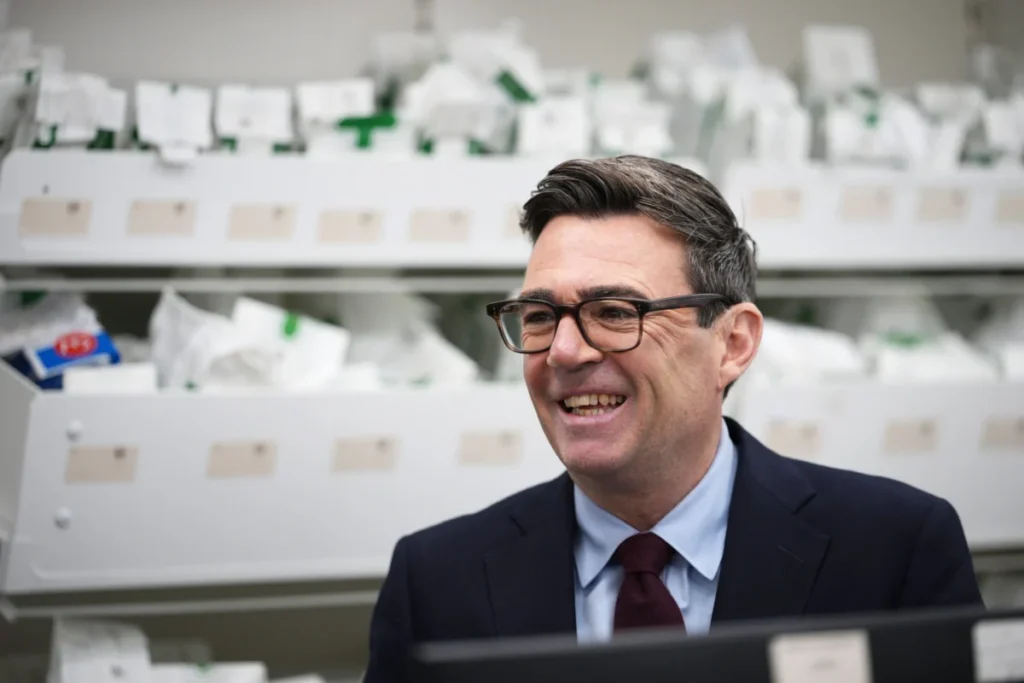

In a move that has sparked a national conversation about the intersection of governance and popular culture, Prime Minister Andy Burnham became the first incumbent occupant of 10 Downing Street to feature on the popular Channel 4 programme Gogglebox. Seated on a sofa alongside his long-time political ally, Liverpool City Region Mayor Steve Rotheram, the Prime Minister participated in the show’s special broadcast dedicated to the Stand Up To Cancer charity campaign. While the appearance was framed as a charitable effort to raise awareness for medical research, it has ignited a fierce debate regarding the optics of leadership, the nature of political communication in the digital age, and the current state of the UK government’s policy agenda.
The Appearance and On-Screen Persona
The broadcast saw the Prime Minister and Mayor Rotheram engaging in typical Gogglebox fashion: reacting to a selection of the week’s most viral television moments. The pair offered commentary on quiz shows, reality television, and heart-wrenching human-interest segments. During a screening of the BBC’s intellectual quiz show Only Connect, the Prime Minister demonstrated an unexpected familiarity with the royal household, correctly identifying the "Warden of the Swans" in response to a complex puzzle. His successful guess was met with a quip that the monarch would be "pleased" with him.
The chemistry between the two northern political heavyweights was apparent, with the duo exchanging banter that leaned heavily into their regional identities. At one point, while grappling with the complex mathematical puzzles presented by the show, the Prime Minister joked, "I’ll be alright at the Budget, me," to which Mayor Rotheram retorted, "Thank God that somebody can count." The light-hearted exchange was intended to showcase a more relatable, human side of the Prime Minister, though it arguably provided his political adversaries with the ammunition they needed to suggest a disconnect between his media strategy and the realities of his governance.
The Political Backlash and Opposition Criticism
The decision to participate in a light entertainment programme has drawn sharp rebuke from the Conservative opposition. Kemi Badenoch, the leader of the Conservative Party, spearheaded the criticism, questioning the timing and appropriateness of the Prime Minister’s media appearances. Badenoch’s critique specifically contrasted the Prime Minister’s presence on a primetime entertainment show with the government’s recent, more sober guidance urging the public to stockpile essentials—such as food and water—in preparation for potential national emergencies.
"I don’t mind them giving advice," Badenoch stated in an interview with the Press Association. "I worry that between the Prime Minister being on Gogglebox and then talking about stockpiling canned goods, they’re not actually doing the really difficult stuff that will protect the country."

This criticism underscores a broader strategic tension. While the Downing Street communications team likely viewed the Gogglebox appearance as an opportunity to reach demographics that traditionally disengage from formal political discourse, the opposition is framing it as a symptom of a government more concerned with image management than structural reform or national security.
Contextualizing the Prime Minister’s Media Strategy
Andy Burnham’s appearance on Gogglebox is not an isolated incident but rather the latest iteration of a deliberate media strategy that has defined his tenure. Since assuming the premiership following his internal rise to power, Burnham has frequently utilized non-traditional media channels to bypass the traditional Westminster press lobby.
His previous media engagements include a viral video in which he ranked pub snacks alongside Chancellor John Healey and a high-altitude interview conducted while standing on a stepladder. These efforts are part of a broader "politics of proximity" strategy, designed to present a leader who is accessible, culturally fluent, and capable of engaging in the same media ecosystem as the general public.
However, political analysts point out that such tactics carry inherent risks. In an era where trust in institutional politics is fragile, the line between "relatable" and "frivolous" is thin. By positioning himself as a regular viewer of The Celebrity Traitors and Only Connect, the Prime Minister risks being perceived as prioritizing personal brand cultivation over the gravity of his office.
Supporting Data and the Impact of the Charity Appeal
Despite the political controversy, the primary stated motivation for the appearance was the Stand Up To Cancer charity. The episode featured poignant, real-world stories of families navigating cancer diagnoses—a stark contrast to the levity of the television clips. Mr. Burnham, who was visibly moved by these segments, remarked on the "utter devastation" of the disease while expressing cautious optimism about the pace of medical research.
The data surrounding cancer research in the UK remains a priority for the electorate. According to Cancer Research UK, approximately one in two people will be diagnosed with cancer at some point in their lives, and the economic burden of cancer care on the National Health Service (NHS) continues to rise. By lending his platform to the Stand Up To Cancer campaign, the Prime Minister aimed to leverage his high profile to encourage donations and public engagement with the charity’s mission. Proponents of his appearance argue that the visibility provided by the Prime Minister likely resulted in a significant uptick in donations that a traditional ministerial press conference would fail to achieve.
Chronology of Events
The buildup to this appearance was marked by a series of political maneuvers that have defined the current administration:
- September 2025: Prime Minister Burnham solidifies his leadership following an internal party shift, signaling a move toward more localized, regional-focused governance.
- Early October 2025: The government issues updated guidance on emergency preparedness, advising citizens to maintain a "three-day supply" of essential items, which triggers widespread public debate.
- Late October 2025: Rumors emerge of a surprise cameo on a major entertainment programme.
- October 24, 2025: The Gogglebox episode airs, featuring the Prime Minister and Steve Rotheram.
- October 25, 2025: Official criticism from the Conservative leadership ensues, framing the appearance as a distraction from the government’s broader economic and security responsibilities.
Analysis: Implications for Future Political Communication
The move to feature on Gogglebox signals a paradigm shift in how political messaging is delivered in the UK. Historically, prime ministers have maintained a degree of separation from entertainment media, preferring structured interviews and press briefings. The current administration, however, seems to have concluded that the "Westminster bubble" is a failing medium for communication.
The implications of this are twofold. Firstly, it indicates that the government intends to lean into "soft power" to communicate its policy objectives, assuming that if they can capture the public’s attention through entertainment, they can steer the narrative on more serious issues later. Secondly, it highlights the increasing pressure on political figures to perform in a "content-first" landscape.
However, the risk remains that such appearances can become a lightning rod for criticism. When the Prime Minister jokes about being "alright at the Budget," he inadvertently invites the public to judge his performance on that very topic with increased scrutiny. If the upcoming budget fails to address the economic anxieties of the electorate, the memory of him sitting on a sofa, beer in hand, could prove damaging to his credibility.
Conclusion
As the dust settles on this unprecedented television appearance, the consensus remains divided. Supporters see a leader who is confident enough to step out of the ivory tower and engage with the public on their own terms, raising awareness for a critical charity in the process. Detractors see a leader who is out of touch with the existential anxieties of the nation, using the glamour of television to mask a lack of focus on the substantive issues facing the country.
Ultimately, the long-term impact of this appearance will not be measured by the ratings of the episode, but by whether the Prime Minister can balance this modern, media-savvy approach with the traditional demands of statecraft. As he prepares for the upcoming Budget, the Prime Minister will find that the British public—and his political rivals—are far less forgiving of his performance in the House of Commons than they are of his commentary on a televised quiz show. The "lightness" he claims to be leading with will soon be tested by the weight of fiscal reality.