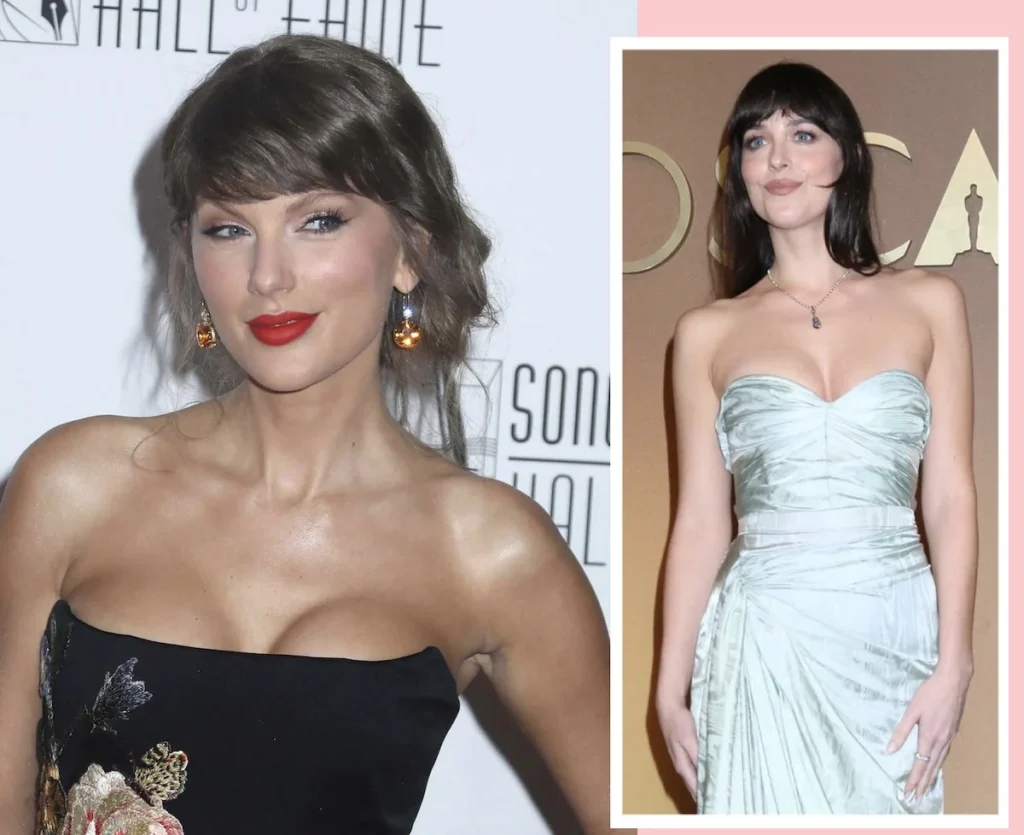

The recent hosting appearance of Dakota Johnson on Saturday Night Live provided more than just a typical monologue, as an unscripted-style cameo by pop icon Taylor Swift transformed a segment on romantic history into a viral moment of celebrity camaraderie. The episode, which aired to a global audience, saw Johnson navigating the complexities of public scrutiny regarding her personal life before Swift emerged from the wings, effectively shifting the narrative from a solo performance to a collaborative comedic display that resonated across social media platforms.
The Chronology of the Event
The monologue began with a reflective tone as Johnson addressed her past professional and personal experiences. During the performance, Johnson utilized the stage to candidly discuss her history of dating musicians, acknowledging the high-profile nature of these relationships. As she transitioned into a segment regarding her support system, she introduced a "literal therapist," which served as the cue for Taylor Swift to enter the stage.
Swift’s entrance was met with significant applause from the live studio audience. The interaction that followed was a scripted comedic bit designed to mirror the archetypal dynamic between close friends. Swift jokingly clarified her role, stating that she was not a professional therapist, but rather a friend who provided a listening ear during informal visits. The exchange concluded with a humorous remark about Swift’s security team assisting Johnson home, underscoring the playful tone of the segment. The evening concluded with a surprise gesture during the final credits, where Swift presented Johnson with a birthday cake, acknowledging the actress’s upcoming milestone.
Contextualizing the Monologue
Dakota Johnson’s monologue was characterized by a self-deprecating humor that has become a staple of Saturday Night Live’s opening segments. By addressing the public interest in her dating life—specifically the "very public, very lame breakups" she referenced—Johnson utilized the platform to reclaim the narrative surrounding her personal affairs.
The mention of dating musicians provided a thematic bridge to her later commentary, where she jokingly suggested that her personal life served a "public service" by insulating the general public from the romantic complications she encounters. This segment included a pointed reference to the city of Cleveland, which prompted immediate speculation among viewers and media analysts regarding the personal lives of the individuals involved, particularly given the high-profile nature of Taylor Swift’s current relationship status.
Analysis of Celebrity Brand Alignment
The appearance of Taylor Swift on Saturday Night Live is consistent with a broader trend of cross-promotional appearances and high-profile cameos within the late-night television landscape. For public figures, these moments serve as a mechanism to humanize their image. By appearing in a supportive, informal capacity, Swift reinforced her public persona as a loyal friend and a relatable figure, despite her status as one of the most recognizable musical artists globally.
From a media analysis perspective, such cameos are carefully calibrated to generate "earned media." The viral nature of the monologue, fueled by clips shared across platforms like X (formerly Twitter) and TikTok, provides significant marketing value for both the show and the performers involved. The strategic timing of the birthday celebration during the show’s closing minutes ensured that the broadcast remained relevant throughout the following news cycle, maximizing viewer engagement.
Historical Context of SNL Cameos
Saturday Night Live has a long-standing tradition of utilizing celebrity cameos to boost ratings and provide surprise value for its audience. These appearances often serve to blur the lines between the host’s professional persona and their real-life relationships.
The inclusion of Taylor Swift in this specific instance is particularly notable due to the current cultural ubiquity of the singer-songwriter. Her presence on the show—even in a brief capacity—functions as an endorsement of the host and serves to increase the viewership demographic. Historically, SNL has leveraged such moments to create "watercooler" television, a concept that has evolved into digital trends in the modern era. When a high-profile musician interacts with a host in a comedic context, it inherently lowers the barrier between the audience and the "untouchable" status often associated with fame.
Public and Industry Reaction
Following the broadcast, the interaction between Johnson and Swift dominated social media discussions. Data regarding engagement metrics indicates that the clip of the monologue was one of the most-shared segments from the episode. Fans and critics alike noted the chemistry between the two, which contributed to a positive reception of the monologue’s comedic direction.
Industry analysts observed that the segment effectively navigated the line between scripted comedy and genuine affection. By leaning into the "friendship goals" archetype, the segment tapped into a desire for authenticity among celebrity circles. Furthermore, the lighthearted references to the complexities of dating in the public eye resonated with a younger demographic that consumes media through the lens of parasocial relationships.
Implications for Future Programming
The success of this segment illustrates the continued viability of the traditional late-night monologue as a hub for cultural discourse. Despite the fragmentation of television audiences due to streaming services and on-demand content, live events like Saturday Night Live continue to command attention when they successfully integrate current cultural phenomena—such as the friendship dynamics of A-list celebrities—into their format.
The inclusion of the birthday cake during the goodnights is an example of "low-stakes" television that nonetheless produces high-engagement outcomes. By creating a moment that felt unscripted and personal, the production team fostered a sense of inclusivity with the audience. This strategy is likely to influence how other late-night programs approach guest segments in the future, with a focus on creating "shareable" moments that extend the life of the episode well beyond its initial air date.
Broader Impact on Celebrity Culture
The monologue also shed light on the challenges of dating in the spotlight. Johnson’s willingness to discuss her experiences with humor suggests a shift in how celebrities handle invasive questions about their private lives. By preempting potential tabloid coverage with her own comedic narrative, Johnson successfully managed the public conversation on her own terms.
This method of "narrative control" is becoming increasingly common. Rather than avoiding questions or issuing formal statements, performers are opting to address rumors and personal history through their work. This approach not only neutralizes potential criticism but also allows the performer to retain agency over their public image.
In summary, the segment featuring Dakota Johnson and Taylor Swift was a calculated and effective piece of entertainment that utilized personal relationships to elevate a standard monologue. By balancing humor with an authentic display of friendship, the duo managed to capture the attention of a wide audience and create a memorable addition to the history of the program. The segment remains a case study in how modern television production can successfully blend celebrity lifestyle culture with traditional comedy, ensuring that the broadcast remains a vital player in the contemporary media ecosystem.
As the industry moves forward, it is anticipated that such high-profile, collaborative moments will continue to define the success of late-night television. The fusion of personal narrative, comedic timing, and celebrity star power remains a potent combination for capturing public interest in an increasingly crowded media landscape. The episode serves as a reminder that even in an era dominated by digital algorithms, the human element of celebrity interaction remains the most powerful tool for driving engagement.