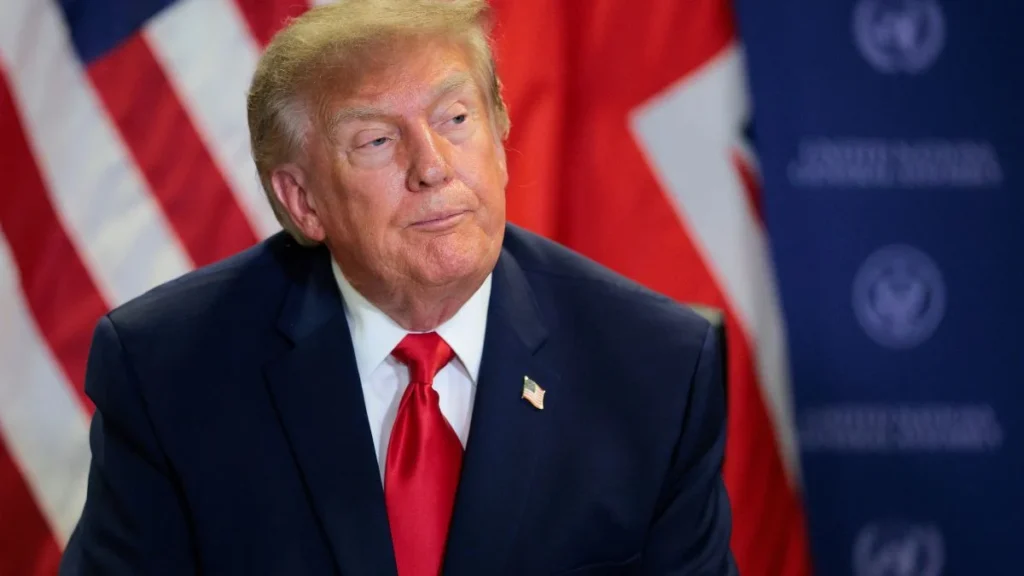

Normal operations for the White House television pool resumed on Friday following a tense standoff between the administration and major news organizations over press access. The dispute, which centered on the exclusion of CNN from the White House complex, temporarily disrupted the collaborative reporting mechanism that has long provided video and audio coverage of the American presidency to global news outlets. The resolution came after days of intense negotiations and a rare show of solidarity among the nation’s leading broadcast networks, ultimately resulting in the restoration of CNN’s press credentials and the full reinstatement of shared pool duties.
The controversy began when the administration implemented a restriction that barred CNN from entering the White House grounds, effectively blocking the network from participating in the rotating television pool. In response to the ban, the other four institutional members of the television pool—ABC News, CBS News, Fox News, and NBC News—made a unified decision to withhold their own participation. By refusing to step in and cover CNN’s assigned shifts, the networks effectively halted standard pool operations. This collective action created a significant blackout period during which independent television footage of presidential engagements was severely limited, impacting domestic and international broadcasters who rely on the pool system for primary source material.
The impasse concluded late Thursday when the administration reversed its position and restored CNN’s access to the White House complex. By Friday morning, the five-network consortium officially reactivated its shared coverage schedule. According to reports from media industry analysts, the resumption of duties was immediately put into practice. CNN assumed pool responsibilities at the National Archives, where President Donald Trump participated in a high-profile tour alongside Chinese President Xi Jinping. Concurrently, CBS News managed the White House grounds pool assignment. Administration officials confirmed that CNN’s credentials for the National Archives event had been officially approved and processed ahead of the schedule.
The mechanics of the White House television pool are vital to modern media infrastructure. Operating on a rotational basis, the five major networks share the responsibility of capturing and distributing official video and audio footage of the president’s public appearances, meetings, and statements when space constraints prevent the entire press corps from attending. When one network is blocked or sidelined, the operational integrity of the system is compromised. The decision by ABC, CBS, Fox, and NBC to stand alongside CNN underscored the interdependent nature of the White House press corps and demonstrated a collective defense of press accreditation standards. Without the pool feeds, news agencies worldwide faced substantial hurdles in broadcasting accurate, independent visual documentation of executive branch activities.
A History of Tense Relations Between the Administration and the Press
The recent dispute is part of a broader, well-documented history of friction between Donald Trump and mainstream media organizations. Throughout his political career, the president has maintained a combative stance toward news outlets that he frequently characterizes as producing biased or inaccurate coverage. This adversarial relationship has periodically manifested in formal restrictions on press access, creating ongoing debates regarding the boundaries of executive authority and the constitutional role of a free press.
During his first term in office, tensions frequently boiled over into public view. A notable precedent occurred in November 2018, when the administration revoked the hard pass of CNN chief White House correspondent Jim Acosta following a contentious exchange during a post-midterm election press conference. That revocation triggered a rapid legal challenge from CNN, leading a federal judge to order the temporary restoration of Acosta’s credentials while the lawsuit proceeded.
Earlier in that same presidential term, specifically in February 2017, the administration took steps to limit access to routine briefings. Sean Spicer, serving as White House press secretary at the time, barred journalists from several major media organizations—including CNN, The New York Times, the Los Angeles Times, Politico, and BuzzFeed—from attending an informal off-camera press briefing, commonly referred to as a "gaggle." In response, representatives from other news outlets, such as Time magazine and the Associated Press, boycotted the restricted session in solidarity with their excluded colleagues. These recurring incidents highlight a consistent pattern of administrative pushback against specific media organizations, setting the stage for the more recent confrontation over pool access.
Broader Implications for Journalistic Freedom and Executive Relations
The resolution of the latest CNN ban provides a momentary stabilization of relations between the executive branch and the journalistic community, yet the underlying tensions remain a defining characteristic of contemporary political reporting. Analysts note that conflicts over press credentials carry significant implications not only for the targeted networks but for the public’s right to access transparent, unfiltered information about government operations.
The episode also serves as a case study in the dynamics of press solidarity. In an era where media organizations often compete fiercely for ratings, scoops, and audience share, the unanimous refusal of the major networks to cross the picket line—so to speak—demonstrates a shared recognition of systemic vulnerabilities. Had the remaining networks capitulated and absorbed CNN’s workload, it could have established a precedent allowing administrations to selectively prune accredited newsrooms based on editorial content or political grievances. By maintaining a united front, the networks successfully defended the integrity of the pool system, reinforcing the principle that access protocols should be administered uniformly rather than applied as a tool of political leverage.
Looking forward, media watchdogs and constitutional scholars will continue to monitor the administration’s interactions with the press corps. While the immediate crisis has passed with CNN regaining its credentials and the National Archives and White House pool duties returning to a regular cadence, the underlying philosophical divide regarding the role and scope of executive transparency persists. As the administration navigates complex domestic and foreign policy landscapes—highlighted by high-stakes diplomatic engagements such as the recent visit by President Xi Jinping—the presence of a fully operational, unobstructed press corps remains a cornerstone of democratic accountability. The events of this past week illustrate that while access can be contested, the collective resolve of the journalistic community continues to play a critical role in preserving the mechanisms of public oversight.