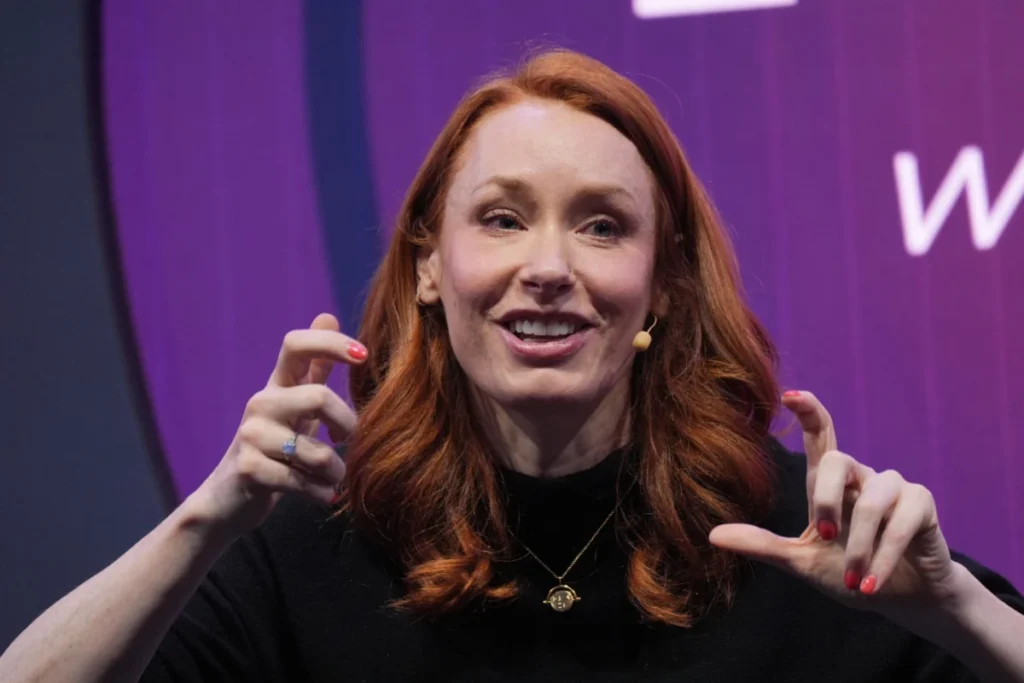

As the highly anticipated new season of the psychological reality phenomenon The Traitors approaches, one contestant is eschewing the typical social-climbing strategies of her predecessors in favor of a rigorous, data-driven approach that mirrors the historic code-breaking efforts of the Second World War. Fry, a self-identified "nerd" among the cast, has revealed that she has spent weeks obsessively auditing the footage and voting patterns of previous seasons, treating the game not merely as a social experiment, but as a complex mathematical puzzle.
The premise of The Traitors, which has become a global television juggernaut, involves a group of contestants—the "Faithfuls"—attempting to identify and banish a small group of "Traitors" hidden among them. The Traitors, in turn, meet in secret to "murder" the Faithfuls each night. Fry’s objective is to leverage statistical probability to gain an advantage in a game defined by paranoia, deception, and social volatility.
The Methodology of the Modern Sleuth
Fry’s strategy centers on the identification of anomalies in the banishment chamber, specifically focusing on what she describes as the "burn vote." In the context of The Traitors, a burn vote occurs when a player casts a ballot for a candidate who is unlikely to be banished, often to avoid drawing attention to themselves or to deflect suspicion away from a strategic ally.
"I’m here to fulfill the nerd quota for the year, and I’m taking my responsibility extremely seriously," Fry stated in an interview ahead of the premiere. "Have I gone back through the data of all the previous games and tried to find statistically significant patterns? Yes. Are any of these going to help me? Honestly, who knows?"
Fry posits that Traitors often utilize the burn vote in the opening episodes of the series to blend into the background while the Faithfuls are still attempting to organize their own lines of communication. By analyzing the voting history of previous seasons—notably referencing the performance of Cat Burns—Fry claims to have mapped out a behavioral blueprint that she believes could reveal the identities of this year’s saboteurs. However, she remains pragmatic about the inherent unpredictability of human behavior.
The Turing Connection and Statistical Probability
Perhaps the most ambitious aspect of Fry’s preparation is her claim to be utilizing methodologies inspired by Alan Turing, the legendary mathematician and cryptanalyst who was instrumental in cracking the Nazi Enigma code at Bletchley Park. While the mechanics of a reality television show are vastly different from the decryption of military ciphers, Fry is attempting to apply similar principles of pattern recognition to identify "signals" within the "noise" of the show.
"I am using the same bit of maths that Alan Turing used to crack the Enigma machine," she explained. "Whether it’s going to work or not, honestly, your guess is as good as mine. I’ve got spreadsheets coming out of my eyeballs. I close my eyes and it’s like there are numbers tattooed on the inside of my eyelids at the moment for how much I’ve been looking at them."
In the history of game theory, the application of statistical analysis to social games—such as poker or social deduction games like Werewolf—has been a subject of intense debate. Proponents argue that by stripping away emotional biases, players can make more rational decisions. Critics, however, argue that The Traitors is fundamentally an emotional game, where psychological manipulation often overrides logical consistency.
Chronology of the Social Deduction Phenomenon
The Traitors, which originated in the Netherlands as De Verraders in 2021, has since been adapted in over 20 countries. The format’s success relies on the delicate balance between the "Faithfuls" attempting to achieve consensus and the "Traitors" attempting to sow discord.

- 2021: The original Dutch version airs, introducing the concept of a "murder" and "banishment" cycle that creates high-stakes social pressure.
- 2022-2023: The format is exported globally, with versions in the United Kingdom, United States, and Australia becoming viral hits. The show is credited with revitalizing the primetime reality genre by focusing on psychological depth rather than mere endurance or athletic competition.
- 2024: Production teams focus on casting increasingly strategic players, leading to a "meta-game" where contestants enter the house having already studied the failures and successes of past seasons.
Fry represents the "new wave" of contestant: the "student of the game." Unlike early seasons, where participants were largely reacting to the environment in real-time, modern players arrive with prepared heuristics, risk-assessment frameworks, and, in Fry’s case, advanced data analysis.
Analytical Challenges and the "Faithful" Factor
Despite her extensive preparation, Fry acknowledges a significant hurdle: the chaotic nature of the "Faithfuls." In her assessment, the primary obstacle to any statistical model is the lack of consistency among the players who are not in on the conspiracy.
"The only problem with picking up on those signals is that the Faithfuls are such an absolute mess," she noted. "They are so all over the place that it’s really hard to pick out what the signal is. That’s just one example of a little bit of maths that I’ve got in my back pocket."
The implication here is that in a high-pressure environment, the collective behavior of the group often deviates from rational actor models. When the majority of players act on intuition, fear, or social influence, the underlying data points—such as voting patterns—can become corrupted, making it difficult for an analyst to determine if a specific vote was a calculated deception or a simple mistake.
Strategic Implications for Gameplay
Fry has explicitly defined her intended gameplay style as "careful, analytical," and—perhaps surprisingly—"mischievous." She maintains that while the math is a foundation, the social component of the game cannot be ignored.
"I really want to enjoy the ride and have fun being playful," she said. This suggests a multi-layered approach: using data to narrow down the suspect pool, but using social interaction to test those hypotheses in real-world scenarios.
Industry analysts watching the show’s progression note that this shift toward "hyper-preparedness" changes the nature of the broadcast. It transforms the show from a social drama into a competitive intellectual exercise. If Fry succeeds in identifying a Traitor using her spreadsheet-based methodology, it would represent a landmark moment for the show, potentially changing how future contestants approach the casting process and their pre-show preparation.
Broader Context and Media Reception
The inclusion of a contestant who prioritizes statistical literacy aligns with broader trends in reality media, where "gamification" has become a central pillar of success. Shows like Survivor and Big Brother have long seen the rise of "super-fans" who analyze edits, confessionals, and voting history to optimize their chances. The Traitors, by its very design, invites this level of scrutiny because it is built on the foundation of hidden information.
Psychologists have noted that the intense pressure of the show often causes even the most analytical minds to crumble. The isolation from the outside world, combined with the lack of sleep and the constant threat of "murder," can undermine even the most robust strategic frameworks. For Fry, the true test will not be her ability to manipulate data, but her ability to maintain that level of focus while under extreme psychological duress.
As the season unfolds, the audience will be looking to see if the "Turing method" provides a genuine edge or if it serves as a psychological crutch in a game where the only certainty is that everyone is lying. Whether or not her spreadsheets translate into a victory, Fry’s approach has already set a high bar for analytical gameplay in reality television. Her presence in the game serves as a reminder that in the modern era of entertainment, even the most spontaneous reality show can be transformed into a battleground for logic, probability, and, ultimately, the relentless search for truth.