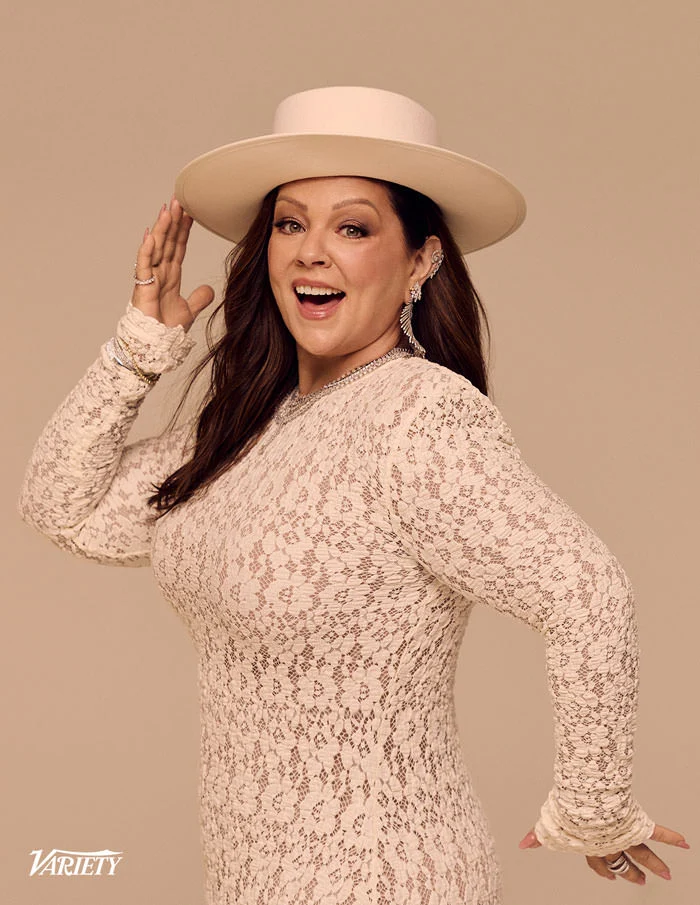

The entertainment industry continues to evolve as prominent figures reflect on their defining career milestones, personal growth, and the cultural shifts that have shaped Hollywood over the past several decades. In a comprehensive and revealing cover story for Variety’s prestigious Power of Women issue, acclaimed actress, writer, and comedian Melissa McCarthy sat down with Editor-at-Large Kate Aurthur. The wide-ranging discussion spanned multiple decades of McCarthy’s professional journey, touching upon her upcoming portrayal of Patsy Ramsey in the true-crime drama project The Murder of JonBenét Ramsey, the enduring legacy of the cultural phenomenon Bridesmaids, the rigorous demands of working on Gilmore Girls, and the harsh realities of facing entrenched misogyny during her formative days in the New York City stand-up comedy circuit.
Through these reflections, McCarthy offered readers a rare, deeply introspective look at the complexities of celebrity culture, the evolution of comedic cinema, and the systemic hurdles women have historically faced in the entertainment business.
Stepping Into the Most Complex Role of Her Career: The Murder of JonBenét Ramsey
Among the most compelling subjects covered in the interview was McCarthy’s upcoming venture into the true-crime genre. The actress is set to portray Patsy Ramsey, the mother of JonBenét Ramsey, the six-year-old American child beauty queen whose tragic and unsolved 1996 murder remains one of the most infamous cold cases in modern criminal history.
McCarthy admitted that her initial reaction to the role was one of immediate hesitation. She confessed that she initially viewed the project as an intrusion into a deeply painful historical event that had already been heavily commercialized by the media. However, after taking the time to thoroughly research the subject matter and reflect on the persistent cultural fascination surrounding the case, her perspective shifted dramatically.
Reflecting on the public’s treatment of the Ramsey family, McCarthy expressed profound sympathy for the immense scrutiny they endured. She likened the intense media frenzy and public speculation to a spectator sport, observing how the tragedy was consumed by the masses much like a sporting event, such as Wimbledon. Furthermore, McCarthy candidly addressed the ethical dilemmas of revisiting such a devastating chapter in American history, expressing a desire to humanize a family that she believes was stripped of basic human dignity by relentless tabloid journalism and public judgment.
When pressed on whether she formed a definitive personal conclusion regarding the unsolved homicide, McCarthy acknowledged that the physical demands of shooting the project required her to adopt a firm internal stance. Speaking candidly about her perspective, she shared her intuition that no member of the immediate family could have been responsible for the crime, noting that she felt compelled to establish that personal conviction to authentically ground her performance.

Cultural Reckoning and Retrospect on 1990s Media Culture
McCarthy’s involvement in The Murder of JonBenét Ramsey also served as an opportunity for personal introspection regarding the broader media ecosystem of the late 20th century. Looking back at December 1996, when the murder originally took place, McCarthy recalled being 26 years old and standing in a grocery store aisle, absorbing the sensationalized headlines splashed across tabloid covers. She specifically remembered reacting to coverage that criticized how Patsy Ramsey dressed her young daughter for pageants, falling victim to the prevailing narrative manufactured by the media at the time.
In the interview, McCarthy took personal accountability for participating in that collective judgment, recognizing how easily society is manipulated into stripping individuals of their humanity during moments of acute crisis. By taking on the role of Patsy Ramsey, McCarthy hopes to encourage audiences to reflect on their own complicity in consuming sensationalized tragedies, fostering a collective realization that emphasizes empathy over exploitation.
The Rigors and Triumphs of Gilmore Girls
Shifting from dramatic true crime to television history, McCarthy reflected on her breakout television role as Sookie St. James in the beloved television series Gilmore Girls. Created by Amy Sherman-Palladino, the comedy-drama series became a defining cultural touchstone of the 2000s, renowned for its rapid-fire dialogue, fast-paced scripts, and distinct auteur-driven vision.
McCarthy revealed that working on the series was intensely demanding, particularly given that it was her first major television job. She recalled receiving massive scripts running upwards of 93 pages, noting the strict protocol that forbade actors from altering even a single contraction, often receiving pages the very morning of a lengthy, continuous oner scene. Despite the grueling schedule, McCarthy expressed deep admiration for Sherman-Palladino’s unwavering dedication to her creative vision. She noted that operating as a female showrunner in Hollywood during that era required an uncompromising, "my way or the highway" mentality to protect the integrity of the show against network pressures. Ultimately, McCarthy credited this resilience for ensuring that Gilmore Girls stood the test of time, cultivating a deeply loyal audience base that continues to claim ownership of the fictional town of Stars Hollow.
Inside the Phenomenon and Joy of Bridesmaids
The conversation also celebrated one of the defining cinematic comedies of the 21st century: 2011’s Bridesmaids. Directed by Paul Feig and co-written by Kristen Wiig and Annie Mumolo, the film earned widespread critical acclaim, scored multiple Academy Award nominations, and fundamentally challenged prevailing industry assumptions regarding the commercial viability of female-led comedy ensembles.
McCarthy earned her first Oscar nomination for Best Supporting Actress for her role as Megan, a breakout performance that catapulted her to international superstardom. Recalling the production process, McCarthy described an atmosphere defined by unadulterated joy and relentless laughter. She shared humorous anecdotes about working alongside co-star Rose Byrne, detailing moments where cast members struggled to maintain their composure during takes. According to McCarthy, actors frequently found themselves hiding beneath tables or behind props simply to muffle their laughter after witnessing improvised comedic beats.
Despite the film’s eventual status as a box-office powerhouse—grossing over $288 million worldwide against a modest production budget—McCarthy revealed that the pre-release climate was fraught with skepticism from studio executives. She recalled being told by industry insiders that pre-sale tracking metrics and box-office projections "were not looking good." Refusing to let external pessimism dampen her enthusiasm, McCarthy maintained firm confidence in the comedic strength of the material.

The turning point arrived on opening night, when McCarthy, her husband Ben Falcone, and director Paul Feig gathered for dinner in Los Angeles before rushing to a local theater to witness the audience’s reaction firsthand. Standing at the back of a packed auditorium, McCarthy watched as the film played to continuous, roaring laughter, validating her initial belief in the project’s broad appeal.
Defending the State of Modern Comedy
Expanding her analysis to the current landscape of the entertainment industry, McCarthy strongly dismissed the recurring narrative suggesting that comedy films are no longer financially viable or culturally relevant. Characterizing this widespread industry belief as an absolute falsehood, she drew a direct parallel between comedy and musical expression.
McCarthy argued that comedy operates on a deeply intuitive, emotional level, noting that unique comedic voices cannot be standardized or forced into rigid corporate formulas. She expressed frustration with the increasingly corporate nature of modern studio filmmaking, lamenting a decline in executives and creators who are willing to trust their gut instincts rather than relying strictly on data-driven metrics. Furthermore, McCarthy critiqued individuals within the industry who attempt to dictate what constitutes humor without possessing a demonstrated comedic sensibility themselves, advocating instead for the preservation of distinct artistic styles.
Confronting Early Misogyny in the New York Stand-Up Scene
Before achieving mainstream recognition in film and television, McCarthy honed her craft in the fiercely competitive and often hostile environment of the New York City stand-up comedy scene. Reflecting on those foundational years, she described performing in cheap, open-mic rooms where performers were allotted brief, tightly regulated sets lasting a minute and a half to two minutes.
However, McCarthy noted that the experience was frequently overshadowed by overt misogyny from audience members. She recalled facing recurring harassment, specifically recounting how male hecklers in nearly every room would routinely demand that female performers expose their bodies. Confronted with this persistent hostile behavior, McCarthy adopted a direct strategy, realizing that the only way to silence the hecklers was to aggressively dismantle them through quick-witted crowd work. While this approach successfully established control over the room, McCarthy reflected with lingering ambivalence on the emotional toll of that dynamic, noting that reducing an heckler to silence ultimately left her feeling drained rather than triumphant.
Broader Implications and Industry Legacy
Melissa McCarthy’s candid reflections in the Variety Power of Women cover story offer a valuable window into the structural and cultural transformations that have defined Hollywood over the past thirty years. From confronting systemic misogyny in underground comedy clubs to navigating the high-pressure environments of network television and shattering box-office glass ceilings with studio comedies, McCarthy’s journey underscores the resilience required to sustain a multifaceted career in the entertainment sector.
As she prepares to tackle complex dramatic terrain with her portrayal of Patsy Ramsey, McCarthy continues to challenge both herself and her audience, reinforcing the enduring importance of empathy, artistic integrity, and creative autonomy in an increasingly corporate media landscape.