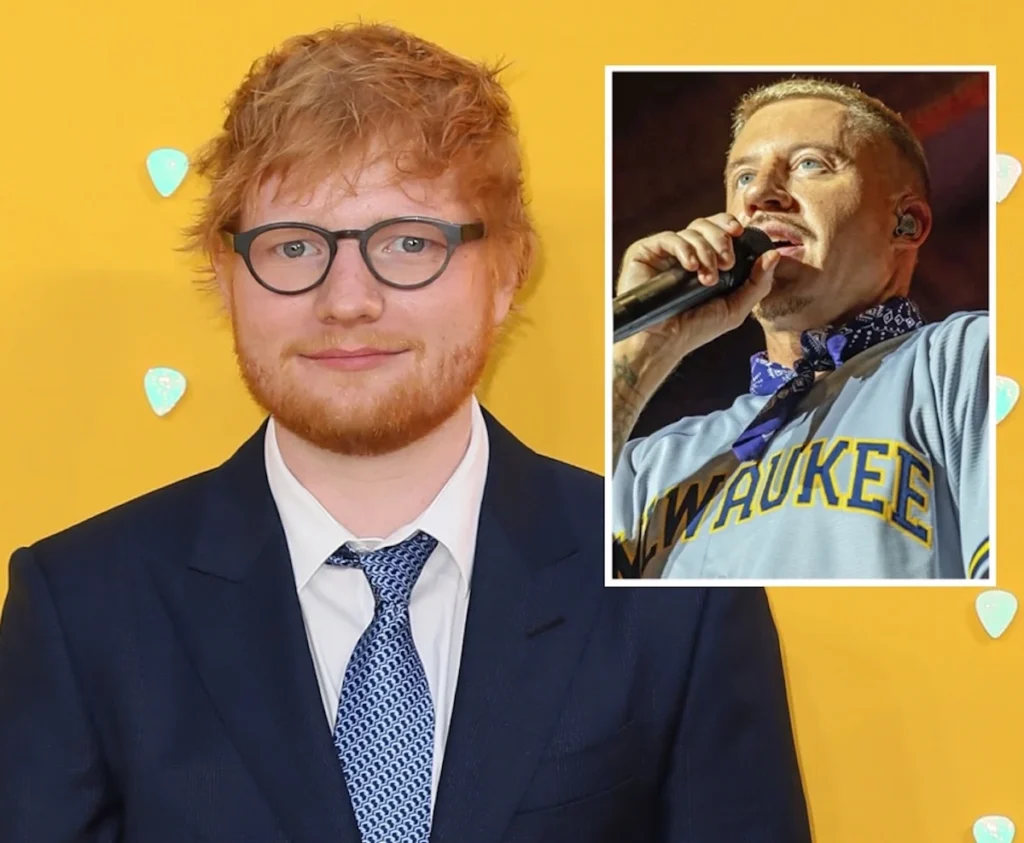

The atmosphere outside Philadelphia’s Lincoln Financial Field on Saturday night was defined by a stark juxtaposition: the exuberant anticipation of thousands of pop music fans and the intense, impassioned chants of demonstrators protesting the ongoing conflict in the Middle East. As concertgoers arrived for Ed Sheeran’s performance, they were met by members of the Philly Palestine Coalition and the activist group Shut Down D&Z, who picketed the venue to voice their opposition to the recent removal of rapper Macklemore from Sheeran’s tour.
The protest, which took place in the shadows of the stadium, served as the latest manifestation of a brewing controversy that has transformed a global music tour into a focal point for geopolitical tensions. While the Philadelphia Police Department confirmed that appropriate security measures were implemented to ensure the safety of both demonstrators and attendees, the presence of the picket line underscored the rising pressure on artists to take definitive stances on international crises.
The Chronology of the Controversy
The friction surrounding the tour began escalating in early September, following Macklemore’s vocal and financial support for Palestinian relief efforts. Macklemore, an outspoken critic of the current military operations in Gaza, had been scheduled to join Sheeran for a string of dates. However, the partnership came to an abrupt end, triggering a cascade of secondary consequences that have rippled through the music industry.
Following the rapper’s removal, several other opening acts—including Finneas and Lukas Graham—withdrew from the tour in solidarity with Macklemore. This left Sheeran as the sole performer for the remainder of the tour, a move that prompted intense public debate regarding the influence of corporate stakeholders and political pressures on artistic programming.
Macklemore has publicly alleged that the decision to remove him from the lineup was influenced by external pressure, specifically pointing toward Robert Kraft, the billionaire owner of the New England Patriots and a noted philanthropist. According to reports, the conflict reached a breaking point regarding the venue’s operational constraints and the political stance of the performer. While Sheeran has stated that he did not personally make the final decision to drop the acts, the optics of the situation have left the singer-songwriter in an unenviable position.
Ticket Demand and Economic Implications
The controversy has had a measurable impact on the commercial performance of the tour. In the days leading up to the Philadelphia show, data from secondary market platforms suggested a softening in demand for tickets. Reports from industry observers indicated that hundreds of seats remained available as of Saturday morning, a rarity for an artist of Sheeran’s stature.
Furthermore, the logistical challenges for fans were compounded by difficulties in securing refunds or reselling tickets through standard platforms. This market volatility highlights the financial risks performers face when their tours become entangled in highly polarized public discourse. For event organizers and venue operators, the incident serves as a case study in the potential for reputational risk to translate into tangible economic losses.
Sheeran Addresses the Crowd
Inside the stadium, the tension that had been building outside for hours finally came to a head. Addressing the crowd from the stage, Sheeran delivered a candid, albeit cautious, statement regarding the tumult. His remarks represented a departure from his typical performance style, which he noted has historically aimed to remain neutral.
"I don’t want to disappoint fans, and I’ve never wanted to be an activist musician, but this has put me in the middle of an important and passionate argument about freedom of speech and the most complex political issue on the planet," Sheeran told the audience. "My concerts have always been a safe space for everyone, and that matters hugely to me. Honoring my commitment to my fans is also completely essential to who I am, and that is why I’m here tonight on my own and continuing my current tour."
In an attempt to strike a balance, Sheeran also addressed the underlying conflict, characterizing the October 7 Hamas-led attack on Israel as "horrific," while simultaneously labeling Israel’s military response in Gaza as "unjustifiable" and "disproportionate." This effort to acknowledge both sides of the conflict highlights the immense difficulty artists currently face when navigating the "middle ground" of a deeply fractured political landscape.
Broader Industry Implications
The situation at Lincoln Financial Field is indicative of a growing trend in the entertainment sector, where the lines between cultural output and political advocacy have become increasingly blurred. In recent years, artists have faced mounting pressure from fans, activists, and sponsors to leverage their platforms to influence public policy or express solidarity with specific humanitarian causes.
The involvement of prominent figures such as Robert Kraft adds another layer of complexity. As owners of massive entertainment venues and professional sports franchises, such individuals occupy a space where business interests and personal political affiliations often intersect. When these interests clash with the vocal activism of performers, the result is a public standoff that tests the boundaries of free speech, contractual obligations, and the role of the artist in society.
For the music industry at large, the Sheeran-Macklemore incident underscores the necessity of clear communication between artists, their management, and the venues that host them. As activists become more adept at utilizing high-profile events to draw attention to their causes, the industry may need to develop more robust frameworks for managing political disagreements without sacrificing the stability of global tours.
Security and Public Safety Concerns
The Philadelphia Police Department’s handling of the protests on Saturday was largely focused on preventing physical altercations between concertgoers and demonstrators. With the use of megaphones, chants, and visible signage, the protesters aimed to disrupt the standard experience of the fans, challenging them to confront the realities of the humanitarian crisis in Gaza.
The chants of "Free Palestine" echoed near the subway stations and entry gates, serving as a reminder that for many, the conflict is not a distant geopolitical concern but a matter of daily urgency. The emotional intensity displayed by the protesters, as captured in social media footage and reports from the scene, suggested that the organizers viewed the concert not just as a music event, but as a platform for mass awareness.
Future Outlook for the Tour
As the tour continues, the question remains whether the remaining dates will see similar levels of organized dissent. Sheeran’s decision to continue as a solo act suggests a desire to minimize further friction with his touring partners and venue operators. However, the emotional toll and the logistical strain of the past week have undoubtedly altered the tenor of the tour.
The incident at Lincoln Financial Field serves as a watershed moment for Sheeran’s career, marking the first time the singer has been forced to navigate such a high-stakes public relations crisis. Whether his attempts to find a middle ground will satisfy his diverse fanbase—or whether the protests will continue to shadow his performances—remains to be seen.
Ultimately, the events in Philadelphia confirm that the global stage of popular music is no longer insulated from the volatile currents of international politics. As artists continue to command massive audiences, the demand for them to adopt stances on critical issues will likely intensify, forcing both performers and the corporate entities that support them to reconsider the intersection of culture, commerce, and conscience.
The industry will be watching closely as the tour proceeds, monitoring whether the current controversy will eventually subside or if it will serve as a catalyst for a more permanent shift in how major musical tours are managed in an era of heightened political sensitivity. For now, the takeaway for the music industry is clear: the era of the "neutral artist" is facing unprecedented pressure, and the cost of such neutrality is becoming increasingly difficult to quantify.