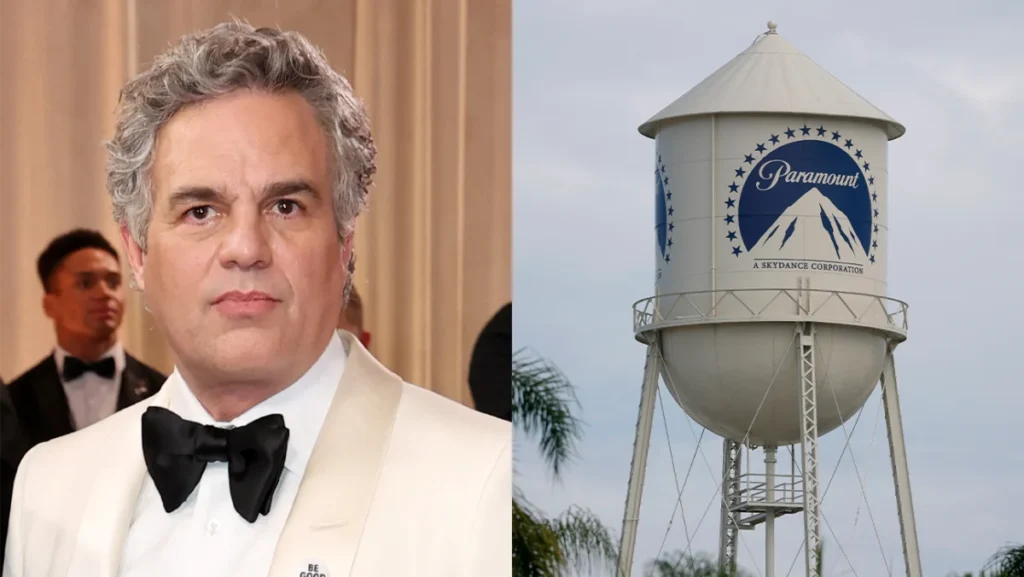

The high-stakes corporate battle over the future of Hollywood’s entertainment landscape has reached a critical juncture. As reports surface that Paramount is engaged in advanced settlement negotiations with a coalition of state attorneys general regarding its controversial acquisition of Warner Bros. Discovery, prominent actor and activist Mark Ruffalo has publicly implored California Attorney General Rob Bonta to stand firm. The ongoing antitrust litigation, spearheaded by 12 state attorneys general, represents one of the most significant regulatory challenges to media consolidation in recent years, drawing intense scrutiny from industry professionals, labor unions, and creative guilds alike.
The controversy centers on a massive corporate takeover that would merge two of the historic “Big Five” major motion picture studios. Critics of the transaction argue that such a consolidation would severely restrict market competition, reduce cinematic output, and ultimately harm consumers through higher subscription and ticket prices. While legal maneuvers and courtroom battles have defined the past several months, recent disclosures indicating that a settlement may be imminent have galvanized opponents of the merger, prompting a renewed wave of public pushback led by prominent cultural figures.
Ruffalo’s Public Plea and Grassroots Mobilization
Taking to the social media platform X, formerly known as Twitter, Mark Ruffalo issued a direct and impassioned plea to California’s top law enforcement official. The actor, known for his roles in major cinematic franchises as well as his active involvement in political and labor advocacy, warned the attorney general against conceding to corporate pressure.
"Don’t you dare @AGRobBonta, do not cave. 5,670 film makers put their necks on the line for you to fight this merger. Another 75,000+ and counting have signed to tell you not to concede in just 3 weeks," Ruffalo wrote. "You work for the people — the very people who will be hurt if you let this lousy deal filled with empty promises go forward."
Alongside his direct address to Bonta, Ruffalo shared a digital petition urging the public to demand that state authorities reject any potential settlement terms with Paramount. This digital mobilization builds upon months of mounting resistance from the creative community. Ruffalo has previously been outspoken in his opposition, having testified before a United States Senate hearing regarding the dangers of media consolidation and signing a high-profile open letter alongside dozens of fellow Hollywood actors condemning the proposed acquisition.
The actor’s intensified focus on the merger also coincides with previous controversies involving corporate affiliations. Earlier in the legislative and public relations battle, Ruffalo drew sharp criticism from Paramount representatives after highlighting connections between Oracle—founded by Larry Ellison, father of Paramount executive David Ellison—and the Israeli military. The exchange ignited a fierce debate regarding the boundaries of corporate accountability, activism, and accusations of antisemitism, though Ruffalo firmly rejected those allegations as dishonest and unfounded.
Chronology of the Antitrust Challenge
The legal roadmap leading to the current settlement talks has been marked by rapid and decisive judicial actions. The regulatory showdown officially commenced on July 13, when a coalition of 12 state attorneys general filed a comprehensive antitrust lawsuit in federal court. The legal challenge asserted that the merger between Paramount and Warner Bros. Discovery would fundamentally undermine market competition, leading to inflated consumer costs, fewer theatrical releases, and a diminished variety of content across both streaming platforms and traditional cinematic distribution channels.
At a joint press conference announcing the litigation, California Attorney General Rob Bonta emphasized the definitive nature of the state’s concerns. "There is no debate here: This merger will snuff out competition, drive up prices, diminish content quality, and produce fewer movies and shows each year," Bonta stated at the time.
The legal strategy employed by the state coalition yielded immediate results for opponents of the deal. On July 20, U.S. District Judge Araceli Martínez-Olguín issued a temporary restraining order, effectively pausing the merger while the antitrust claims were evaluated. Recognizing the gravity of the legal arguments presented by the states, the court extended the temporary pause on July 23. Facing mounting judicial scrutiny and the prospect of a prolonged courtroom battle, Paramount formally agreed on July 24 to voluntarily hold off on finalizing the acquisition until the court could render a definitive ruling on whether the transaction violated federal and state antitrust laws.
Financial and Market Implications of the Merger
The potential consolidation of Paramount and Warner Bros. Discovery represents a seismic shift within the global media and entertainment ecosystem. Industry analysts have long pointed to the pressures of streaming profitability, rising production costs, and shifting consumer habits as primary drivers behind the wave of corporate mergers. However, economists and labor advocates warn that consolidation of this magnitude inevitably leads to widespread workforce reductions, reduced opportunities for independent creators, and a monopolization of intellectual property.
The coalition of states opposing the transaction argues that combining two of the industry’s foundational studios creates an entity with disproportionate market power, capable of dictating terms to theater owners, streaming competitors, and creative talent alike. A settlement between Paramount and the state attorneys general—if finalized—could potentially include structural remedies, licensing agreements, or operational concessions designed to appease antitrust regulators without entirely blocking the transaction. Conversely, folding on the lawsuit without stringent safeguards could trigger severe political and legal blowback from the tens of thousands of industry professionals who have mobilized against the deal.
Official Responses and the Corporate Stance
Corporate representatives for Paramount have consistently defended the transaction as a necessary evolution in a highly competitive and rapidly changing global media market. Company executives have argued that the combined enterprise will possess the technological infrastructure and financial resilience required to compete effectively against dominant technology conglomerates and international streaming giants.
Regarding the heated public rhetoric surrounding the deal, Paramount has previously condemned tactics it views as crossing ethical lines. In response to Ruffalo’s earlier social media commentary touching upon corporate leadership and international geopolitical conflicts, a Paramount spokesperson issued a formal statement denouncing the inclusion of such arguments in a commercial dispute.
"We are, as always, troubled when antisemitic tropes are invoked in purported service of a business dispute," the Paramount statement read in part. "Words like ‘genocide’ and ‘apartheid,’ applied to a corporate transaction, aren’t just wrong — they’re a bridge too far, and they cheapen the very real suffering those words are meant to describe. This doesn’t deserve a response in kind — and to be clear, we don’t tolerate prejudice of any kind, against anyone."
Ruffalo swiftly refuted the accusation, maintaining that his political critique was entirely focused on corporate governance, military technology contracts, and antitrust principles rather than identity or heritage. "The accusation that I am antisemitic is appalling and fundamentally dishonest," the actor fired back on X.
Broader Impact on the Future of Entertainment
As reports from The Wall Street Journal indicate that settlement discussions have reached an advanced stage, the ultimate outcome remains uncertain. Attorney General Rob Bonta and his state-level counterparts face immense pressure from both corporate negotiators seeking a path forward and creative guilds demanding protection for industry laborers and consumers.
The resolution of this antitrust battle will likely establish a critical legal precedent for how regulatory bodies evaluate massive media mergers in the digital age. Whether state authorities choose to maintain their hardline opposition in alignment with the thousands of filmmakers and artists petitioning against the deal, or opt to negotiate structured concessions with Paramount, the decision will profoundly shape the economic and creative realities of the entertainment industry for decades to come.