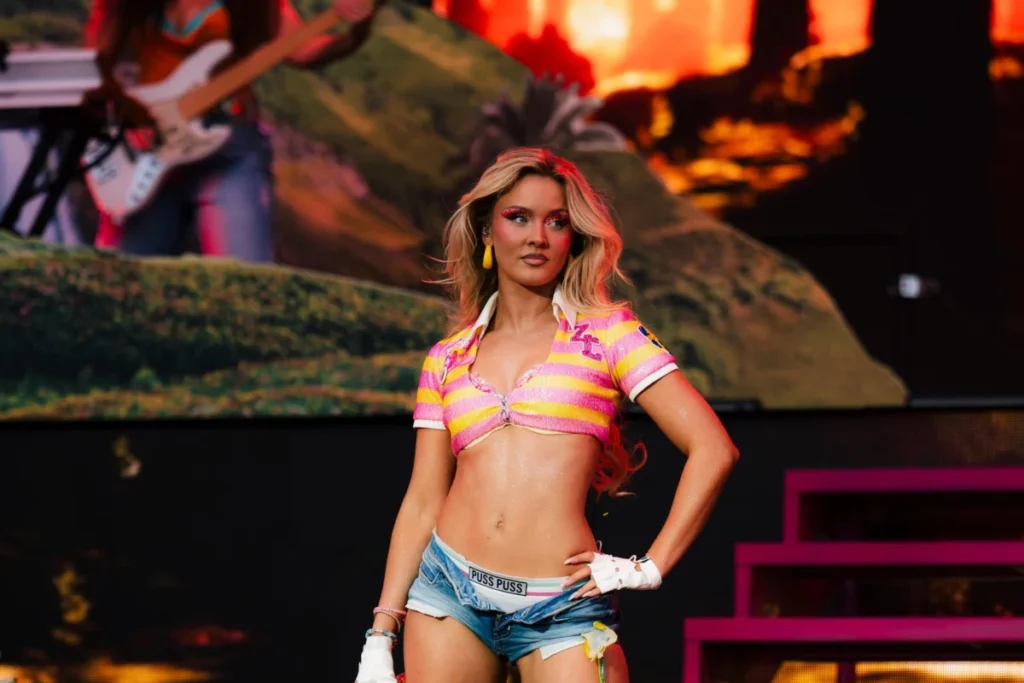

Pop star Zara Larsson has voiced strong condemnation against the White House following the unauthorized use of her chart-topping single Midnight Sun as the soundtrack for a controversial social media video highlighting Immigration and Customs Enforcement (ICE) operations. The digital clip, published on the official White House TikTok account, features footage of federal agents executing arrests and deportations, underscored by the provocative caption "Never ending deportations." This phrase appears to be a direct wordplay on the central lyrical theme of Larsson’s hit track, which references a "never ending midnight sun."
The incident marks the latest in a growing trend of musicians publicly objecting to government utilization of their copyrighted intellectual property for partisan political messaging and immigration enforcement campaigns. Larsson, known for her outspoken political views and global pop presence, quickly took to the platform to express her deep dismay and moral opposition to the pairing of her art with aggressive federal enforcement imagery.
A Visceral Response and Humanitarian Appeal
Responding via her personal TikTok account, Larsson opened her video with an "L" gesture before articulating her profound disappointment. Speaking directly to the camera with a somber demeanor, the Swedish singer-songwriter explained the emotional weight of witnessing her creative work co-opted in such a manner. "I’m just sad. My heart is heavy seeing that," Larsson stated, emphasizing that the human beings targeted by these policies share fundamental commonalities with citizens on all sides of the political debate.
Drawing from her own upbringing in Sweden, Larsson reflected on the privileges and security that shaped her early life, contrasting them with the precarious realities faced by migrants striving to establish stable futures. She underscored that the individuals depicted in the White House video—pointing specifically to a man dressed in construction attire—are real people striving for a better life.
Furthermore, Larsson expressed sharp dismay over the widening cultural phenomenon of transforming serious, life-altering geopolitical issues into trivial internet memes. She argued that such digital media strategies foster deep social division rather than genuine human connection. Concluding her video message with an explicit critique, she condemned the creators of the post for utilizing dehumanizing tactics to advance administrative objectives. Billboard reached out to the White House for comment regarding the licensing and usage of the track, though no official statement had been issued at the time of publication.
A History of Tensions Over Copyright and Messaging
This controversy is not an isolated incident between Larsson and the current administration’s social media division. Earlier in the year, the White House published a contentious video clip showcasing President Donald Trump dancing to Larsson’s commercial smash "Lush Life," overlaid with messaging intended to bolster public support for ICE and domestic law enforcement agencies.
In response to that initial post, Larsson utilized her Instagram Stories to disavow the association entirely. She forcefully declared her solidarity with immigrant communities and vocalized her opposition to the agency, writing candidly, "I f—ing hate ICE." Her consistent refusal to allow her catalog to endorse aggressive federal immigration policies highlights a broader friction point between the entertainment industry and political entities leveraging popular culture for policy advocacy.
Broader Industry Backlash Against White House TikTok Strategy
Larsson is far from the only high-profile artist to push back against the administration’s digital media practices. The controversy echoes a similar public dispute involving pop superstar Ariana Grande. Grande recently raised objections after her track "Bye" was featured in an official White House video highlighting ICE operations. In response to that deployment, Grande publicly condemned the association, characterizing the underlying content of the federal videos as "barbaric" and "inhumane," and asserting that her creative output should never serve to amplify state-enforced separations.
As federal agencies increasingly turn to short-form video platforms like TikTok to reach younger demographics and shape public narratives around border security and law enforcement, copyright holders and performing rights organizations face complex legal and ethical challenges. While the political utility of viral audio tracks is evident to media strategists, the resulting public relations fallout underscores the severe reputational risks when artists actively disavow state-sponsored agendas.
Commercial Success of Midnight Sun
The controversy surrounds a composition that has enjoyed immense commercial viability and cultural saturation throughout the year. "Midnight Sun" propelled Larsson to new heights on international music charts, securing the No. 13 position on the Billboard Hot 100. This achievement followed closely on the heels of her collaboration with PinkPantheress on the track "Stateside," which reached No. 6 on the same chart.
The song’s organic success on TikTok—where users frequently pair it with nature aesthetics, travel vlogs, and reflective content—makes its sudden repurposing for state enforcement videos particularly jarring for both the artist and her fanbase. Larsson originally conceived "Midnight Sun" as an ode to emotional connectivity, universality, and humanity’s relationship with the natural world, a conceptual foundation that stands in stark opposition to the imagery of detention and deportation.
Implications for Copyright Law, Digital Advocacy, and the Music Industry
The intersection of pop music and state-level political communication raises significant questions regarding copyright management, fair use, and digital licensing on social media platforms. Platforms like TikTok operate under umbrella licensing agreements with major performing rights organizations (PROs) such as ASCAP and BMI, which typically grant general performance rights for platform users, including verified institutional accounts. However, the commercial and moral rights of recording artists and songwriters often clash with government accounts utilizing trending audio features for explicit political advocacy.
Legal analysts note that while institutional accounts may navigate platform terms of service by utilizing built-in audio libraries, the unauthorized implication of political endorsement or the weaponization of artistic works for controversial state policies can invite severe public scrutiny. Artists are increasingly exploring legal mechanisms, cease-and-desist notices, and direct platform appeals to compel the removal of their master recordings from politically charged digital campaigns.
Looking forward, the ongoing clash between international pop stars and government social media units signals a permanent shift in how digital public relations are conducted. As artists leverage their massive follower bases to fact-check, critique, and disavow state messaging in real time, institutional accounts face mounting accountability regarding the provenance and ethical implications of the media they disseminate. For Zara Larsson and her peers, protecting the integrity of their artistic output remains a paramount priority, ensuring that creative works dedicated to human connection are not subverted into instruments of division.