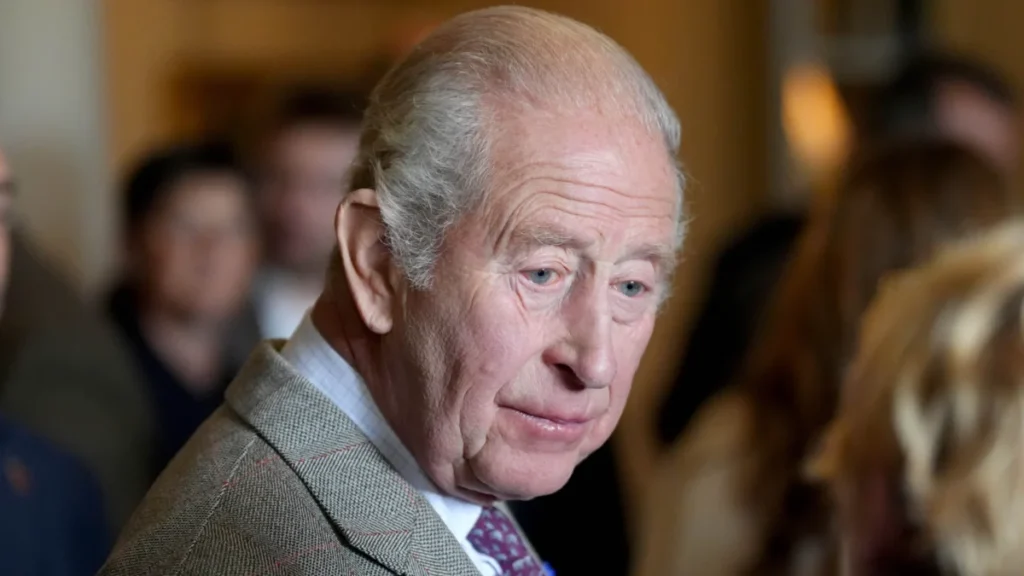

The British monarchy has once again found itself engulfed in a deeply personal and high-stakes public relations crisis, drawing King Charles III into an unexpected war of words with Charles Spencer, the 9th Earl Spencer and younger brother of the late Princess Diana. Ahead of the highly anticipated publication of Earl Spencer’s explosive forthcoming memoir, Swan Song: Diana, My Sister, a startling revelation from its pages has sent shockwaves through Buckingham Palace and reignited long-dormant public grievances regarding the events surrounding Princess Diana’s tragic death in August 1997.
The controversy centers on a specific, highly contentious recollection detailed in the memoir, in which Earl Spencer claims that the then-Prince of Wales made a callous and dismissive remark shortly after Diana’s fatal automobile crash in Paris. According to the excerpt, during a heated telephone exchange concerning the controversial decision to have 15-year-old Prince William and 12-year-old Prince Harry walk behind their mother’s coffin in the public funeral procession, King Charles allegedly unleashed a stream of pent-up frustration. Spencer writes that the future monarch hissed down the telephone line: "Rest assured, we’ll forget her soon enough."
This allegation has triggered a fierce backlash across the British media and among the public, where Princess Diana remains a revered and enduring cultural icon nearly three decades after her passing. In an extraordinary departure from standard protocol—which typically dictates a policy of dignified silence regarding critical literary works—Buckingham Palace issued a rare and pointed public statement to dispute the claim. The firm response has drawn immediate comparisons to past institutional crises, highlighting a recurring pattern in how the House of Windsor manages familial and public relations fallout during moments of intense scrutiny.
A Timeline of Grief and Contention: From the 1997 Tragedy to Present-Day Revelations
To understand the weight of the current dispute, one must examine the chronology of events that forged a deep rift between the royal family and the Spencer family, a rift that has periodically surfaced in the decades following Princess Diana’s death on August 31, 1997.
Immediately following the tragedy in Paris, global grief manifested in an unprecedented outpouring of public mourning outside Kensington and Buckingham Palaces. Millions of mourners left floral tributes, creating a sea of flowers that became the defining visual of late-20th-century British history. Amidst this national trauma, tensions arose behind closed doors regarding the logistics of the state funeral, scheduled for September 6, 1997.
Earl Spencer has long maintained that he fiercely opposed subjecting young princes William and Harry to the intense global scrutiny of walking behind the gun carriage carrying their mother’s coffin through the streets of London. In his memoir, Spencer recalls clashing with senior royals over the arrangement, arguing that it placed an intolerable emotional burden on the grieving adolescents. It was during these tense negotiations, Spencer claims, that the phone call containing the controversial remark took place.
For years, public perception of the funeral procession has remained critical of the royal establishment, a sentiment famously amplified by Earl Spencer’s searing eulogy at Westminster Abbey, where he famously promised that the Spencer family would actively protect William and Harry from the media circus that hounded their mother. The release of Swan Song: Diana, My Sister threatens to reopen these historical wounds, reminding the British public of a period when the monarchy faced its most severe existential crisis of the modern era.
Official Palace Responses and Echoes of Past Crises
Faced with mounting public outrage over the newly published excerpt, Buckingham Palace took the calculated risk of breaking its traditional silence. The official statement released to media outlets such as the BBC carefully cast doubt on the accuracy of Earl Spencer’s memory while maintaining a diplomatic veneer.
"While we do not comment on books as a matter of principle, His Majesty is mindful that the pain of fraternal grief can cloud reason, affect judgment and colour memory in ways others do not recognise, even many years after such a loss," the Palace statement read. Furthermore, representatives for the King argued that the alleged remark was "entirely out of character for a man with a deeply compassionate nature, who at the time was dealing with his own grief and that of their two sons."
Media analysts and royal commentators were quick to note the striking linguistic parallels between this latest statement and the response issued by the late Queen Elizabeth II in March 2021. Following the explosive Oprah Winfrey interview in which Prince Harry and Meghan Markle leveled accusations of institutional racism against unnamed members of the royal family, the late monarch famously diffused the tension with the phrase, "recollections may vary."
By employing a similarly measured yet firm phrasing, current royal aides are attempting to undermine the credibility of the narrative without engaging in a protracted public debate. However, experts note that such statements run the risk of keeping the controversy in the headlines longer than a standard "no comment" policy would dictate.
Broader Implications for the Modern Monarchy
The timing of this fresh controversy could not be more challenging for King Charles III and the wider royal family. The public quarrel erupted precisely as senior members of the firm were engaged in high-profile public engagements. King Charles, Prince William, and Catherine, Princess of Wales, have maintained a busy schedule of public appearances aimed at projecting stability and continuity. Concurrently, the return of Prince Harry to the United Kingdom for a series of engagements has already saturated the British tabloids with speculation regarding potential family reunions or continued estrangement.
The resurgence of the "Diana wars" underscores a persistent vulnerability for the House of Windsor: the public’s enduring sensitivity regarding the treatment of the late princess. Decades after her death, any narrative suggesting a lack of empathy or underlying hostility from senior royals toward Diana continues to evoke visceral public anger. For King Charles, whose popularity has fluctuated over the years and who is currently navigating his responsibilities as sovereign while undergoing cancer treatment, the distraction is both unwelcome and politically sensitive.
Moreover, the publication of Earl Spencer’s memoir highlights the ongoing challenge the royal family faces from within its extended network. Unlike authorized biographies or independent journalistic accounts, memoirs written by family members carry an air of intimate authority that is difficult for PR teams to effectively neutralize.
Fact-Based Analysis of Public Sentiment and Media Reaction
Reactions from the British press have been sharply divided along editorial lines, reflecting the broader societal polarization surrounding the institution of the monarchy. Tabloid publications have leaned heavily into the dramatic narrative of a royal family feuding behind closed doors, contrasting the compassionate public image cultivated by King Charles with the harsh words attributed to him in the book. Conversely, conservative commentators have urged caution, questioning the reliability of recalling emotionally charged conversations that allegedly took place more than 26 years ago.
From an analytical standpoint, the incident demonstrates that the ghosts of 1997 continue to exert a powerful gravitational pull on the House of Windsor. While King Charles has spent decades rehabilitating his public image—successfully ascending to the throne and securing widespread acceptance alongside Queen Camilla—memories of the late 1990s remain a political minefield.
As Swan Song: Diana, My Sister hits bookshelves globally, public relations experts anticipate that the media cycle will continue to test the Palace’s crisis management strategies. Whether the institution can successfully weather this latest storm by maintaining its dignified silence—or if further revelations will force additional defensive measures—remains one of the most closely watched dramas in contemporary British life.