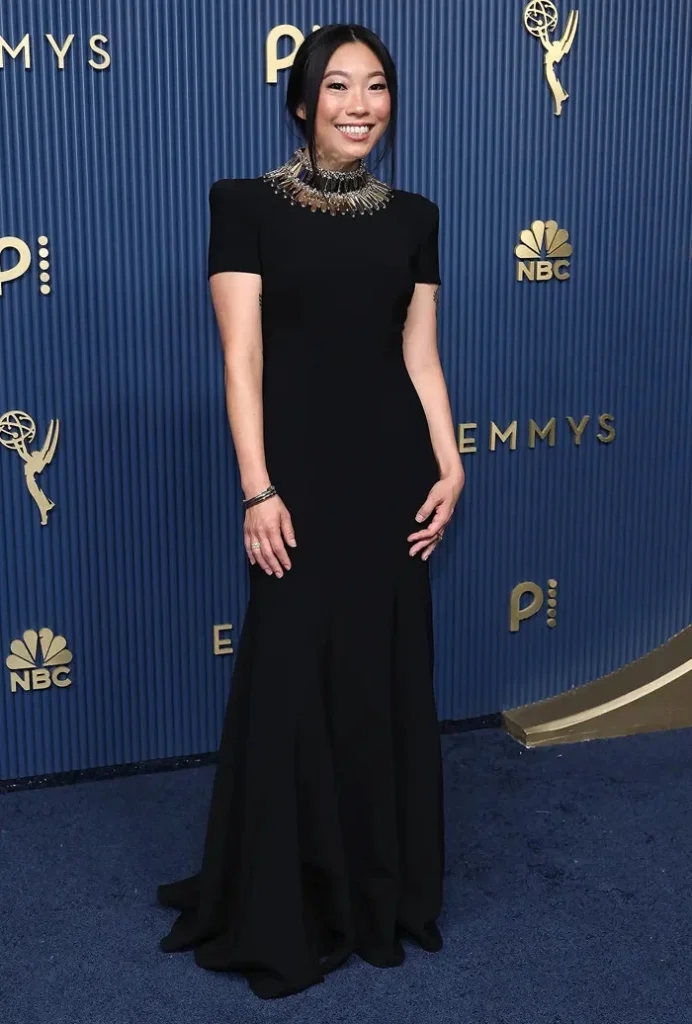

The 78th Primetime Emmy Awards, held on September 15, 2026, marked another milestone in television history, celebrating the finest achievements in the medium across streaming, cable, and broadcast networks. Beyond the accolades, statuettes, and emotional acceptance speeches, television’s premier night delivered a masterclass in red carpet fashion, establishing dominant aesthetic trends that dictated the evening’s visual narrative. Among the sea of vibrant hues, metallics, and avant-garde silhouettes, one overarching sartorial choice emerged as the undisputed favorite of the evening: the timeless, versatile, and commanding presence of black.

While the Little Black Dress (LBD) functions as the menswear equivalent of a tuxedo in formal settings, the 2026 Emmys red carpet showcased an unprecedented variety of interpretations. From haute couture interpretations evoking classical architectural forms to understated column gowns, television’s leading women utilized the neutrality of black to project sophistication, authority, and dramatic flair. Industry analysts noted that black ensembles accounted for roughly thirty percent of the prominent looks at the venue, reflecting a broader red carpet preference for understated luxury and architectural minimalism over fleeting novelty trends.

Deconstructing the High-Fashion Black Ensembles
The evening’s array of black garments featured creations from some of the world’s most prestigious fashion houses, drawing intense scrutiny from fashion historians, critics, and style enthusiasts alike. The range of design approaches highlighted both triumphs in tailoring and cautionary examples of over-embellishment.

Architectural Minimalism and Tailoring Triumphs
Several attendees opted for streamlined silhouettes that played on classic tuxedo elements and sharp tailoring. Lisa Kudrow captured attention in a Celine gown that offered a modern, razor-sharp interpretation of the lady tuxedo. Avoiding literal tropes such as traditional bow ties, the ensemble relied on precise cuts and immaculate proportions to achieve a commanding presence.

Similarly, Michelle Pfeiffer delivered a masterclass in evening wear, donning a Saint Laurent creation. Industry insiders praised the look as a benchmark of the evening, noting that the gown’s silhouette was perfectly tailored to her frame, elevated expertly by judiciously placed gold accents that broke the monotony of the dark fabric without compromising elegance.

In contrast, other interpretations of tailored black gowns met with mixed reviews. Amanda Peet’s Givenchy gown drew criticism for structural issues, specifically a restrictive bustline and stark white lining that detracted from the overall aesthetic. Meanwhile, Carrie Coon’s choice of Maison Margiela was described by style commentators as leaning overly austere, evoking a "Mother Superior" aesthetic that overshadowed the inherent craftsmanship of the garment. Constance Zimmer countered this with an Akris dress that offered a cleaner silhouette, though critics suggested finer straps would have elevated the design.

Embellishments, Textures, and Avant-Garde Risks
Black fabrics on the 2026 red carpet frequently served as canvases for complex textures, structural draping, and bold experimentation, yielding polarizing results among critics.

Awkwafina surprised fashion commentators by stepping away from her traditionally quirky styling to embrace a deeply elegant Jenny Packham creation. The gown, anchored by a striking and intricate collar, was widely lauded as one of the best-executed looks of the night, proving a departure into classical glamour that resonated with audiences.

Conversely, riskier choices faced heavy scrutiny. Julianne Hough’s Antonio Grimaldi gown featured a feather peplum that drew widespread disapproval for its overwhelming proportions. Keri Russell, typically a red-carept favorite, struggled to make a Khaite black leather gown work; stylists noted that the ballooning bodice and overly high neckline hindered an otherwise promising fabric choice. Odessa A’Zion’s archival Jean Plus Gaultier dress was similarly critiqued for an excess of dangling elements that cluttered the silhouette.

Other notable looks included Amy Poehler in Roland Mouret, a halter-strap design that critics felt lacked the necessary statement jewelry to anchor the look, and Grace Gummer in Dior, whose dress featured intricate white embellishments that prompted debate over whether they enhanced or detracted from the gown’s architectural shape. Emmy Rossum’s Julie de Libran Couture gown featured dramatic hair and makeup styling, though the dress itself was viewed as slightly overdesigned due to heavy lace trimming. Lisa Ann Walter embraced high-drama fashion in a Christian Siriano gown paired with statement-making gloves, a look that fashion chroniclers celebrated for its unapologetic theatricality. Hannah Einbinder in Calvin Klein Collection and Olivia Munn in Fforme rounded out the spectrum, with critics noting that while both adhered to safe tailoring, their respective looks ultimately felt understyled or lacking in distinctive flair.

Broader Implications for Awards Season Fashion
The prominence of black attire at the 2026 Emmy Awards underscores a shifting consumer and celebrity mindset toward sustainable, enduring fashion choices. Stylists working with top-tier talent have increasingly gravitated toward archival pieces and classic color palettes, signaling a move away from hyper-trendy, single-use garments that dominate fast-fashion cycles.

Furthermore, the prevalence of historical fashion houses—such as Dior, Saint Laurent, Givenchy, and Jean Paul Gaultier—on the 2026 red carpet reinforces the symbiotic relationship between television prestige and heritage luxury brands. As streaming platforms and traditional networks continue to invest heavily in prestige television, the promotional machine surrounding awards shows like the Emmys remains a critical economic engine for the global fashion industry.

With the 2026 television awards season officially underway, the bold statements made on the Emmy red carpet have set a high bar for forthcoming ceremonies. Whether future events will continue to favor the timeless elegance of black or pivot toward vibrant maximalism remains to be seen, but the September 15 gathering has firmly etched its place in the annals of modern red-carpet history.