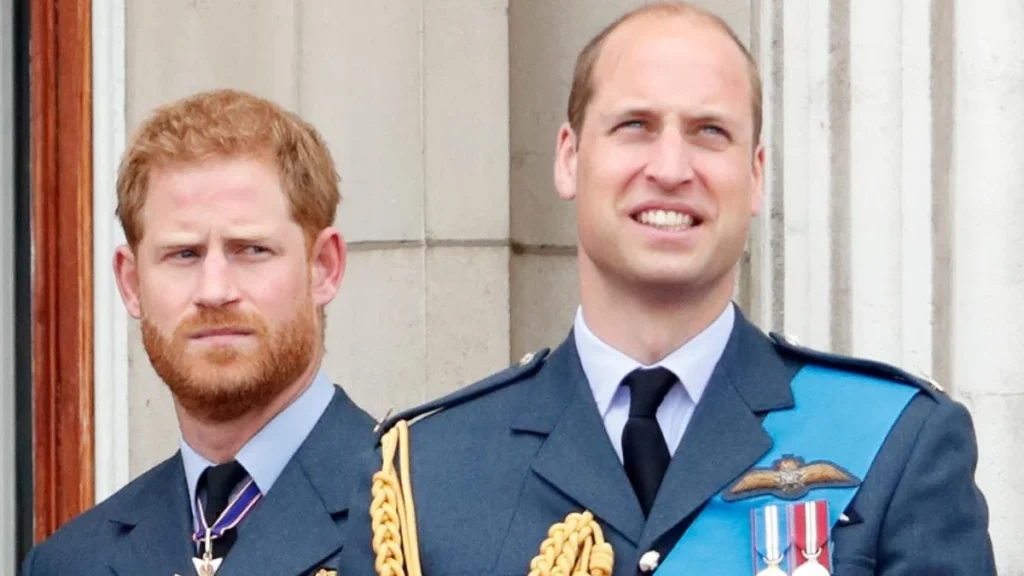

The ongoing estrangement within the British royal family has reportedly plumbed new depths following a decisive bureaucratic move from Buckingham Palace regarding the status of the Duke and Duchess of Sussex. According to recent reports stemming from diplomatic and palace circles, Prince Harry has privately placed the blame for his father’s hardline stance squarely on the shoulders of his elder brother, Prince William. The friction centers on a formal directive issued by King Charles III, which definitively closed the door on any potential "half-in, half-out" working model for the Sussexes following their return to the United Kingdom after a multi-year sojourn in California.
The development marks yet another chapter in the strained relationship between the royal siblings, whose public and private fallout has captivated global media audiences for years. While the official line from the palace has consistently emphasized administrative clarity and the maintenance of institutional boundaries, insiders suggest that the interpersonal dynamics at play are far more complex and deeply personal. As the monarchy navigates a period of profound transition under the reign of King Charles, the ongoing friction concerning Prince Harry and Meghan Markle highlights the enduring challenges of balancing familial relationships with the rigid protocols of the Crown.
Background Context of the Sussex Relocation and the 2020 Megxit Agreement
To understand the gravity of the recent palace communications, one must examine the foundational events of January 2020, widely referred to in British media as "Megxit." At that time, Prince Harry and Meghan Markle announced their intention to step back as senior working members of the royal family. The couple expressed a desire to carve out a progressive new role that would allow them to earn their own financial independence while continuing to support Queen Elizabeth II, the Commonwealth, and their various patronages.
However, a hastily arranged summit at Sandringham yielded a very different outcome. The late Queen Elizabeth II, alongside key advisors, determined that a hybrid model—whereby members of the royal family could represent the institution part-time while simultaneously pursuing commercial ventures—was untenable. The resulting agreement stipulated that the Sussexes would relinquish their "HRH" styles, step away from official military appointments, and cease carrying out royal duties on behalf of the Sovereign.
Despite this comprehensive settlement, questions surrounding the exact parameters of their status persisted, particularly as the couple established a new life in Montecito, California, with their children, Prince Archie and Princess Lilibet. Over the subsequent six years, the Sussexes launched various media projects, including a high-profile Netflix docuseries, a Spotify podcast deal, and Prince Harry’s bestselling memoir, Spare. Throughout this period, occasional rumors surfaced suggesting that the couple might seek a partial reconciliation or a more flexible arrangement with the institution, especially in the wake of Queen Elizabeth II’s passing in September 2022 and the ascension of King Charles III.
The Chronology of the Recent Palace Directive and Formal Guidance
The latest point of contention arose following the family’s relocation back to the United Kingdom, which prompted renewed speculation regarding their official standing within the royal hierarchy. In response to mounting inquiries from various stakeholders, the Crown took formal steps to eliminate any ambiguity.
According to reports, the Lord Chamberlain’s office issued formal guidance following explicit instructions from King Charles. The document was designed to address what officials termed "requests for guidance" regarding the status of the Duke and Duchess of Sussex. The primary objective of the directive was to ensure absolute clarity, explicitly stating that Harry and Meghan remain non-working members of the royal family and that any ongoing charitable or commercial endeavors are strictly private initiatives pursued independently of the Sovereign.
Sources close to the Duke of Sussex indicate that while Harry acknowledged the formal directive emanated from the office of the King, he firmly believed that Prince William was the principal architect behind the enforcement of the hardest possible line. The Prince of Wales was reportedly unyielding in his support of the palace’s restrictive stance, viewing any compromise on the matter as detrimental to the integrity of the institution. For Harry, this perceived intervention by his brother was interpreted as a deliberate effort to keep the door firmly closed, dashing any remaining hopes for a flexible reintegration into the royal fold.
Analysis of Prince William’s Institutional Stance and the Heir’s Perspective
Within elite circles of the British establishment, Prince William’s posture regarding the institution is viewed through the lens of preservation, duty, and long-term stability. As the heir apparent to the British throne, the Prince of Wales is heavily invested in maintaining the clear boundaries that define modern constitutional monarchy.
Analysts specializing in royal affairs note that William’s approach is heavily influenced by the lessons of the past. The late-20th-century controversies surrounding various members of the royal family underscored the dangers of institutional ambiguity. For William, the concept of a "half-in, half-out" model presents significant operational and reputational risks. Allowing individuals to simultaneously leverage royal status for commercial gain while retaining official privileges is seen by the Prince of Wales as an unacceptable compromise that could undermine public trust in the Crown.
Consequently, William’s reported backing of King Charles’s uncompromising directive is consistent with his broader vision for a streamlined, modernized, and strictly accountable monarchy. Sources suggest that the Prince of Wales views the Sussexes’ ongoing attempts to redefine their relationship with the family as a distraction from the core mission of the institution, particularly at a time when the monarchy is managing a reduced number of active working royals due to health challenges faced by both the King and the Princess of Wales.
The Role of the Lord Chamberlain and the Need for Institutional Clarity
The involvement of the Lord Chamberlain’s office in issuing the clarifying directive underscores the administrative seriousness with which the palace treats these matters. The Lord Chamberlain, the most senior official in the Royal Household, oversees the operations of the department and acts as the primary channel of communication between the Sovereign and the operational arms of the monarchy.
When the guidance was drafted, the explicit intent—as articulated by palace insiders—was to avoid doubt or confusion among government departments, international partners, charitable organizations, and the general public. In the years following their departure, instances had occasionally arisen where the lines between official royal patronage and the Sussexes’ private philanthropic work became blurred in public discourse. By issuing a definitive statement, the Palace sought to establish a bright-line rule: the Duke and Duchess of Sussex operate entirely outside the official working structure of the House of Windsor.
This administrative step, while framed as a routine measure of governance, inevitably carried profound symbolic weight. In the tightly controlled ecosystem of the British court, procedural documents of this nature are rarely issued without high-level consultation among key principals, making Prince Harry’s suspicion regarding William’s influence a logical deduction within the context of palace politics.
Broader Implications for the Future of the House of Windsor
The latest friction between the royal brothers highlights the deep structural challenges facing the House of Windsor as it looks toward the future. The transition from the Elizabethan era to the Caroline era has been marked by a deliberate contraction of the working royal family. With fewer individuals carrying out official engagements, the pressure on the remaining senior members—principally King Charles, Queen Camilla, Prince William, and Catherine, Princess of Wales—has increased significantly.
Despite these operational pressures, the institution has signaled an unwavering commitment to its current boundaries. The decision to reject any form of partial return for the Sussexes demonstrates that, in the eyes of the current leadership, institutional cohesion takes precedence over familial reconciliation.
For the British public and the wider Commonwealth, the ongoing estrangement remains a source of considerable media fascination and public debate. While some commentators argue that a reconciliation between the brothers would benefit the monarchy’s public image, others maintain that a definitive separation is the only viable path forward for an institution bound by strict constitutional and ceremonial duties.
As Prince Harry and Meghan Markle continue to build their independent professional lives in North America, and as Prince William prepares for his eventual ascension to the throne, the prospects for a meaningful thaw in their relationship appear increasingly remote. The recent events surrounding the palace directive serve as a stark reminder that the divide between the brothers is not merely personal, but deeply intertwined with differing visions for the future of the British monarchy itself.