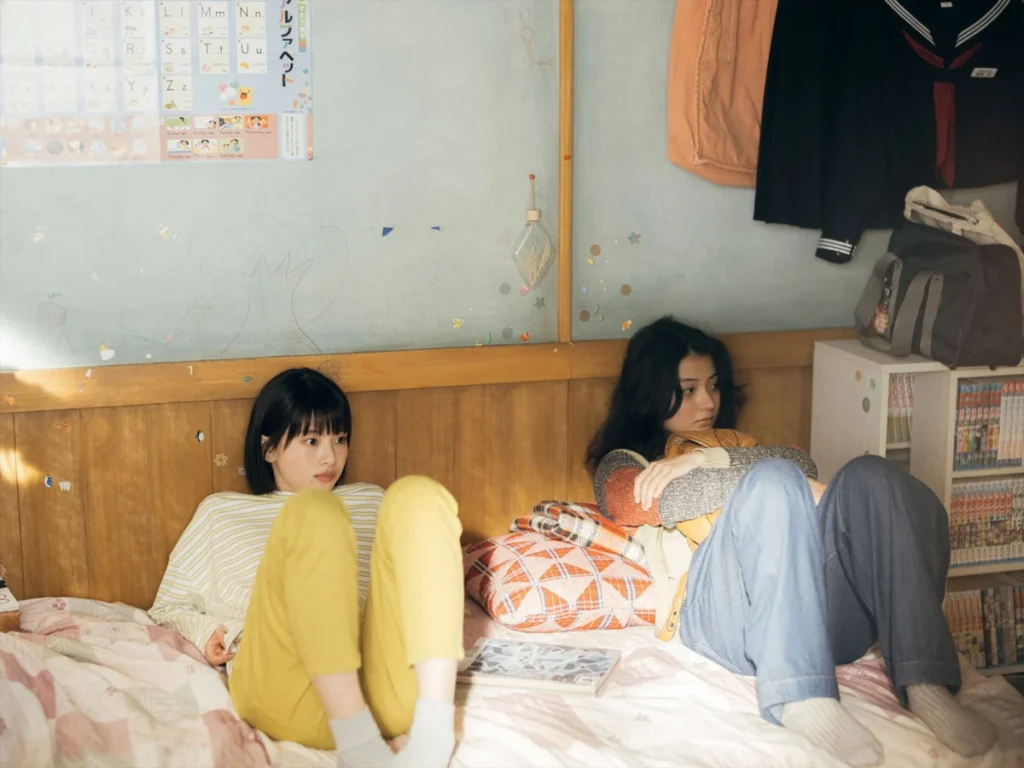

The 2026 Venice Film Festival has served as the launchpad for a diverse array of international cinema, capturing the attention of critics and cinephiles alike along the Lido. Among the most discussed entries in the official selection is the live-action adaptation of Look Back, directed by acclaimed Japanese auteur Hirokazu Kore-eda. The feature, which bridges the gap between traditional manga storytelling and contemporary cinematic technique, explores the profound bond between two young female artists navigating the complexities of creative ambition, isolation, and mutual inspiration.
The premiere places Kore-eda back in the international spotlight following a busy production year. The director’s concurrent project, the science-fiction feature Sheep in the Box, debuted earlier in the calendar year at the 2026 Cannes Film Festival to a more polarized reception. In contrast, Look Back has emerged as a critical darling on the Venice circuit, drawing praise for its visual elegance, emotional resonance, and the delicate handling of its young protagonists’ artistic journeys.
Main Facts and Production Background
Look Back is a direct cinematic translation of the 2021 one-shot manga written and illustrated by Tatsuki Fujimoto, a creator widely recognized for his distinct narrative style in titles such as Chainsaw Man. The narrative centers on Fujino, a confident school student who publishes a popular four-panel (yonkoma) manga in the school paper, and Kyomoto, an agoraphobic student who refuses to attend classes yet produces breathtaking artwork that rivals Fujino’s.
When Fujino discovers Kyomoto’s work, a powerful artistic rivalry transforms into a deep, formative friendship. The two collaborate on various manga projects as they transition from childhood into their teenage years, facing both internal doubts and the practical skepticism of their families, who frequently dismiss comic illustration as an impractical vocation.
The production boasts a notable creative team. Alongside Kore-eda’s dual role as director and editor, the film features cinematography by Senzo Ueno, whose visual framing balances static, intimate compositions of the girls sketching in their rooms with kinetic, flowing tracking shots that mirror Fujino’s youthful energy. The musical score is composed by Yuta Bandoh, providing an emotional scaffolding that enhances the narrative’s lighter moments as well as its dramatic turns.
The casting process utilized a dual-generation approach to depict the characters across different life stages. Furi Nanase and Rokka Okada portray Fujino and Kyomoto during their formative early years, while Natsuki Deguchi and Aju Makita assume the roles as the characters enter high school and confront more sophisticated artistic and personal challenges.
Chronology and Narrative Arc
The development of Look Back reflects a rapid expansion of Tatsuki Fujimoto’s literary footprint into multi-media formats. Following the release of the original manga in July 2021 via Shueisha’s Shonen Jump+ platform—where it amassed millions of digital views within days—the intellectual property was first adapted into an animated feature film that gained international acclaim.
Kore-eda’s live-action interpretation represents a distinct artistic pivot, translating the hand-drawn panels into physical space. Chronologically, the film tracks the maturation of its protagonists through distinct phases:

- Discovery and Rivalry: Fujino’s initial pride in her artistic superiority is challenged by the technical brilliance of Kyomoto’s submissions to the school newspaper.
- Collaboration: The two girls meet face-to-face, bonding over a shared passion for drawing, which leads to years of collaborative manga creation.
- Divergence and Real-World Pressures: As the characters approach higher education, familial pressures regarding career stability introduce tension into their artistic pursuits.
- The Dramatic Turning Point: The narrative incorporates the original source material’s infamous third-act twist—a sudden, tragic event that alters the trajectory of the characters’ lives and forces an existential reckoning with loss, regret, and the permanence of art.
Supporting Data and Festival Context
The 83rd Venice Film Festival continues to host high-profile international premieres, with Japanese cinema maintaining a robust presence in competition and showcase categories. Kore-eda, a Palme d’Or winner known for his empathetic explorations of family dynamics and youth—such as Nobody Knows and Shoplifters—brings his signature neorealistic sensitivity to a genre traditionally dominated by animation.
Industry analysts note that live-action adaptations of contemporary manga have become a significant growth sector for Japanese studios seeking to bridge domestic comic book culture with global arthouse audiences. However, adapting a critically revered work like Look Back presented unique structural hurdles, particularly in translating the metanarrative and temporal shifts of the original manga’s final act into a cohesive cinematic grammar.
While certain critics noted that the film’s third-act editorial pacing introduces conceptual ambiguities—typical of complex adaptations dealing with speculative or psychological turns—the overarching consensus points to the strength of the central performances as the primary anchor of the project.
Official Responses and Industry Reception
Critical reception at the Venice screening emphasized the authenticity of the child and adolescent performances, a hallmark of Kore-eda’s filmography. Reviewers highlighted the director’s established aptitude for eliciting nuanced, unscripted-feeling portrayals from young performers, which prevents the material from slipping into melodrama.
Cinematographer Senzo Ueno’s work has also been singled out for praise by industry observers, who point to the visual dichotomy between the claustrophobic confinement of the girls’ drawing studios and the expansive outdoor sequences. The score by Yuta Bandoh has been credited with providing a unifying tonal layer that softens the narrative’s sudden, darker thematic shifts.
Although distributors have yet to announce a comprehensive global release schedule following the Venice premiere, industry insiders anticipate broad international distribution given Kore-eda’s established box-office and critical footprint in North America, Europe, and across Asia.
Broader Impact and Implications
The success of Look Back at Venice underscores a broader trend within the global film market: the increasing fluidity between traditional literature, manga, anime, and live-action arthouse cinema. By applying a humanistic, auteur-driven approach to material originating from digital manga platforms, filmmakers are redefining the parameters of contemporary youth and coming-of-age cinema.
Furthermore, the film’s thematic exploration of creative collaboration offers broader commentary on the psychological necessity of artistic community. For the creative industries, Look Back serves as a timely reminder of the role mentorship and peer validation play in sustaining artistic output under societal pressure. As the film prepares for its wider theatrical rollout, its reception suggests that stories focusing on empathy, shared passion, and resilience remain universally resonant across cultural and linguistic boundaries.