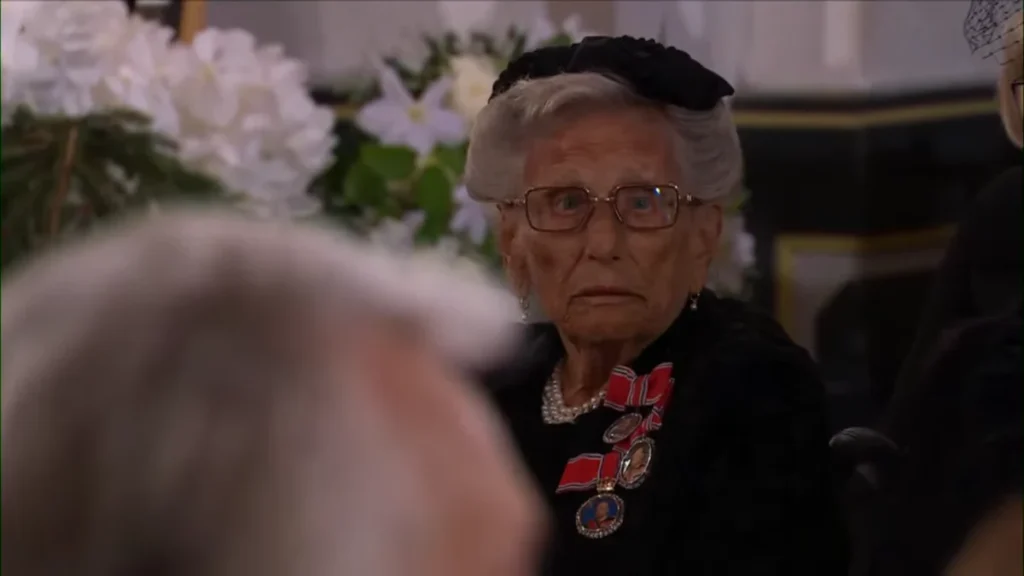

OSLO — Amidst the solemn hymns and the quiet weeping of a grieving nation, the women of the Norwegian Royal Family gathered in Oslo to bid a final farewell to King Harald V. In a poignant tribute that blended personal grief with centuries of royal tradition, Queen Sonja, Queen Mette-Marit, Crown Princess Ingrid Alexandra, Princess Märtha Louise, and Princess Astrid wore a deeply personal and symbolic memento from the late monarch: the Royal Family Order of King Harald V.
The appearance of these distinct insignia during the state funeral at Oslo Cathedral and the subsequent private service at Akershus Castle Church served as a visual reminder of the close familial bonds shared within the House of Glücksburg, as well as a reflection of enduring royal heritage.
A Touching Tribute Etched in Diamonds and Silk
The Royal Family Order of King Harald V is not a state honor bestowed by the government, but rather a personal gift given directly by the sovereign to female members of the royal family. The insignia features a detailed portrait of the late king captured at the time of his accession to the throne, elegantly framed by sparkling diamonds. The miniature portrait is suspended from a vibrant red ribbon, which is characteristically bordered by distinct blue and white stripes, echoing the national colors of Norway.
Traditionally, Royal Family Orders are utilized across various European monarchies to honor and recognize female family members. Historically, male royals received prominent military honors and decorations as a matter of course through armed forces service, whereas female members were frequently excluded from these traditional military pathways. Consequently, European monarchs established the Royal Family Order as a distinct, highly personal token of appreciation, awarded at the sovereign’s ultimate discretion to acknowledge personal service, devotion, and representation of the crown.
For the funeral proceedings, the inclusion of these specific orders carried immense emotional weight. Queen Sonja, who stood as a pillar of strength alongside her late husband for decades, wore her husband’s order close to her heart. She was joined by Queen Mette-Marit and the young Crown Princess Ingrid Alexandra, representing the future continuity of the Norwegian monarchy. Also donning the order were King Harald’s sister, Princess Astrid, and Princess Märtha Louise, completing a united front of royal women honoring the patriarch who guided Norway through times of profound social change and modernization.
Generational Tributes and Historic Legacies
The visual display of family orders at major state events often tells a generational story of service, longevity, and dynastic history. Royal women frequently wear all the family orders they have been awarded during their lifetimes, creating a dazzling cascade of historical continuity on their mourning attire.
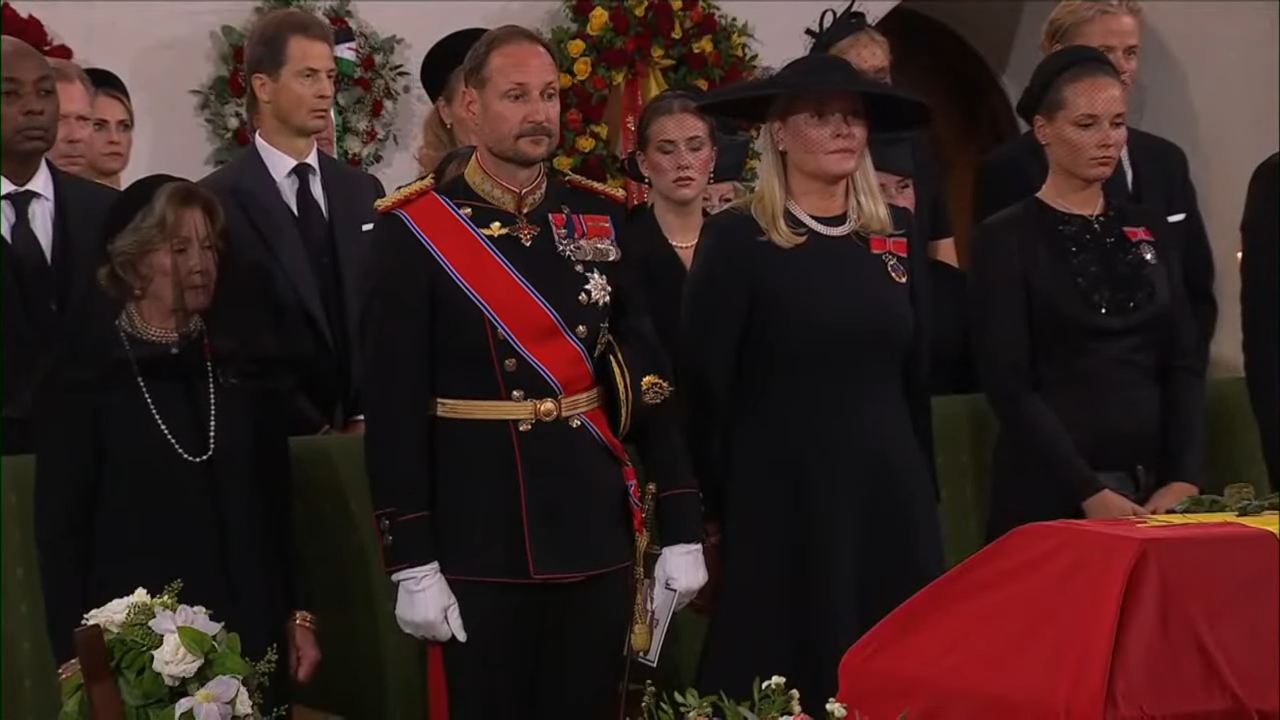
Princess Astrid, the fiercely dedicated sister of the late king, offered a striking example of this tradition. Alongside the Royal Family Order of King Harald V, Princess Astrid wore the orders bestowed upon her by her grandfather, King Haakon VII, and her father, King Olav V. By wearing the insignia of three successive monarchs, Princess Astrid embodied nearly a century of Norwegian history, bridging the gap between the establishment of the modern independent Norwegian monarchy in 1905 and the contemporary era.
Similarly, the late Princess Ragnhild, King Harald’s eldest sister who passed away in 2012, had also been a proud recipient of her brother’s royal family order during her lifetime. The tradition ensures that even as generations pass, the unique bond between the sovereign and the women of the royal household remains visibly honored and preserved.
A Nation Mourns: The Final Farewell to King Harald V
The funeral services in Oslo marked the culmination of a period of national mourning following the death of King Harald V, who passed away peacefully at the age of 89 on August 28. The beloved monarch, affectionately known for his down-to-earth demeanor, his passion for sailing, and his unwavering dedication to the Norwegian people, had reigned since 1991.
The day’s itinerary began with a grand state funeral service at the historic Oslo Cathedral, attended by dignitaries, foreign royals, political leaders, and everyday citizens wishing to pay their respects. Following the cathedral service, a more intimate, closed-door funeral ceremony was held at Akershus Castle Church. This historic fortress, which overlooks the Oslofjord, served as a fittingly solemn resting place for the king, whose ancestors helped shape modern Norway.
In attendance at Akershus Castle Church were members of the immediate royal family, domestic officials from the Norwegian government and the judicial system, and high-profile international guests. Among the foreign dignitaries were the Presidents of Finland and Iceland, underscoring the deep Nordic solidarity and regional respect commanded by King Harald throughout his nearly 35-year reign.
The Chronology of a Sovereign’s Final Journey
The passing of King Harald V initiated a meticulously planned protocol, balancing constitutional duties with national grief.
On August 28, the Royal Court officially announced the death of King Harald V at the age of 89, plunging the Scandinavian nation into deep mourning. Flags across the country were lowered to half-mast as thousands of citizens began laying floral tributes outside the gates of the Royal Palace in Oslo.
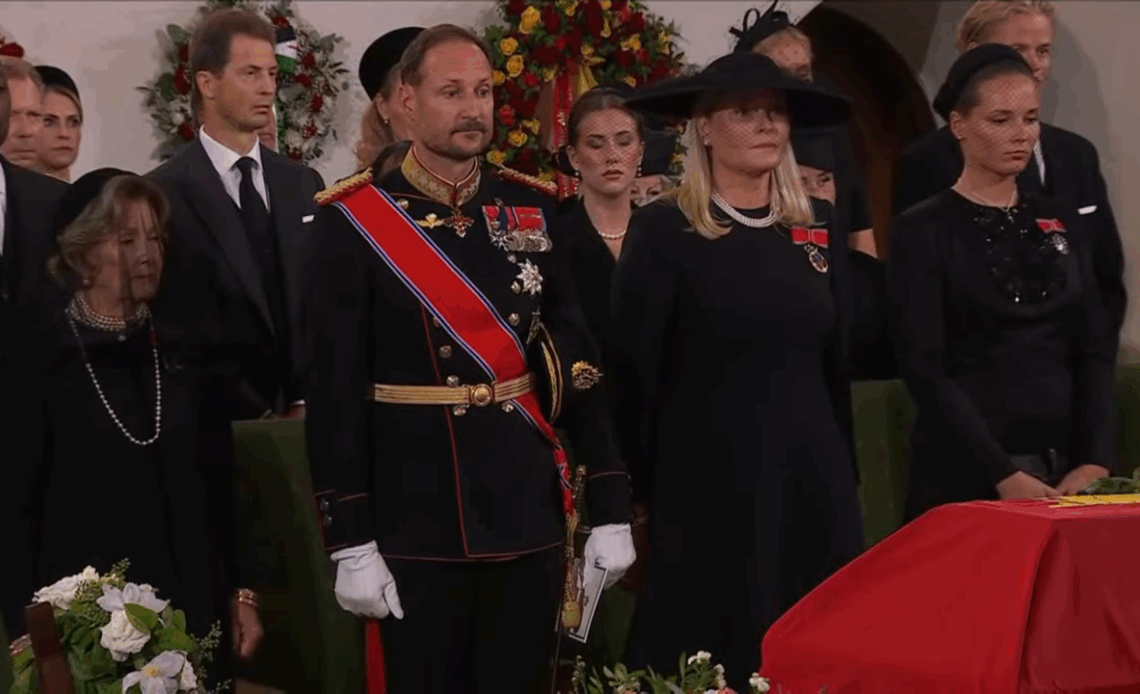
In the days immediately following his passing, the Council of State convened, and Crown Prince Haakon formally assumed the constitutional duties of the head of state, stepping seamlessly into his role as monarch. Tributes poured in from international leaders, human rights organizations, and sports associations, highlighting King Harald’s vast range of interests, from environmental advocacy to his historic representation of Norway in Olympic sailing competitions.
The days leading up to the funeral saw a public lying-in-state, allowing tens of thousands of mourners to file past the casket and express their gratitude for a king who famously championed inclusivity, mental health awareness, and multiculturalism within Norwegian society.
The state funeral proceedings culminated on this afternoon in Oslo, as the gun salutes echoed across the fjord and the Royal Family Order of King Harald V caught the afternoon light against the dark mourning garments of the royal women—a silent, glittering testament to a life dedicated to family, duty, and nation.
Institutional Implications and the Future of the House of Glücksburg
As Norway closes this historic chapter, the focus inevitably shifts toward the future of the Norwegian monarchy under the stewardship of the new king. King Harald’s reign was defined by his ability to modernize the institution while retaining the deep affection of the Norwegian public. He famously navigated controversies with grace, supported progressive social values, and maintained a stabilizing presence during times of national crisis.
The prominent display of the Royal Family Order of King Harald V by the women of the family—most notably Crown Princess Ingrid Alexandra—signals a deliberate bridging of past traditions into a new era. As Ingrid Alexandra prepares for her eventual ascension to the throne, carrying forward the honors and traditions established by her grandfather ensures institutional stability and historical continuity.
Observers note that while the monarchy faces modern challenges regarding media scrutiny, privacy, and public funding, the deeply human and relatable image projected by the family during the funeral reinforces the institution’s soft power. By leaning into shared grief, personal tributes, and time-honored symbols like the Royal Family Order, the Norwegian Royal Family demonstrated an acute awareness of the public’s need for closure and continuity.
The legacy of King Harald V will undoubtedly live on through the legislative achievements of his reign, the modernization of the royal house, and the personal memories held by the family members who wore his portrait close to their hearts on a somber Oslo afternoon. As the flags return to full mast and Norway adapts to a new royal era, the memory of the sailor king will remain permanently etched in the national consciousness, symbolized as much by his warmth and common touch as by the diamond-framed portraits worn by the women who loved him best.