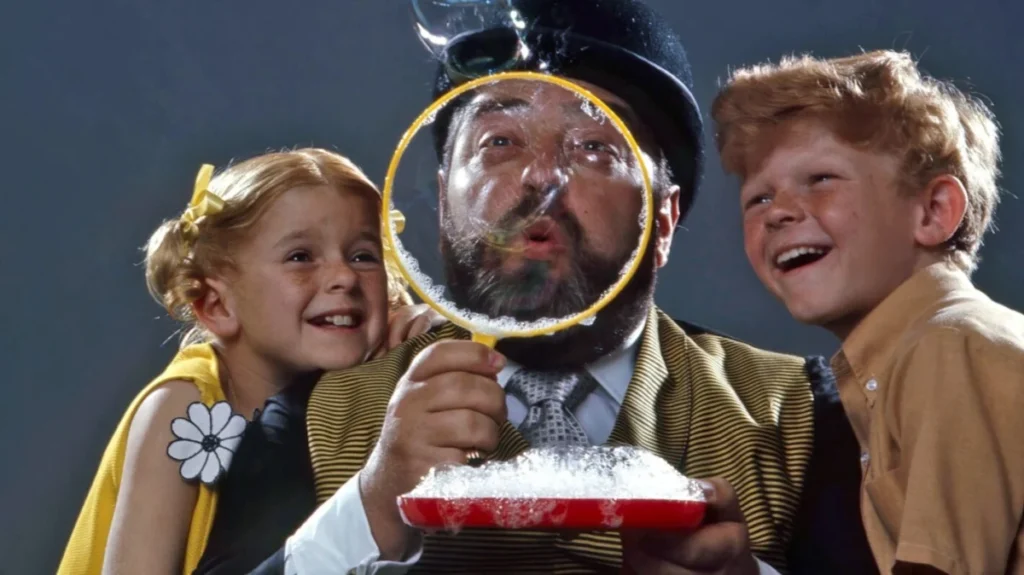

On September 12, 1966, the CBS network introduced audiences to a premise that would fundamentally alter the landscape of the American sitcom: the sudden collision of a swinging bachelor’s lifestyle with the responsibilities of instant fatherhood. Family Affair, created by Don Fedderson, debuted not merely as a comedy, but as a poignant exploration of grief, adaptation, and the shifting definition of the nuclear family. As the series marks its 60th anniversary, its historical significance remains tied to its ability to bridge the gap between traditional domestic tropes and the realities of tragedy.
The Premise and the Cultural Shift
The narrative foundation of Family Affair was strikingly somber for a 1960s television landscape dominated by escapist fare like Gilligan’s Island or The Beverly Hillbillies. The show centered on Bill Davis, a wealthy civil engineer living a sophisticated, jet-setting life in a luxurious Manhattan high-rise. His world was irrevocably changed when his brother and sister-in-law were killed in a car accident, leaving their three children—teenager Catherine "Cissy" Davis and six-year-old twins Elizabeth "Buffy" and Jonathan "Jody" Davis—orphaned.
Forced to relocate from the Midwest to New York City, the children were placed under the guardianship of their Uncle Bill. However, the true linchpin of the household was Giles French, the impeccably mannered, slightly stuffy, and deeply devoted English gentleman’s gentleman. Played with masterful restraint by Sebastian Cabot, Mr. French provided the domestic stability the Davis apartment lacked, serving as a surrogate parent who navigated the complexities of child-rearing with a dry wit that became the show’s hallmark.
A Chronology of a Classic
The series spanned five seasons, concluding its original run on March 4, 1971. Its production history reflects the evolution of late-1960s network television:
- 1966 (Season 1): The pilot established the "fish-out-of-water" dynamic. The contrast between the children’s rural Indiana roots and Bill’s high-society urban existence served as the primary engine for early plotlines.
- 1967 (Season 2): The show cemented its status as a top-rated program. It was during this period that the merchandising juggernaut of the "Mrs. Beasley" doll—Buffy’s beloved, bespectacled rag doll—became a cultural phenomenon, signaling the show’s immense popularity among the youth demographic.
- 1968–1969 (Seasons 3–4): The writers began to tackle more mature themes, particularly as Cathy Garver’s character, Sissy, transitioned from a teenager into young adulthood. The scripts became increasingly focused on the emotional growth of the children rather than just the comedic friction of their presence.
- 1970–1971 (Season 5): The final season saw a shift in tone as the series prepared for its conclusion. The twins, Buffy and Jody, were notably older, and their signature sign-off—"Thanks for watching, we’ll see you next week"—became a staple of the show’s identity, fostering a parasocial bond between the child actors and the audience that was unique for the era.
The Economics of Television and Merchandising
While critical analysis often focuses on the narrative arc, Family Affair was also a masterclass in television economics. By the late 1960s, the "tie-in" industry was in its infancy, yet Family Affair proved that a show could be a vehicle for more than just advertising time. The Mrs. Beasley doll, manufactured by Mattel, remains one of the most successful character-based toys of the 20th century. Its ubiquity in American households underscored the show’s reach; it wasn’t just a sitcom, it was a lifestyle brand that permeated the daily routines of the American middle class.
The financial success of the show allowed CBS to take risks on more expensive location shoots and high-production-value sets, which lent the series a sophisticated aesthetic that separated it from the "black-and-white" look of earlier sitcoms. By the time it transitioned to full color in its later years, it had become a definitive look at the "Manhattan Dream."
Character Dynamics and Sociological Implications
The dynamic between Brian Keith’s Bill Davis and Sebastian Cabot’s Mr. French offered a subversive look at masculinity. In an era where the "tough guy" lead was expected to be stoic and solitary, Keith played Bill with a vulnerability that acknowledged his inadequacy in parenting. Conversely, Cabot’s character challenged traditional gender roles; he was the primary domestic figure, responsible for the emotional nurturing of the children and the management of the household.
The children, too, were portrayed with a level of agency that was uncommon. Anissa Jones (Buffy) and Johnny Whitaker (Jody) were often tasked with carrying the emotional weight of the episodes. Their performances, characterized by a naturalistic delivery, helped humanize the tragedy of their characters’ backstory, ensuring that the audience never lost sight of the fact that these children were, fundamentally, victims of a profound loss.
Behind the Scenes: The Cast and Production
The chemistry between the cast members was not merely a result of scriptwriting; it was reportedly fostered by a genuine, albeit professional, affection. Brian Keith, known for his rugged, outdoorsy persona, often served as a mentor to the younger actors. Sebastian Cabot, despite his refined on-screen demeanor, was known for his warmth and his ability to improvise, which often led to the most memorable comedic beats in the series.
The production of the show was helmed by Don Fedderson, a veteran of the industry who understood the necessity of "gentle conflict." Unlike the slapstick comedies of the era, Family Affair favored the "situation" in the sitcom. Problems were resolved not through chaotic misunderstandings, but through dialogue and the slow process of building a non-traditional family unit.
Legacy and Broader Impact
Sixty years later, Family Affair serves as a historical marker for the transition from the mid-century domestic ideal to the more complex familial structures of the 1970s. It was among the first shows to address the concept of a "chosen family"—a household formed not by blood alone, but by necessity and deep-seated loyalty.
The show’s impact on later television cannot be overstated. Modern series that focus on non-traditional households—such as Full House or even Modern Family—owe a debt to the structural blueprint laid down by Bill Davis and his unlikely brood. The show proved that audiences were willing to engage with darker, more complex premises if the characters remained grounded in empathy and kindness.
Reflections on an Anniversary
As we look back from the vantage point of 2026, the absence of the original cast members—many of whom passed away in the decades following the show’s conclusion—adds a layer of poignancy to the anniversary. The loss of Anissa Jones in 1976, just a few years after the show ended, remains a tragic footnote in television history, one that fans still grapple with when revisiting the innocence of Buffy’s character.
The show’s longevity in syndication has allowed subsequent generations to experience the quiet, measured pace of the 1960s. In an era of rapid-fire digital consumption, the slow-burn storytelling of Family Affair offers a rhythmic reprieve. It remains a testament to the idea that a family is defined by the people who show up, who stay, and who—as Buffy and Jody reminded us every week—make the effort to say thank you to the people watching at home.
Ultimately, Family Affair was a product of its time that transcended its era. It managed to balance the high-gloss glamour of a New York penthouse with the fundamental human need for connection. For six decades, it has stood as a reminder that even in the most unconventional of circumstances, the bonds of family are the most resilient force in the human experience. As the industry looks toward the next generation of television, the legacy of Bill Davis and his charges remains a foundational pillar of what it means to tell a story about people simply trying to do their best for one another.