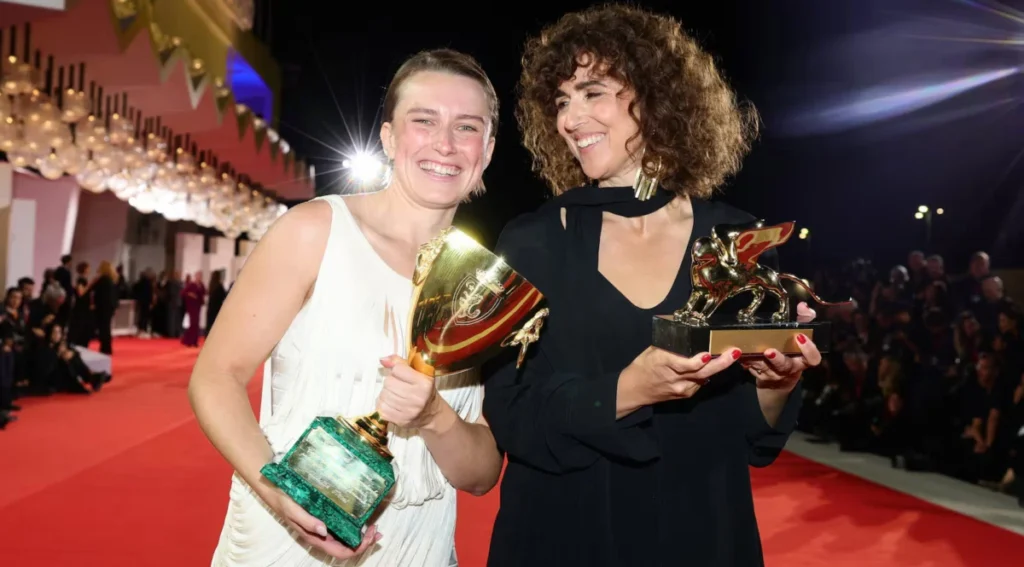

The 83rd Venice International Film Festival concluded its prestigious eleven-day run on the historic Lido island, culminating in a high-profile awards ceremony at the majestic Sala Grande. As one of the world’s oldest and most influential cinematic showcases—standing alongside the Cannes Film Festival and the Berlin International Film Festival as a cornerstone of the global film calendar—this year’s edition drew intense international scrutiny. The coveted Golden Lion, the festival’s highest honor recognizing the best overall feature in competition, was awarded to the Danish historical drama Woman Unknown (Kvinde Ukendt), directed by May el-Toukhy. The decision has since ignited widespread debate among film critics, industry insiders, and festival attendees regarding jury dynamics, artistic merit, and the evolving criteria behind major cinematic accolades.
Festival Timeline and Background Context
The 83rd iteration of the Venice International Film Festival commenced in late August 2026, transforming the Venetian Lido into a bustling hub of international cinema, red-carpet premieres, and fierce competition. Over the course of nearly two weeks, 21 feature films competed in the main Venezia 83 section, evaluated by a distinguished international jury.
The jury was chaired by acclaimed American actress and director Maggie Gyllenhaal, marking a significant tenure for the filmmaker known for her rigorous analytical approach to storytelling. Joining Gyllenhaal on the main competition panel were Tunisian filmmaker Kaouther Ben Hania, British musician and composer Daniel Blumberg, Italian film scholar Francesco Casetti, French director Xavier Giannoli, Afghan filmmaker Shahrbanoo Sadat, and legendary Hong Kong action director Johnnie To. This culturally and professionally diverse panel was tasked with navigating a dense and politically charged selection of global cinema before finalizing their decisions on the final weekend of the festival.
Analysis of the Main Competition Winners
The announcement of May el-Toukhy’s Woman Unknown as the Golden Lion recipient surprised many industry analysts. Set in Denmark immediately following the conclusion of World War II, the film follows a woman navigating intense public accusations and societal trauma during a fragile period of national reckoning. Notably, Woman Unknown stood out as the only film in the main competition directed by a woman.
When addressing the press following the ceremony, jury president Maggie Gyllenhaal defended the unanimous selection, describing the film’s impact on the jury as hitting them like a "laser beam" compared to other contenders. However, the decision drew immediate comparisons to the previous year’s unexpected top-prize winner, sparking familiar industry conversations about whether major festival juries occasionally prioritize thematic resonance and sociopolitical messaging over groundbreaking formal cinematic craft. Critics pointed out that while el-Toukhy’s film tackles a compelling historical narrative, its traditional staging and conventional visual language lacked the formal innovation typically associated with Golden Lion recipients.

Conversely, the Silver Lion Grand Jury Prize was awarded to Lee Chang-dong’s Possible Love, a work widely championed by critics as a masterclass in complex contemporary storytelling and dynamic narrative architecture. Many industry observers argued that Possible Love more accurately represented the pinnacle of artistic achievement in the 2026 lineup, echoing similar sentiments expressed earlier in the year when Cristian Mungiu’s Fjord secured the Palme d’Or at Cannes while runner-up titles earned critical preference for the top slot.
Acting and Directing Honors
Beyond the top two prizes, the acting categories featured standout performances that are already generating early Oscar buzz for the upcoming awards season.
The Coppa Volpi for Best Actor was awarded to Hollywood veteran John Malkovich for his tour-de-force performance in Martin McDonagh’s Wild Horse Nine. Malkovich’s searing portrayal drew immediate acclaim from trade publications, with prognosticators suggesting the performance positions him as an early frontrunner for the Academy Award for Best Actor next year. Meanwhile, the Coppa Volpi for Best Actress went to Mathilde Arcel for her compelling, emotionally demanding lead performance in the Golden Lion-winning Woman Unknown, anchoring the film’s tense historical atmosphere.
In the directorial categories, Ilya Khrzhanovsky received the Silver Lion Award for Best Director for his monumental and immersive film Dau, a project emblematic of his uncompromising and sprawling approach to cinematic art. The Best Screenplay award was presented to Stéphane Brizé, Coralie Amedeo, and Olivier Gorce for A Good Little Soldier, a film also directed by Brizé that examines institutional rigidity and human vulnerability.
Additionally, the Special Jury Prize was awarded to NAZA, a powerful and politically urgent documentary directed by Yuval Abraham and Rachel Szor, further highlighting the festival’s ongoing commitment to platforming essential global discourse through non-fiction filmmaking. The Marcello Mastroianni Award for Best Young Actor or Actress was claimed by Malou Khebizi for her breakout work in Cédric Kahn’s A Place to Heal (15/18).
Orizzonti Section and Independent Honors
The Orizzonti section, dedicated to discovering fresh aesthetic and expressive trends in international cinema, was judged by a separate jury chaired by French filmmaker Valérie Donzelli, alongside Peter Becker, Elizabeth Lo, David Pablos, and Barbara Ronchi.

The Orizzonti Award for Best Film was presented to Diane in the Loop (Un détour par Diane), directed by Raphaël Balboni and Ann Sirot. The Orizzonti Award for Best Director went to Jacqueline Lentzou for A Day in the Life of Jo: Chapter Phaedra, a film praised for its distinct visual rhythm and intimate character study. Additional Orizzonti honors included Laleh Marzban winning Best Actress for Falling House, and Riccardo Scamarcio taking Best Actor for The Children of the Monkey, which also secured the Orizzonti Best Screenplay prize for Damiano Femfert and Tommaso Landucci.
In the debut film category, Auguste Bernard Kouemo Yanghu’s House of the Wind (La maison du vent) earned the prestigious "Luigi De Laurentiis" Venice Award for a Debut Film, alongside a Special Orizzonti Jury Prize. Meanwhile, the audience-voted Armani Beauty Audience Award was presented to Alina Șerban for her resonant feature I Matter (Eu contez).
Broader Impact and Industry Implications
The conclusion of the 83rd Venice International Film Festival marks the official kickoff of the autumn awards season, a critical window during which studios and independent distributors position their prestige titles for commercial release and Academy Award contention.
The jury’s choices under Maggie Gyllenhaal’s leadership reflect an increasing willingness among international film festivals to elevate narratives engaging with historical trauma, geopolitical friction, and social introspection. However, the ongoing debate surrounding the distribution of top prizes—particularly the preference for thematic weight over formal cinematic innovation—underscores the eternal tension between critical consensus and jury subjectivity.
As these award-winning titles transition from the Lido to international theatrical releases, film festivals, and upcoming regional ceremonies, their reception by broader audiences will ultimately determine their legacy. For now, the 2026 Venice Film Festival leaves behind a diverse cinematic ledger, highlighted by commanding performances from established legends like John Malkovich and provocative historical explorations that will continue to shape the cultural conversation well into the coming year.