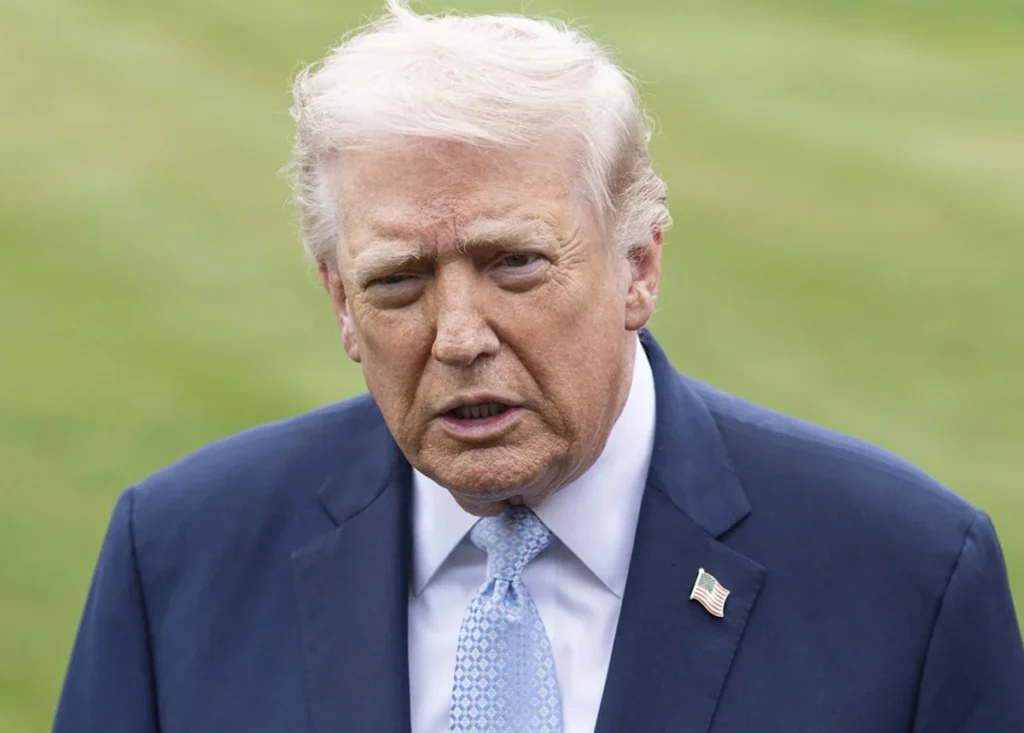

A high-tension incident unfolded on the tarmac in Dallas on Thursday as former President Donald Trump engaged in a volatile confrontation with ABC News senior political correspondent Rachel Scott. The encounter, which occurred as the former president prepared to depart on Air Force One, has sparked renewed national debate regarding the increasingly fraught relationship between the former administration and members of the White House press corps. The confrontation was ignited when Scott attempted to secure a follow-up response regarding a campaign pledge involving a $5,000 disbursement to every U.S. adult should the Republican party secure control of both chambers of Congress in the upcoming midterm elections.
The interaction was captured on video, showing the former president repeatedly interrupting the correspondent, wagging his finger in her direction, and physically stepping toward her while leaning into her personal space. The aggressive posture and verbal dismissal—"Not you, not you. Hey! Not you"—have prompted widespread scrutiny from media ethics organizations and political observers alike, as the clip circulated rapidly across digital platforms.
Chronology of the Dallas Confrontation
The events on the Dallas tarmac took place amidst a busy travel schedule for the former president. According to reports from the scene, the exchange began as Trump was moving toward his aircraft. Scott, a seasoned reporter who has frequently covered the Trump campaign, sought to clarify the mechanics and feasibility of the proposed $5,000 stimulus plan, a central pillar of the current Republican midterm platform.
As Scott posed the question, the former president immediately pivoted from his planned departure to intercept the line of questioning. The visual record of the event shows a distinct shift in body language as Trump closed the distance between himself and the reporter. The interaction lasted only a few moments, yet the physical intensity of the lunge and the dismissive verbal cues have drawn comparisons to previous instances where the former president sought to stifle inquiries from the press. Scott later uploaded the footage to X, the social media platform formerly known as Twitter, with the succinct caption: "My question to Trump tonight."
Contextualizing the $5,000 Midterm Pledge
The underlying cause of the tension—the proposed $5,000 payout—represents a significant and ambitious economic policy promise. Trump’s proposal centers on the premise that a unified Republican Congress would enable a massive redistribution of federal funds to the American electorate. Economic analysts have noted that such a policy would require substantial legislative maneuvering, as the funding mechanism for such a broad stimulus remains unclear.
During previous campaign stops, the former president has touted this policy as a means to counter inflation and stimulate household spending. However, the plan has faced skepticism from fiscal conservatives and opposition lawmakers, who argue that the sheer scale of the expenditure could exacerbate national debt levels. Scott’s attempt to follow up on this specific point of contention likely triggered the former president’s defensive reaction, as he has frequently bristled at questions that delve into the practical implementation of his campaign promises.
A History of Contentious Press Relations
The incident in Dallas is far from an isolated event; rather, it is the latest chapter in a long-standing pattern of friction between Donald Trump and Rachel Scott. Over the past several years, their professional interactions have frequently devolved into public verbal altercations.

In May, at the Lincoln Memorial Reflecting Pool, the former president publicly berated Scott, utilizing pejorative language to characterize her professional capabilities. At that time, Trump dismissed her reporting as a "horror show" and labeled her one of the "worst" members of the press. Similarly, in December of the previous year, the former president targeted Scott after she inquired about the transparency of a military airstrike. During that exchange, he referred to her as the "most obnoxious" reporter in the room.
These repeated public displays of hostility toward specific journalists have become a hallmark of the former president’s media strategy. By framing journalists as adversaries, he has effectively galvanized his base, who often view mainstream media inquiries as inherently biased or hostile. However, this strategy has also drawn sustained criticism from organizations such as the White House Correspondents’ Association and the Committee to Protect Journalists, which argue that such rhetoric undermines the fundamental role of a free press in a democratic society.
Official Network Response
In the immediate aftermath of the Dallas incident, ABC News issued a formal statement affirming its support for its correspondent. The network’s statement, provided to media outlets on Friday, served as a clear defense of its Washington team’s editorial standards.
"We wholeheartedly support Rachel Scott and our entire Washington team who do an exceptional job delivering trusted and straightforward reporting to the public every single day," the statement read. This institutional backing is significant, as it highlights the network’s commitment to maintaining its reporting presence, even in the face of direct intimidation. By standing behind their correspondent, ABC News is signaling that it will not be deterred by the hostility encountered on the campaign trail.
Broader Implications for Political Journalism
The confrontation between Donald Trump and Rachel Scott raises profound questions about the state of political journalism in the current climate. When public figures utilize physical intimidation or personal vitriol to deflect from policy questions, it complicates the ability of the electorate to receive substantive information.
- Erosion of Norms: The incident marks a further departure from traditional norms of presidential or campaign-press interactions, where questions, however difficult, are met with policy-based answers or managed responses rather than personal attacks.
- Safety of Journalists: The physical nature of the "lunge" described by observers raises concerns about the safety of reporters assigned to cover high-profile candidates. Security teams are typically tasked with protecting the candidate, but the burden of protection for the press corps often falls on the organizations themselves, which may find it increasingly difficult to operate in volatile environments.
- Public Perception: The incident highlights the growing polarization in how the public consumes news. Supporters of the former president may view the incident as a display of strength against a hostile media establishment, while critics view it as a dangerous erosion of the standards of political discourse.
Fact-Based Analysis of the Current Landscape
As the midterm elections approach, the intensity of media coverage is expected to increase. Both parties are vying for control, and the economic policies—such as the $5,000 pledge—will remain at the forefront of the debate. The incident in Dallas serves as a reminder that the environment for journalists covering the former president remains as volatile as ever.
Statistically, the frequency of "contentious" press events has trended upward over the last two election cycles. Data from media monitoring groups suggests that candidates who employ aggressive rhetoric toward the press often see a correlation in increased engagement from their supporters. However, this comes at the cost of reduced access to information, as the dialogue between the candidate and the voter—mediated by the press—becomes fractured.
In conclusion, the encounter between Donald Trump and Rachel Scott on the Dallas tarmac is a microcosm of a larger, systemic issue in modern American politics. The former president’s reaction to a legitimate policy inquiry highlights a continued preference for adversarial confrontation over objective debate. As the election season progresses, the ability of the media to ask tough questions will continue to be a litmus test for the health of the political discourse. For now, the video stands as a stark visual record of the ongoing tension between a candidate and those tasked with reporting on his campaign.