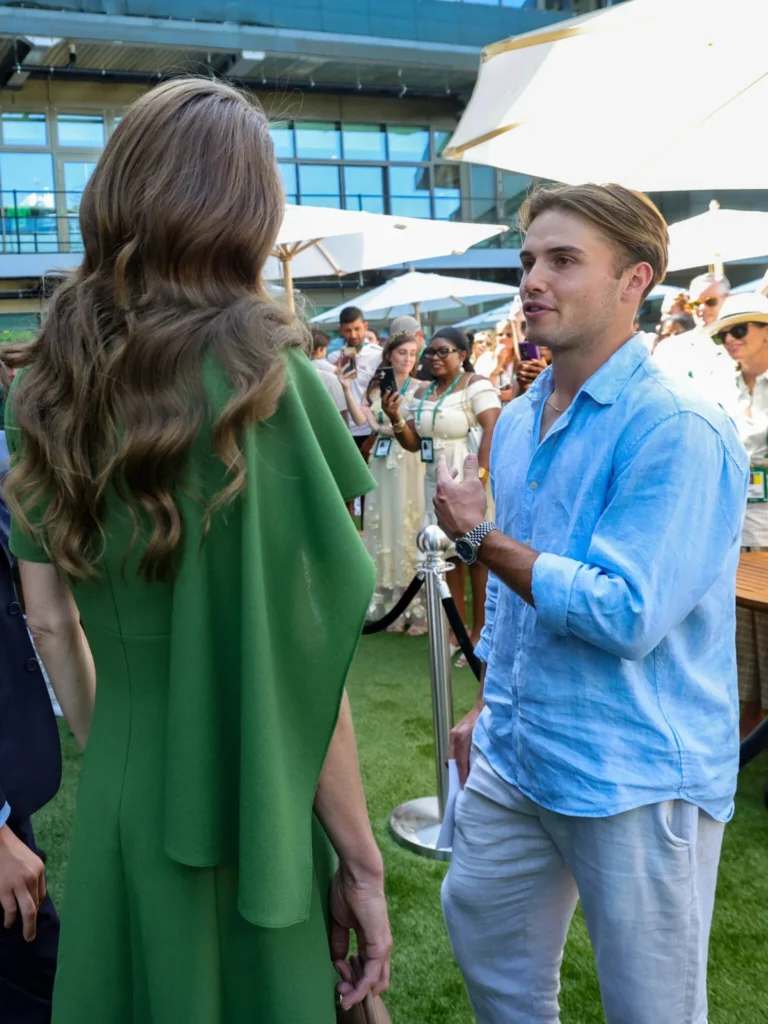

The Prince of Wales made a significant appearance at the prestigious Wimbledon Championships 2026, marking his first visit to the iconic tournament this year, to personally commend Britain’s rising tennis star, Arthur Fery. Fery, a wildcard entrant, captured the nation’s attention with an extraordinary journey to the men’s singles semi-finals, a feat that became the undisputed narrative of the championship. His unexpected success has cemented his status as a newfound sporting hero, drawing praise from the highest echelons of British society.
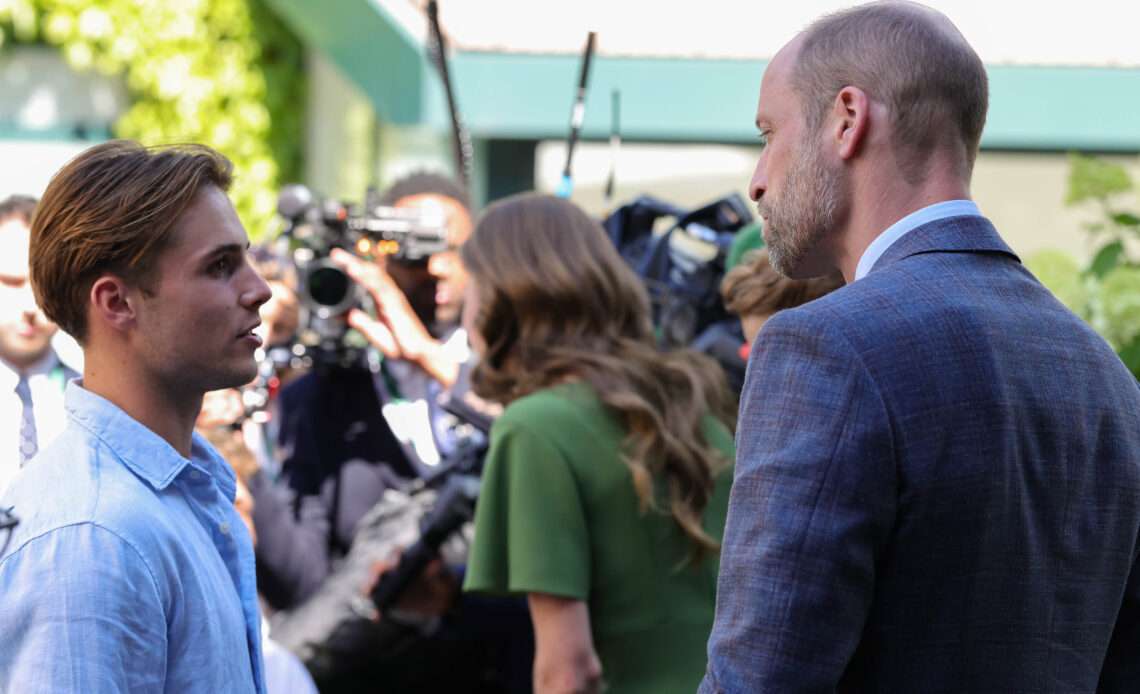
Prince William, heir to the throne, engaged in a cordial exchange with Fery, sharing lighthearted moments and words of encouragement just prior to the Men’s Singles Final. The highly anticipated final was set to feature Fery’s conqueror, the formidable Alexander Zverev, facing off against the reigning champion, Jannik Sinner, in a clash that promised to be a fitting climax to the fortnight of intense competition.
A Royal Presence on Championship Sunday
The final day of Wimbledon 2026 saw a strong showing from the Royal Family, led by the Princess of Wales, Catherine, who holds the esteemed position of patron of the All England Club. Accompanying her were Prince George, aged 12, and Princess Charlotte, aged 11, making it a full family affair at the world’s most celebrated tennis tournament. The family arrived to find Centre Court bathed in the warm glow of summer, a familiar setting for the culmination of the championship.
Princess Catherine, ever the picture of elegance, donned a striking olive green dress featuring a one-shouldered cape, an ensemble that lent a touch of sophisticated flair to the afternoon’s proceedings. The sartorial choices of the younger royals also stood out: Princess Charlotte wore a vibrant blue outfit, while both Prince George and Prince William opted for the more formal attire of suit and tie, befitting the significance of the occasion.
Prince George, who was approaching his 13th birthday, appeared to be battling a touch of fatigue, perhaps indicating a late night spent watching the World Cup football matches. His father, Prince William, a known football enthusiast, had indeed been active on social media, celebrating England’s hard-fought 2-1 victory over Norway, a win that propelled the national team into the World Cup semi-finals. This dual focus on sporting achievements underscored the family’s engagement with national pride and athletic excellence.
Commending the Underdog’s Triumph
The Princess of Wales also had the opportunity to speak with Arthur Fery, whom she had previously supported during one of his earlier matches. Her presence at his initial rounds demonstrated a keen interest in his progress, a sentiment echoed by many across the United Kingdom who became captivated by his remarkable run. Her conversation with Fery, alongside her husband and children, underscored the royal family’s role in championing British talent and celebrating sporting achievements.
Prior to the Men’s Singles Final, Kate, George, and Charlotte also took the time to interact with the tournament’s indispensable ballboys and ballgirls. These young individuals play a crucial role in the seamless operation of Wimbledon, and the Royal Family’s acknowledgement of their efforts served as a testament to their hard work and dedication throughout the tournament, which had welcomed hundreds of thousands of tennis fans over the past two weeks.
A Tradition of Royal Attendance and Trophy Presentation
As the afternoon unfolded, the Royal Family took their seats in the coveted Royal Box, a tradition that highlights their enduring connection to the sport and the tournament. They were joined by other distinguished members of the House of Windsor, including Prince Michael of Kent, who was present with his children, Lady Gabriella Kingston and Lord Frederick Windsor, accompanied by his wife, Sophie Winkleman.
In a role that has become a cherished tradition, the Princess of Wales was slated to present the coveted trophies to the champions of both the Men’s and Women’s Singles finals, a symbolic gesture reinforcing the Royal Family’s deep-seated association with Wimbledon and its esteemed legacy.
Arthur Fery’s Ascent: A Wimbledon Fairytale
Arthur Fery’s presence in the semi-finals of Wimbledon 2026 was nothing short of a sporting miracle. As a wildcard entrant, his ranking placed him outside the automatic qualification spots, meaning his path to the latter stages was an uphill battle against some of the world’s most elite players. His journey began in the early rounds, often on the outer courts, where he steadily built momentum, dispatching higher-ranked opponents with a combination of youthful exuberance, tactical acumen, and unyielding determination.
Fery’s style of play, characterized by aggressive groundstrokes and a fearless approach, quickly endeared him to the Wimbledon crowd. Each victory fueled his confidence and amplified the growing buzz surrounding his potential. The British public, always eager to embrace a homegrown talent, rallied behind him, turning his matches into must-watch events. His run transcended mere sporting achievement; it became a symbol of possibility and the rewards of perseverance in the face of daunting odds.
Supporting Data and Context: Wimbledon’s Global Standing
The Wimbledon Championships, established in 1877, is one of the four Grand Slam tennis tournaments and is universally regarded as the premier grass-court event in the world. Its rich history, stringent traditions, and the allure of playing on its hallowed grounds attract the finest talent from across the globe. The tournament boasts a substantial economic impact, drawing significant tourism revenue and broadcasting rights, further solidifying its position as a global sporting spectacle.
In 2026, the tournament continued its legacy of showcasing incredible athleticism and captivating storylines. The men’s singles draw, in particular, was fiercely contested, with established champions and emerging stars vying for supremacy. The presence of Alexander Zverev and Jannik Sinner in the final underscored the depth of talent within the men’s game, while Fery’s surprise semi-final appearance injected an element of the unexpected that resonated deeply with fans.
Royal Patronage and Sporting Engagement
The Royal Family’s long-standing connection with Wimbledon is well-documented. Queen Elizabeth II was a patron for many years, and her presence at the finals was a regular fixture. This tradition of royal support has been continued by King Charles III and Queen Camilla, and significantly, by the Princess of Wales, whose patronage of the All England Club highlights a genuine passion for tennis and a commitment to fostering British sport.
Prince William’s personal interest in sports extends across various disciplines, including football, rugby, and tennis. His visits to Wimbledon often focus on engaging with players, coaches, and the dedicated staff who make the tournament possible. His interaction with Arthur Fery not only acknowledged the young athlete’s remarkable achievement but also served to inspire future generations of aspiring tennis players in the UK.
Broader Impact and Implications
Arthur Fery’s remarkable run at Wimbledon 2026 carries significant implications for British tennis. His success provides a much-needed boost to the sport’s profile domestically, potentially inspiring a new wave of young players to pick up a racket. As a wildcard, his journey demonstrates that talent and dedication can overcome established hierarchies, offering a beacon of hope for those striving to break through at the highest level.
Furthermore, Fery’s story aligns with broader trends in professional sports, where the rise of talented young athletes from diverse backgrounds continues to capture global attention. His ability to perform under immense pressure on the world’s biggest stage suggests a promising future, and his interaction with Prince William signifies a recognition of his burgeoning status within the national sporting consciousness. The Princess of Wales’s continued patronage and engagement with Wimbledon further solidify the sport’s importance within the fabric of British culture and tradition. The tournament, as always, provided a powerful platform for celebrating excellence, sportsmanship, and the enduring appeal of competitive sport.