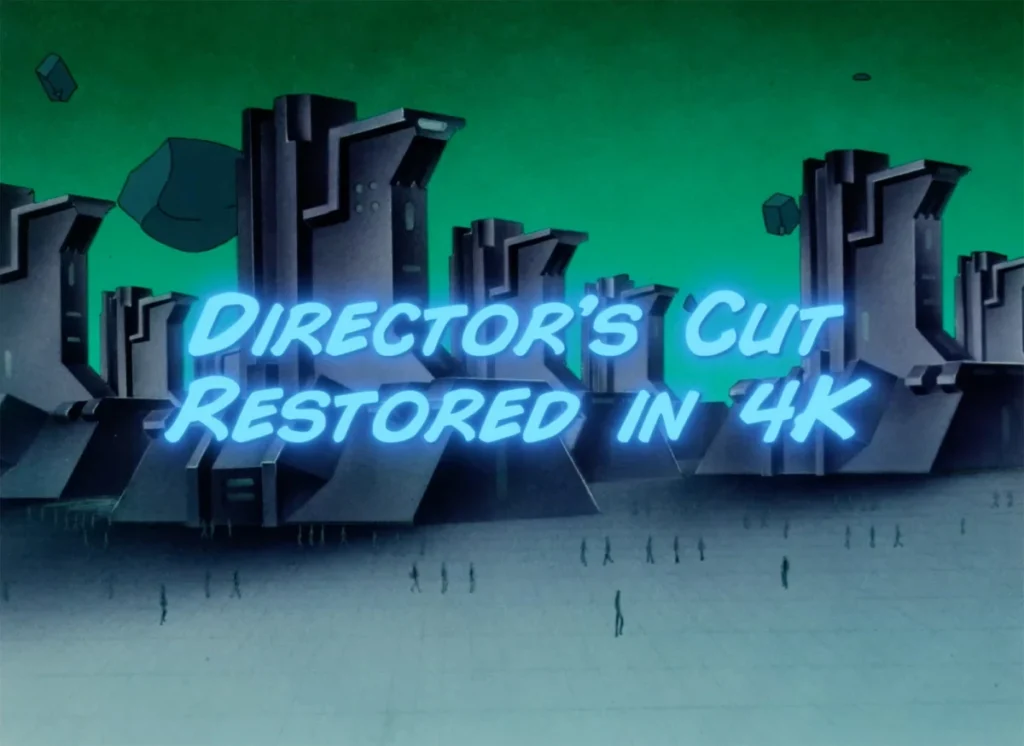

Janus Films has unveiled a new official trailer for a meticulously crafted 4K restoration of Gandahar, the 1987 animated science fiction classic from France. This release marks a significant moment for fans of visionary animation and a chance for a new generation to experience a film that pushed the boundaries of imagination. Directed by the late René Laloux, a titan of French animation renowned for his distinctive and thought-provoking works like Fantastic Planet and The Time Masters, Gandahar arrives in its original, uncut French version, a stark contrast to the edited and dubbed iteration that received a limited theatrical release in the United States in 1988. The timing of this restoration follows Janus Films’ successful 4K re-release of The Time Masters last year, signaling a renewed appreciation for Laloux’s unique cinematic legacy.
The film transports viewers to the distant planet of Gandahar, a seemingly utopian society where peace and prosperity are the norm. However, this idyllic existence is shattered by disturbing reports of inhabitants at the planet’s frontiers being inexplicably turned to stone. Tasked with unraveling this chilling mystery is Sylvain, a young man sent to investigate. His quest for answers leads him to a startling revelation: a colossal, sentient brain known as Metamorphis is at the heart of Gandahar’s growing crisis. This discovery propels Sylvain on a perilous journey, aided by the enigmatic Airelle, through the very fabric of time itself. Their mission is nothing less than to confront and defeat Metamorphis, a task that places not only their lives but the entire future of Gandahar in grave jeopardy. The film’s narrative is underscored by a profound temporal paradox: "In a thousand years, Gandahar was destroyed, and all its people massacred. A thousand years ago, Gandahar will be saved, and what can’t be avoided will be." This cyclical and deterministic theme is characteristic of Laloux’s philosophical approach to science fiction, challenging audiences to ponder causality and destiny.

A Legacy of Visionary Animation
René Laloux’s contribution to the landscape of animated cinema is undeniable. His films are celebrated for their intellectual depth, surreal visual artistry, and willingness to explore complex, often unsettling, themes. Gandahar, his final feature film, stands as a testament to his unique vision. The visual style of Gandahar is particularly noteworthy, featuring the imaginative creature and environment designs of renowned comic-book artist Philippe Caza (also known as Caza), whose surreal and organic aesthetic is seamlessly integrated into Laloux’s distinctive animation. This collaboration resulted in a world that is both alien and strangely familiar, populated by beings that defy conventional categorization. The film’s original French title, "Les Années-lumière" (The Light Years), hints at the vast temporal and spatial scales explored within the narrative.
The narrative of Gandahar is adapted from Jean-Pierre Andrevon’s French novel "Les hommes-machines contre Gandahar" (The Machine-Men Against Gandahar). The screenplay, co-written by Laloux and Raphael Cluzel, translates the novel’s complex themes into a visually arresting cinematic experience. The score, composed by Gabriel Yared, further enhances the film’s atmospheric and epic quality, weaving a sonic tapestry that complements the visual grandeur and emotional weight of the story.
The Journey of Gandahar: From French Release to International Acclaim
Gandahar first premiered in France in December 1987, captivating audiences with its ambitious storytelling and unique animation. Its subsequent release in the United States in 1988, however, was met with a significantly altered version. The theatrical release in the US was edited for content and dubbed into English, a common practice at the time for foreign films aimed at broader international markets. This altered version, while introducing the film to a new audience, arguably diluted the artistic integrity and thematic richness of Laloux’s original vision.

The current 4K restoration by Janus Films aims to rectify this by presenting Gandahar in its pristine, uncut French form. This commitment to preserving the filmmaker’s original intent is a crucial aspect of film archival and restoration, allowing audiences to engage with the work as it was intended to be seen and heard. The restoration process, which involves meticulous digital cleaning, color correction, and sound remastering, breathes new life into the film’s visual and auditory elements, ensuring that its intricate details and subtle nuances are fully appreciated by contemporary viewers. The trailer released by Janus Films showcases the remarkable clarity and vibrancy achieved through this restoration, hinting at a visual feast that promises to be even more immersive than before.
Unpacking the Thematic Depths of Gandahar
At its core, Gandahar is more than just a science fiction adventure; it is a philosophical exploration of destiny, societal evolution, and the consequences of unchecked technological advancement. The planet Gandahar, a seemingly perfect society, is built on a foundation that is ultimately revealed to be fragile and potentially flawed. The emergence of the "Men of Metal" and the existential threat posed by Metamorphis forces the inhabitants to confront their past and the choices that have shaped their present.
The film’s protagonist, Sylvain, represents a nascent hero, thrust into a conflict far beyond his initial understanding. His journey is not merely a physical one but also an intellectual and emotional awakening as he grapples with the complex machinations of Metamorphis and the ethical dilemmas inherent in Gandahar’s societal structure. The introduction of the "Deformed," a race of mutants ostracized from Gandahar due to past scientific experimentation, adds another layer of complexity. Their existence serves as a poignant reminder of the potential dark side of progress and the societal costs of striving for perfection. Their alliance with Sylvain highlights themes of prejudice, acceptance, and the interconnectedness of all beings within a planetary ecosystem.

The concept of Metamorphis, a gargantuan, disembodied brain, is a potent symbol of artificial intelligence and the potential dangers of a consciousness divorced from empathy and human connection. Its ability to manipulate and control through advanced technology raises questions about the nature of sentience and the ethical boundaries of scientific pursuit. The film’s cyclical narrative structure, with its interwoven past and future, further emphasizes the idea that history is not a linear progression but a series of interconnected events, where past actions inevitably shape future outcomes. This philosophical underpinning elevates Gandahar beyond a mere genre film, positioning it as a work of significant artistic and intellectual merit.
Supporting Data and Context
The re-release of Gandahar arrives at a time when animated films, particularly those with mature themes and artistic ambition, are gaining increased recognition and critical appreciation. The success of other restored animated classics and the growing demand for unique, auteur-driven animated features suggest a receptive audience for Laloux’s work. The 4K restoration itself represents a significant investment in film preservation, ensuring that cinematic masterpieces are accessible to future generations. The technical aspects of 4K restoration involve high-resolution scanning of the original film elements, followed by meticulous digital cleanup to remove scratches, dirt, and other imperfections. Color grading is then undertaken to match the original intended look, and the soundtrack is remastered to provide optimal audio clarity. This process can take months or even years, depending on the condition of the original materials and the complexity of the film.
The choice of Janus Films to handle this restoration and re-release is also noteworthy. Janus Films is a renowned distributor known for its commitment to art cinema and its role in bringing critically acclaimed foreign films to American audiences. Their involvement with Laloux’s work, following their successful restoration of The Time Masters, underscores the enduring appeal and artistic significance of his filmography.

Broader Impact and Implications
The re-release of Gandahar in its original form has several implications for the film industry and for animation enthusiasts. Firstly, it provides a valuable opportunity for scholars and critics to re-examine Laloux’s work through the lens of his complete artistic vision, free from the alterations of previous releases. Secondly, it serves as an educational tool, exposing a new generation of viewers to the rich history of international animation and the diverse forms it can take.
Furthermore, the renewed interest in Laloux’s films can inspire contemporary animators and filmmakers to explore bold and unconventional storytelling approaches. In an era often dominated by formulaic blockbusters, the unique aesthetic and intellectual rigor of films like Gandahar offer a powerful counterpoint, demonstrating the potential of animation to be a medium for profound artistic expression and thought-provoking commentary. The film’s themes of societal control, the ethics of progress, and the nature of humanity remain remarkably relevant in today’s technologically advanced and rapidly changing world.
Release Details and Future Outlook
Gandahar is slated to premiere in select U.S. theaters on August 28th, 2026. This theatrical re-release is expected to be accompanied by a wider digital and home video release, making the 4K restoration accessible to a broader audience. Fans can visit Janus Films’ official website for the most up-to-date information regarding showtimes and availability. The release is poised to reignite discussions about the film’s enduring legacy and its place within the pantheon of groundbreaking animated science fiction. The trailer, accompanied by a striking poster, offers a tantalizing glimpse into the visually rich and intellectually stimulating world that awaits audiences. As the film re-enters the cultural conversation, it is a reminder that some cinematic visions transcend time, continuing to captivate and challenge viewers decades after their initial release. The anticipation for this restored masterpiece is palpable, promising a cinematic event that honors the genius of René Laloux and celebrates the power of visionary animation.