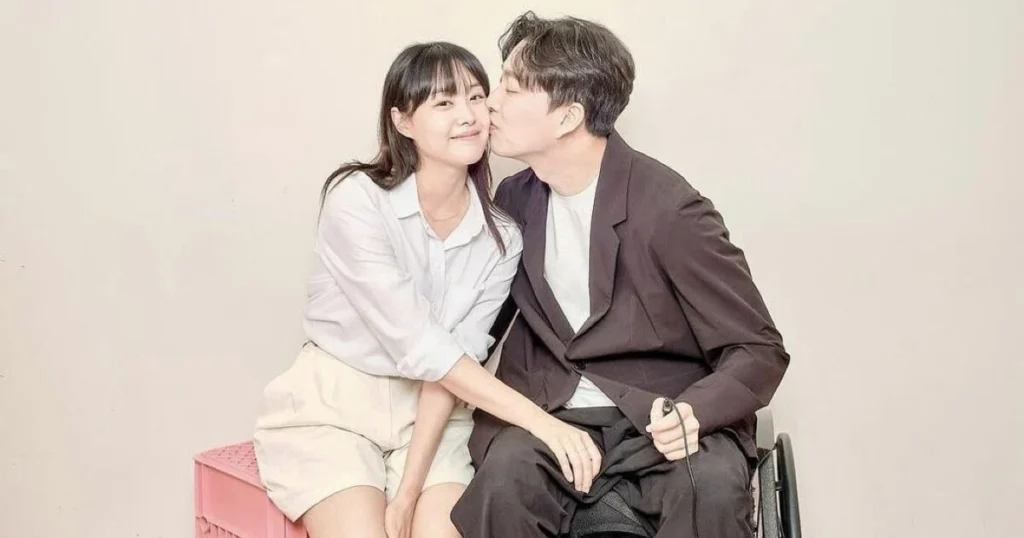

The transition from a public-facing idol to a private partner involves a complex navigation of identity, particularly for those who have spent decades under the scrutiny of the South Korean entertainment industry. Singer and actress Song Jieun, a former member of the prominent K-pop girl group Secret, recently provided a candid look into this evolution during a featured appearance on the YouTube channel "Wonderful Woman." In a video titled "If You Love, Like This Couple! | Singer Song Jieun | Wonderful Woman," uploaded on July 15, Jieun detailed the psychological shifts she has experienced since marrying her husband, Park We. The interview highlights not only the personal growth of a veteran entertainer but also the broader challenges of communication and self-assertion within the context of high-profile marriages.
The Revelation of Good Child Syndrome
Central to Song Jieun’s reflection is the concept of "good child syndrome," a psychological term often used to describe individuals who suppress their own desires and emotions to meet the expectations of authority figures or to maintain harmony in their environment. During the interview, Song admitted that her upbringing as an only child in a strict household significantly shaped her interpersonal dynamics. She noted that from a young age, she felt a compulsion to follow the majority’s will, often at the expense of her own thoughts and preferences.
This behavioral pattern followed her into her adult life and her romantic relationship with Park We. During their dating period, Song described a tendency to agree with her partner’s suggestions regardless of her internal feelings. "Because I wanted to be loved and adored by him, whenever he asked, ‘Jieun, shall we do this?’ even if I had a different opinion, I always said, ‘Okay,’ and went along with it," she explained. This desire for external validation is common among public figures who are trained from a young age to project an agreeable and marketable persona.
The Shift from Dating to Marriage
The dynamic of their relationship underwent a necessary transformation following their legal and ceremonial union. Song Jieun observed that while the "pleasing" behavior was sustainable during short-term dating encounters, the reality of cohabitation and a lifelong commitment made such suppression impossible. She noted that during their dating days, she could return to her own home and recover from the exhaustion of self-suppression. However, marriage removed that boundary.
"Marriage is different—you don’t break up. You have to keep living with consideration, but one day my tired expressions must have shown," she confessed. This realization led to a pivotal moment of honesty where she disclosed to Park We that she did not always enjoy the activities or foods they shared. She expressed that while she initially followed his lead out of a desire to please him, she also had personal interests and boundaries that needed to be respected.
Park We’s Response and the Realization of Incompatibility
The revelation of Song’s hidden preferences was a significant shock to Park We. According to Song, Park had entered the marriage under the impression that they were perfectly compatible, largely because she had rarely expressed dissent. "He told me, ‘I thought there was no one more compatible than you, which is why I married you,’ but it turned out most things didn’t match," Song recounted.
Park’s reaction was one of empathetic concern rather than frustration. He reportedly asked her with "sad eyes" if she had truly lived her entire life trying to satisfy others. This moment of mutual vulnerability has since paved the way for a more transparent and honest communication style within their household. Song concluded that she is now "honest about everything with him," marking a departure from the "good child" persona that had defined her for years.
Chronology of the Relationship and Public Announcement
The relationship between Song Jieun and Park We has been a subject of significant public interest in South Korea, partly due to Park We’s profile as a prominent YouTuber and advocate for people with disabilities. The couple first went public with their relationship in December 2023, sharing their story through social media and Park We’s YouTube channel, "Weracle."
In September 2024, the couple officially registered their marriage, a legal step often taken in South Korea prior to or shortly after the wedding ceremony. They held their formal wedding ceremony in October 2024, surrounded by friends, family, and colleagues from the entertainment industry. The timeline of their relationship suggests a rapid but deeply committed progression, characterized by public transparency and a shared mission to inspire others through their story.
Background: Song Jieun’s Career in the Spotlight
To understand the weight of Song Jieun’s "good child syndrome," it is necessary to examine her career trajectory. Song debuted in 2009 as the main vocalist of Secret, a group that became one of the "second-generation" K-pop staples with hits like "Magic," "Madonna," and "Shy Boy." The K-pop industry is notorious for its rigorous training systems and the pressure it places on idols to maintain a "pure" and "agreeable" image.
As the main vocalist, Song was often the face of the group in vocal performances and solo endeavors. Her solo career, marked by the success of tracks like "Going Crazy," further solidified her status as a respected artist. However, the transition from being a member of a group—where individual opinions are often secondary to the group’s brand—to a solo actress and then a wife required a significant re-evaluation of her self-expression. Her recent honesty about her personality changes suggests a broader trend of former idols seeking more authentic lives after leaving the strict confines of the idol system.
Background: Park We’s Journey of Resilience
Park We is a figure of immense resilience in the South Korean digital landscape. In 2014, Park suffered a catastrophic fall from a building that resulted in a diagnosis of general paralysis (quadriplegia). Despite the initial prognosis, through rigorous rehabilitation, he regained significant mobility in his upper body.
He eventually launched the YouTube channel "Weracle" (a portmanteau of "We" and "Miracle"), which focuses on his daily life as a wheelchair user, accessibility issues, and motivational content. His channel has garnered hundreds of thousands of subscribers, making him a central figure in the movement to improve the visibility of people with disabilities in South Korea. The union between a high-profile former idol and a disability advocate has been hailed by the public as a "miracle-like" romance, though Song Jieun’s recent interview reminds the public that their marriage faces the same mundane and psychological hurdles as any other.
Psychological Context: The "Good Child" in East Asian Society
Psychologists in South Korea have frequently discussed "good child syndrome" (known locally as chak-han-ai jeun-gu-gun) within the context of East Asian parenting styles, which often emphasize filial piety, obedience, and social harmony. For individuals like Song Jieun, who grew up in a strict household and then entered an industry that rewards compliance, the pressure to be "good" can lead to chronic stress and a loss of self-identity.
The shift toward honesty in her marriage is seen by experts as a healthy developmental milestone. By asserting her own likes and dislikes, Song is moving away from a role-based identity (the "perfect wife" or "perfect idol") and toward an authentic identity. This transition is particularly vital in a marriage where one partner has a physical disability, as the caregiver-partner dynamic can sometimes inadvertently suppress the needs of the caregiver if open communication is not maintained.
Broader Implications for Celebrity Culture and Social Stigma
The openness with which Song Jieun and Park We discuss their marital adjustments serves a dual purpose. First, it humanizes the K-pop idol experience, showing that the "perfect" personas seen on screen are often the result of deep-seated psychological conditioning. Second, it continues to break down social stigmas regarding disability in South Korea.
By discussing their "incompatibility" and the hard work required to align their lives, they provide a realistic counter-narrative to the idealized "fairytale" often projected onto their relationship by the media. Their story suggests that the strength of their bond lies not in an effortless "match," but in their willingness to confront personal flaws and communicate honestly.
Supporting Data and Public Reaction
Public sentiment toward the couple has remained overwhelmingly positive. Following the release of the "Wonderful Woman" video, social media platforms and Korean community portals saw a surge in supportive comments. Many netizens praised Song Jieun for her bravery in admitting her struggles with "good child syndrome," noting that many people in their 20s and 30s struggle with similar pressures to conform.
Data from South Korean social media monitoring tools indicated that the terms "Song Jieun," "Park We," and "Good Child Syndrome" trended shortly after the video’s release. The engagement levels on the "Wonderful Woman" video surpassed the channel’s average, highlighting the public’s continued fascination with the couple’s journey.
Conclusion: A Foundation of Honesty
The narrative of Song Jieun and Park We is evolving from one of "overcoming adversity" to one of "building a sustainable partnership." Song’s admission that she is now "honest about everything" with her husband indicates a maturing relationship that prioritizes individual well-being over the facade of perfect harmony.
As they navigate their first year of marriage, the couple continues to be a point of reference for discussions on disability, mental health, and the changing nature of celebrity in South Korea. Their willingness to share the less-than-perfect aspects of their transition into married life provides a substantive look at the realities of partnership, proving that even the most celebrated couples must engage in the difficult work of self-discovery and honest dialogue to ensure a lasting union.