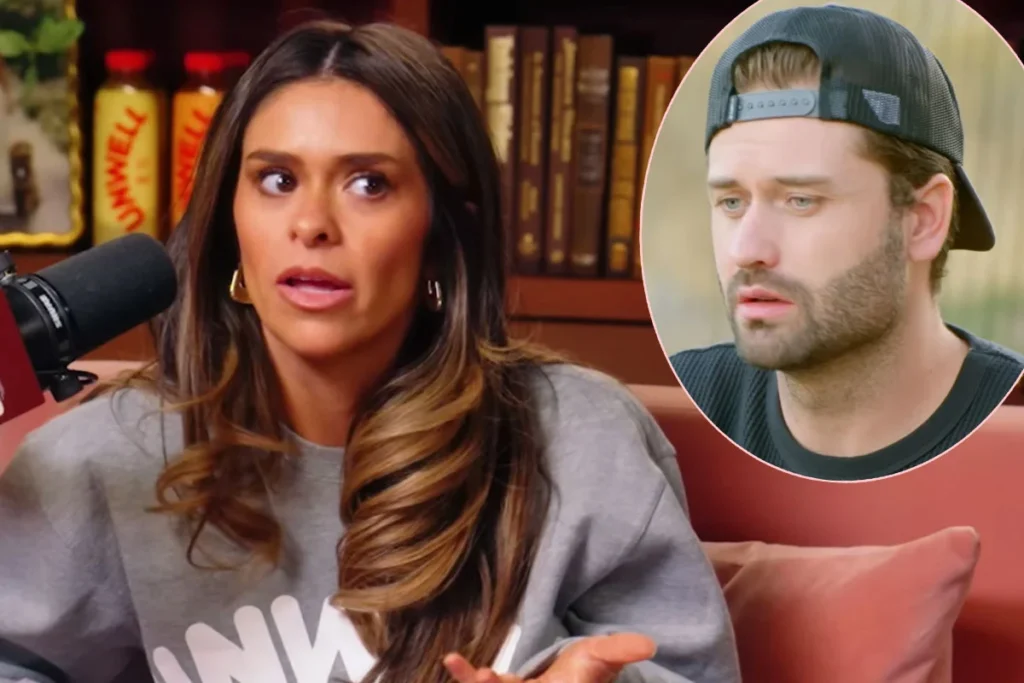

The Department of Child and Family Services (DCFS) in Utah has initiated a significant legal action, filing a petition in juvenile court to declare the three children of social media personality Taylor Frankie Paul as "abused, neglected or dependent." This move signals a severe escalation in concerns regarding the welfare of Paul’s offspring, prompting a fast-tracked hearing and a request for court-ordered protective supervision and the appointment of a guardian ad litem. The petition, filed by the Utah Attorney General’s Office, casts a stark spotlight on the personal life of a figure who rose to prominence through her online presence, particularly within the "Mormon TikTok" community.
Background of Taylor Frankie Paul and Her Public Persona
Taylor Frankie Paul gained widespread recognition as a social media influencer, notably through her candid discussions and content related to her life as a Latter-day Saint woman, often dubbed "Mormon TikTok." Her online presence provided a glimpse into her personal life, including her marriage and family, attracting a large following eager for authentic, relatable content. However, Paul’s public profile took a dramatic turn when she became embroiled in a highly publicized "soft-swinging" scandal. This controversy, which involved revelations about her marital arrangements and subsequent divorce from Tate Paul, catapulted her into national headlines, drawing intense media scrutiny and public commentary. The increased attention, while boosting her fame, also brought unprecedented pressure and a constant examination of her personal life choices. She shares her 8-year-old daughter Indy and 5-year-old son Ocean with her ex-husband Tate Paul, and her 2-year-old son Ever with her ex-partner Dakota Mortensen. The current DCFS action represents a profound shift from public fascination with her lifestyle choices to serious legal proceedings concerning the safety and well-being of her children.
Chronology of DCFS Involvement and Allegations
The DCFS petition outlines a series of incidents and observations that form the basis of their aggressive stance. According to details from the court filing, which were first reported by TMZ and subsequently corroborated by People, the agency’s involvement intensified following a May 2026 home visit. During this visit, Paul reportedly made a concerning statement to a DCFS agent, indicating that her life coach, identified as Kari, was "the only reason she was still alive." Paul then requested that Kari be permitted to conduct assessments for her mental health and domestic violence issues. However, the DCFS agents informed Paul that Kari was not qualified to administer such professional evaluations, raising questions about the support systems Paul was relying on.
The home visit also reportedly included episodes of emotional volatility from Paul. The filing details that Paul became visibly agitated after reviewing social media messages on her phone, leading her to storm out of the house. During this interaction, she allegedly told DCFS agents that while she was not suicidal, they "should know who killed her if she ends up dead because she felt no one believes her." These statements, made in the presence of child welfare officials, underscore a significant level of personal distress and a perceived lack of support or understanding. Such remarks are often taken very seriously by child protection agencies as they can indicate a parent’s diminished capacity to cope with stress, which can indirectly impact their ability to provide consistent and stable care for their children.
Further details within the DCFS filing present specific instances of alleged neglect and exposure to domestic conflict. One particularly disturbing revelation concerns a domestic violence incident where Taylor Paul reportedly threw a chair at Dakota Mortensen while their 8-year-old daughter, Indy, was present. Witnessing such an event can be deeply traumatizing for a child and is often cited by child welfare agencies as a form of emotional abuse or neglect due to exposure to violence.
The petition also raised concerns about the caregiving responsibilities placed upon Indy. It alleges that the young girl is often the one responsible for changing her 2-year-old brother Ever’s diapers and preparing his bottles. Such an arrangement, if consistently true, could be viewed as parentification, where a child is expected to take on adult roles and responsibilities, potentially depriving them of their own childhood and development. The filing further notes that Indy frequently hears her mother fighting with Dakota, which reportedly makes her sad. This consistent exposure to parental conflict can have profound negative impacts on a child’s emotional and psychological well-being, leading to anxiety, depression, and behavioral issues.
During the DCFS home visit, agents observed Taylor Paul becoming "escalated and dysregulated," a term that suggests a significant loss of emotional control. Amidst this tense environment, her youngest son, Ever, reportedly sought comfort from Paul’s sister and nanny, Aspen, indicating a potential lack of emotional regulation from Paul and a reliance on other caregivers for the child’s sense of security. The DCFS also included statements from Paul’s own therapist, who reportedly alleged that Paul had not meaningfully committed to her therapy sessions and that the therapist perceived Paul felt "forced" to be there. This lack of engagement in therapeutic interventions, especially when mandated or recommended for mental health concerns, can be a red flag for child welfare agencies, suggesting a parent may not be fully addressing issues that could impact their parenting capacity.
Legal Framework and Implications of the Petition
The DCFS petition seeks a finding that the children have been "abused, neglected or dependent." In Utah, these terms have specific legal definitions. "Abuse" typically refers to physical, sexual, or emotional harm inflicted upon a child. "Neglect" involves a failure to provide for a child’s basic needs, such as adequate food, shelter, medical care, education, or supervision, or a failure to protect a child from harm. "Dependency" might refer to a situation where a child has no parent or guardian capable of providing care and protection. A finding of any of these conditions allows the court to intervene to protect the child’s welfare.
The request for "protective supervision" means that the court would maintain oversight of the family situation, often requiring DCFS caseworkers to regularly monitor the home environment and Paul’s compliance with court orders, which might include therapy, parenting classes, or other supportive services. The appointment of a "guardian ad litem" (GAL) is a critical step in child welfare cases. A GAL is an attorney or trained advocate appointed by the court to represent solely the best interests of the children involved. This individual investigates the family situation, gathers information, and makes recommendations to the court regarding what they believe is best for the children, independent of the parents’ or DCFS’s wishes. The Utah Attorney General’s Office’s involvement in filing the petition underscores the gravity of the allegations, as this office often handles complex and high-stakes legal matters for the state. The request for a "fast-tracked" hearing indicates the agency’s belief that the children are in a situation requiring urgent judicial attention.
The privacy surrounding juvenile court proceedings is a cornerstone of child protection law, designed to shield children from public exposure during sensitive legal battles. The fact that details of this petition have been leaked raises significant concerns, as noted by sources close to Paul. Leaks from such proceedings can potentially undermine the very protections intended for children, subjecting them and their families to public scrutiny that can be detrimental to their well-being and the legal process itself.
Official Responses and Statements
Following the public disclosure of the DCFS petition, representatives for Taylor Frankie Paul issued statements to address the serious allegations and the legal process unfolding. A source close to the 32-year-old reality star provided a statement to TMZ, expressing profound concern over the leak of confidential juvenile court information. "The fact that this leaked speaks volumes on its own," the source stated. "Juvenile court is private to protect the children’s interests, leaking this information does the exact opposite. Someone is clearly acting in their own interest, not the children’s." This statement suggests a belief that the leak was a deliberate act by an external party, potentially with ulterior motives, rather than an accidental disclosure.
The source further asserted that the publicly available information is "incomplete," arguing that it "leaves out DCFS’s documented concerns about the other side, which are on record in district court and with law enforcement." This implies that the DCFS may have also raised issues regarding the other parent or parties involved in the children’s lives, and that a more comprehensive picture would emerge once the juvenile court "weigh[s] all of that in full." This defense aims to broaden the scope of the inquiry, suggesting that the current narrative focuses unfairly on Paul while omitting other relevant factors.
Taylor Paul’s lawyers also released a statement to People, offering a more formal legal perspective on the situation. They characterized the transition of the ongoing custody actions to juvenile court as "a common step for families engaged in highly contentious, complex custody matters." This framing attempts to normalize the court’s intervention, presenting it not as an indictment but as a procedural necessity in difficult custody disputes. The lawyers stated that Taylor Paul is "not deterred by this transition; she welcomes the added structure and oversight it provides and looks forward to continuing her progress toward normalizing custody and becoming the healthiest version of herself." This suggests a willingness to cooperate with the court’s directives and a commitment to personal growth and stability for the benefit of her children. The statement concluded by emphasizing Paul’s full commitment "to doing whatever is necessary to reach that goal and will not be swayed from it," and appreciating "the professionalism of DCFS and its representatives."
Broader Impact and Implications
The DCFS action against Taylor Frankie Paul carries significant implications, not only for her and her family but also for the broader discourse around public figures, parental responsibility, and child welfare. For Paul, the immediate future involves a strenuous legal battle that will undoubtedly impact her public image and potentially her career. The intense scrutiny on her parenting and mental health will persist throughout the proceedings, forcing her to navigate deeply personal challenges in the public eye. The outcome of the juvenile court case could range from mandated services and protective supervision to, in extreme scenarios, a temporary or permanent loss of custody, depending on the court’s findings regarding the children’s safety and well-being.
For the children, Indy, Ocean, and Ever, the paramount concern remains their welfare and safety. The legal process, while designed to protect them, can also be a source of stress and uncertainty. The role of the guardian ad litem will be crucial in ensuring their voices, or at least their best interests, are heard and represented in court. The long-term psychological impact of contentious custody battles, exposure to domestic conflict, and public attention on their family cannot be understated. Children in such situations often require extensive support and therapy to process their experiences.
This case also contributes to the public discourse on mental health, domestic violence, and parental responsibilities, especially when involving individuals with a significant public platform. It highlights the complexities of balancing personal struggles with the critical duties of parenthood. The ethical implications of leaks from private court proceedings, particularly those concerning child welfare, also warrant discussion, raising questions about media responsibility and the protection of vulnerable individuals within the legal system. Ultimately, the case underscores the principle that regardless of public status, the welfare of children is a priority that child protection agencies are legally mandated to uphold, often through interventions that can be both aggressive and necessary.
If you have sincere cause to suspect child abuse, call the Childhelp National Child Abuse Hotline at 1-800-4-A-Child or 1-800-422-4453, or go to www.childhelp.org.