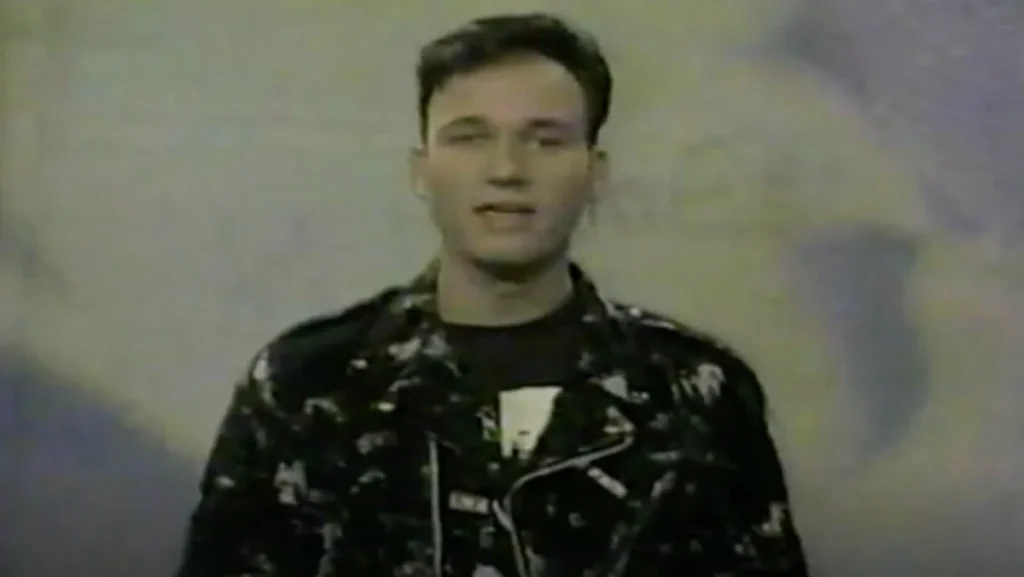

Dave Kendall, the visionary British television producer, host, and disc jockey who conceived and fronted MTV’s groundbreaking alternative music program 120 Minutes, has passed away. His death was announced on Tuesday by fellow MTV alumnus and former 120 Minutes host Matt Pinfield, prompting an outpouring of tributes from across the music and media industries. Kendall, 68, leaves behind a monumental legacy, having played a pivotal role in bringing punk, post-punk, goth, synth-pop, and other nascent underground genres to a national audience, fundamentally reshaping the musical landscape of the late 20th century.
Pinfield, reflecting on Kendall’s profound impact, shared a heartfelt tribute, stating, “Dave was one of the true believers. Long before alternative music found its way into the mainstream, he was there every week on 120 Minutes, introducing people to bands that would go on to define an era. He didn’t just host a show. He gave a home to music that deserved to be heard.” Pinfield further underscored Kendall’s authentic connection to the art form and its creators: “He loved the music, respected the artists, and connected with fans in a way that always felt authentic. That’s a rare gift.” This sentiment encapsulates the essence of Kendall’s approach, which resonated deeply with a generation of viewers hungry for sounds beyond the mainstream.
The Genesis of an Alternative Revolution
Born in the United Kingdom, Dave Kendall’s journey to MTV was marked by a keen understanding of burgeoning musical trends and a desire to champion sounds that defied commercial categorization. His early career in media and music equipped him with the foresight to recognize the burgeoning alternative scene that was simmering beneath the surface of the dominant pop and rock genres of the early 1980s. When he joined MTV as a producer, the network, launched in 1981, was rapidly consolidating its cultural footprint but primarily focused on mainstream pop and rock acts, often characterized by glitzy, high-budget music videos. While artists like Michael Jackson, Madonna, Duran Duran, and Bon Jovi dominated the airwaves, a vibrant ecosystem of independent labels, college radio stations, and underground clubs was fostering a different kind of music – one that was raw, experimental, and often politically charged.
Kendall identified a significant void in MTV’s programming. He saw an untapped audience yearning for exposure to bands like The Smiths, R.E.M., The Cure, Siouxsie and the Banshees, and countless others who were achieving critical acclaim and building cult followings without significant mainstream media attention. This vision culminated in his audacious pitch to MTV executives: a dedicated two-hour block for these "alternative" sounds, which he christened 120 Minutes. The concept was revolutionary for its time, challenging the network’s established programming model and betting on the appeal of music that was, by definition, outside the norm.
Launching a Cultural Touchstone: March 10, 1986
120 Minutes officially debuted on March 10, 1986, initially without a fixed host, instead featuring a rotating roster of MTV VJs. The show quickly carved out a niche for itself, becoming a beacon for music fans disillusioned with the prevalent pop and hair metal. It was a crucial platform for genres that included, but were not limited to, punk rock, post-punk, new wave, goth rock, industrial, ska revival, and early indie rock. In an era before widespread internet access and streaming services, college radio stations were the primary gatekeepers for non-mainstream music. 120 Minutes served as an essential bridge, elevating these sounds from localized niche audiences to a national and even international stage.
Kendall’s own deep connection to the music and his thoughtful approach to its presentation made him the natural choice to eventually host the program. He took over hosting duties in 1989, a role he maintained until 1992. During his tenure, Kendall became the amiable, knowledgeable face of alternative music for millions. His calm demeanor, articulate introductions, and genuine enthusiasm for the artists he featured created an atmosphere of authenticity that was distinct from the often more boisterous or commercialized presentation of other MTV programs. He wasn’t just reading teleprompter copy; he was sharing music he genuinely believed in, and that passion was palpable.
Kendall’s Era: Nurturing the Alternative Boom
The period from 1989 to 1992, with Dave Kendall at the helm, was a transformative time for alternative music. This era saw the genre steadily build momentum, laying the groundwork for the explosion of grunge and alternative rock that would define the early 1990s. 120 Minutes provided crucial early exposure to bands like Nirvana, Pearl Jam, Soundgarden, Smashing Pumpkins, and Alice in Chains before their mainstream breakthroughs. It also continued to champion established alternative acts such as R.E.M., The Cure, Depeche Mode, and Pixies, solidifying their status and introducing them to new fans.
Kendall articulated the show’s unique position in a 2016 interview with CONSEQUENCE, stating, “By far the most important thing about 120 Minutes was that it acted as a distribution channel for organic musical produce, if you will. The only other outlet for non-mainstream music at the time was a few local college radio stations.” This analogy perfectly encapsulates the show’s function: it was a curated marketplace, offering viewers access to fresh, authentic music that was often unavailable through conventional commercial outlets. Without 120 Minutes, many influential bands might have remained regional phenomena for far longer, or perhaps never broken through at all. The show not only played music videos but also featured in-depth interviews, live performances, and segments that delved into the subcultures surrounding these genres, providing a holistic view that transcended mere video rotation.
The Broader Impact and Legacy of 120 Minutes
The cultural impact of 120 Minutes extends far beyond its initial run. It wasn’t just a television show; it was a cultural institution that fostered a sense of community among alternative music fans. For many young people growing up in the 80s and early 90s, tuning into 120 Minutes on Sunday nights was a ritual, a gateway to a world of sound and ideas that felt rebellious and authentic. The show democratized access to music that was otherwise considered niche, paving the way for the "alternative nation" phenomenon.
The success of 120 Minutes eventually led MTV to launch spin-off shows and dedicated programming blocks, such as Alternative Nation and Headbangers Ball (which, while metal-focused, shared the niche-programming approach), further cementing the network’s role in breaking diverse genres. The show’s format and ethos influenced subsequent music programming on other networks and platforms, demonstrating the viability and profitability of catering to specialized musical tastes. Its role in the rise of alternative music cannot be overstated; it provided the crucial visual and sonic platform that helped these artists transition from college radio darlings to household names. Bands like Nirvana, whose "Smells Like Teen Spirit" video became an anthem, found their initial widespread exposure on shows like 120 Minutes, which had diligently cultivated an audience ready to embrace such a seismic shift in popular music.
A Career Beyond the Minutes
After his departure from 120 Minutes in 1992, Dave Kendall’s career continued to evolve, demonstrating his enduring passion for music and media. He remained active as a television host and producer, applying his expertise to various projects. His deep knowledge of music and his personable style made him a sought-after presence in the industry. Kendall also frequently performed as a DJ, bringing his eclectic taste and extensive musical library to live audiences, a testament to his continued connection with the very music he championed on television.
In later years, Kendall expanded his reach to radio, hosting a show on SiriusXM’s First Wave channel, which specializes in new wave and alternative music from the 1980s. This role allowed him to reconnect with many of the artists and genres he had helped popularize decades earlier, bringing his unique perspective and historical insight to a new generation of listeners and long-time fans. His commitment to global understanding also saw him serve as a correspondent for the Bangkok Post in Thailand, where he resided during the latter part of his life. This chapter of his life highlighted his diverse interests and his ability to engage with culture and current events beyond the music sphere, though his passion for sound remained a constant thread.
Tributes and Enduring Reverence
The news of Kendall’s passing elicited a wave of tributes from former colleagues, artists, and countless fans whose lives he touched. Matt Pinfield’s initial announcement resonated widely, sparking discussions across social media platforms about the profound impact of 120 Minutes and Kendall himself. Artists who benefited from the show’s platform, as well as those who simply grew up watching it, shared memories of its significance. Many pointed to Kendall’s role as an educator, a guide who introduced them to bands that would become lifelong favorites and shape their musical identities.
His legacy is one of authenticity, curation, and fearless advocacy for music that defied easy classification. In an industry often driven by commercial imperatives, Dave Kendall stood out as a purist, a "true believer" as Pinfield aptly described, whose primary motivation was the music itself. He possessed a rare ability to bridge the gap between underground scenes and mass media, all while maintaining the integrity of the artists he showcased.
The Enduring Echo of Alternative
In an age where music discovery is largely algorithm-driven and fragmented, the concept of a curated program like 120 Minutes holds a nostalgic yet powerful appeal. Dave Kendall’s vision for the show was prescient, anticipating the eventual mainstreaming of alternative music and demonstrating the hunger for diverse sounds. He not only provided a platform but also fostered an environment of curiosity and exploration, encouraging viewers to delve deeper into the rich tapestry of independent music.
His passing marks the end of an era for many who associate him directly with the golden age of alternative music on MTV. Yet, his influence continues to resonate. The bands he championed are now legends, and the cultural shifts he helped catalyze are permanent fixtures of music history. Dave Kendall’s pioneering spirit and unwavering dedication to alternative music ensured that 120 Minutes was more than just a show; it was a movement, a vital artery in the heart of a burgeoning counterculture. His contribution to music television and the broader cultural landscape will be remembered as truly transformative. He provided a voice, a face, and a home for music that dared to be different, and for that, he will be eternally cherished by artists and fans alike.