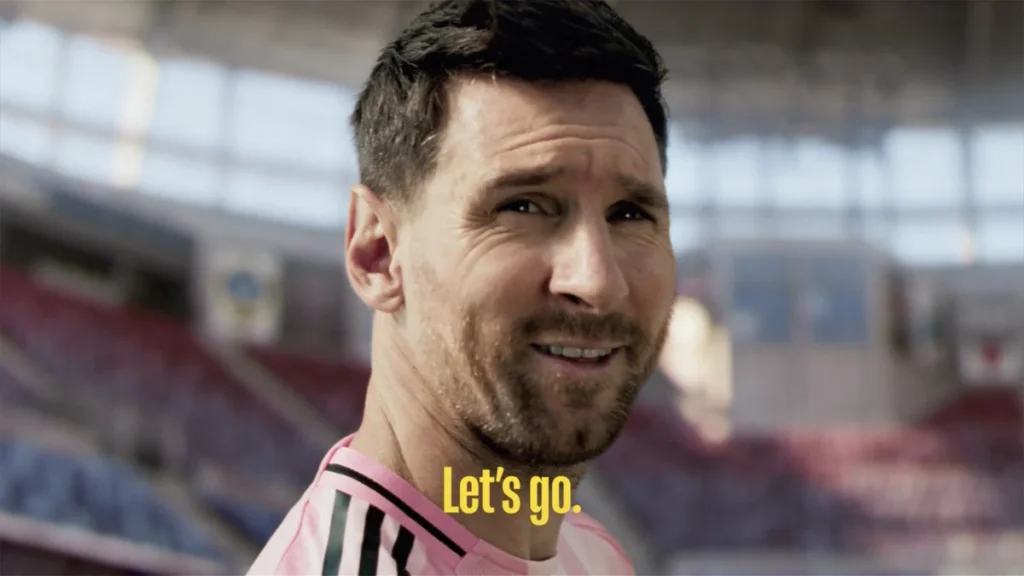

As the curtains prepare to fall on the monumental 2026 FIFA World Cup, Major League Soccer (MLS) is strategically positioning itself to seize an unparalleled opportunity, launching what the league has heralded as the most extensive and coordinated marketing campaign in its 33-year history. This ambitious initiative, aptly titled "Thanks World, We’ll Take It From Here," is designed to convert the global football fervor ignited by the World Cup into sustained, passionate engagement with North America’s premier domestic soccer league. The campaign’s timing is critical, rolling out as the global spectacle reaches its climax, aiming to seamlessly transition newly minted and re-energized football fans into the MLS ecosystem.
A Bold Declaration of Intent and Strategic Vision
The audacious tagline, "Thanks World, We’ll Take It From Here," is more than just a catchy phrase; it’s a bold declaration of MLS’s intent to elevate its stature within the global football landscape and solidify its position in the competitive North American sports market. This campaign represents a pivotal moment for the league, which has steadily grown in prominence since its inception following the 1994 FIFA World Cup hosted by the United States. The 2026 tournament, co-hosted by the United States, Canada, and Mexico, offers an unprecedented platform, and MLS is leaving no stone unturned in its bid to harness this momentum. The strategy is multifaceted, leaning heavily on the star power of its diverse ownership group and top-tier athletes, while also embedding itself deeply within cultural touchpoints to broaden its appeal beyond traditional sports audiences.
The campaign’s star-studded roster includes luminaries such as Inter Miami megastar Lionel Messi, whose arrival in 2023 sent shockwaves through the sporting world and dramatically boosted MLS viewership and attendance figures. Alongside Messi, LAFC star Son Heung-Min, Inter Miami co-owner David Beckham, Austin FC owner Matthew McConaughey, LAFC co-owner Magic Johnson, and Philadelphia Union owner Kevin Durant lend their considerable influence and cross-cultural appeal. This blend of football legends, Hollywood icons, and NBA Hall of Famers underscores MLS’s strategic approach to transcend conventional sports marketing, aiming to attract audiences from entertainment, music, and broader popular culture.
Radhika Duggal, the Chief Marketing Officer of MLS, articulated the core philosophy behind this monumental undertaking in an interview with The Hollywood Reporter. "The FIFA World Cup is going to bring millions of new fans into the game, and our job is to make sure their soccer journey doesn’t end when the tournament does," Duggal stated. Her remarks highlight a proactive approach to fan acquisition and retention, acknowledging that the World Cup serves as an unparalleled gateway to the sport. "This campaign is about showing people that there’s a club, a community, and a story waiting for them every week in MLS. We’re meeting fans through culture, music, and entertainment, making it easy to discover the league, whether that’s on Apple TV or at their local stadium. MLS has never been more ambitious or more connected to the moments shaping culture, and we’re excited to welcome a whole new generation of fans." This comprehensive vision emphasizes accessibility, community, and the ongoing narrative of domestic club football, positioning MLS as a vibrant, continuous source of sporting entertainment.
Historical Context: The Genesis and Evolution of MLS
The relationship between the FIFA World Cup and the birth of Major League Soccer is deeply intertwined. The league itself was founded in 1996, a direct result of the United States being awarded the hosting rights for the 1994 World Cup. FIFA mandated the creation of a professional domestic league as a condition for hosting the tournament. While the 1994 World Cup was a resounding success, drawing record attendance and demonstrating a latent interest in soccer within the U.S., MLS faced significant challenges in its early years. The league struggled with fan engagement, financial stability, and establishing a distinct identity in a crowded sports market dominated by the NFL, NBA, MLB, and NHL.
Over the past three decades, however, MLS has undergone a remarkable transformation. From its initial ten teams, the league has expanded to 29 clubs, with a 30th team, San Diego FC, set to join in 2025. This expansion reflects robust growth in interest and investment, particularly in non-traditional soccer markets. The average attendance for MLS matches has steadily climbed, often surpassing that of NBA and NHL games in many markets. The quality of play has improved dramatically, attracting a mix of promising young talent from North America and abroad, alongside established international stars like Messi, Beckham, Zlatan Ibrahimović, and Thierry Henry, who have chosen MLS as a destination in their careers. The league’s valuation has also soared, with expansion fees reaching upwards of $500 million, underscoring investor confidence in its long-term potential. The multi-billion dollar, ten-year broadcast deal with Apple TV, launched in 2023, further cemented MLS’s position as a forward-thinking league, embracing digital platforms to reach a global audience.
The Unprecedented Opportunity of the 2026 World Cup
The 2026 FIFA World Cup, featuring an expanded format with 48 teams and co-hosted across 16 cities in the United States, Canada, and Mexico, represents an unprecedented opportunity for soccer in North America. Unlike the 1994 tournament, where the U.S. national team was still developing and the domestic league was nascent, the landscape in 2026 is vastly different. The U.S. Men’s National Team (USMNT) has a strong core of young players competing in top European leagues, generating significant national interest. Canada’s men’s team recently qualified for its first World Cup in 36 years in 2022, and Mexico remains a perennial CONCACAF powerhouse.
The sheer scale of the 2026 event is projected to shatter previous viewership and attendance records. The last World Cup, Qatar 2022, drew a cumulative audience of 5 billion people, with the final alone watched by nearly 1.5 billion. Matches involving the U.S. team during previous World Cups have consistently garnered NFL-like television ratings in North America. For instance, the 2022 U.S. vs. England group stage match was watched by over 20 million viewers on FOX and Telemundo, a figure comparable to major NFL regular-season games. The potential for the 2026 tournament, with home soil advantage for three host nations, to significantly surpass these numbers is immense. A blockbuster match involving Mexico or the USMNT, particularly in the later stages of the tournament, could easily exceed 40-50 million viewers across various platforms, as evidenced by the Mexico-England "blockbuster battle" cited in the original report, which drew over 44 million people across two networks and their streaming platforms.
This colossal influx of attention is precisely what MLS aims to leverage. The league’s gamble is that the intense, short-term interest in national team football during the World Cup can be successfully channeled into sustained engagement with the club game. Fans who become captivated by the athleticism, drama, and global spectacle of the World Cup are seen as prime candidates to become regular followers of MLS, particularly if they can connect with players they admired in the tournament or identify with a local club and community.
The Multifaceted Campaign Rollout and Cultural Integration
The "Thanks World, We’ll Take It From Here" campaign is designed for maximum reach and impact, launching strategically during Fox’s coverage of the 2026 World Cup semifinals and final. This prime-time exposure ensures that the campaign’s message resonates with the largest possible football audience at the peak of their engagement. Beyond the initial television spots, the campaign will proliferate across an extensive array of platforms, including Apple TV (the exclusive streaming home for MLS Season Pass), other linear television networks, streaming services, digital media, social media, and prominent out-of-home advertising placements. This omni-channel approach ensures pervasive visibility, meeting fans wherever they consume media.
A significant component of the campaign involves all 30 MLS clubs, underscoring a unified league-wide effort. Twenty-two of these clubs are offering "first match on us" promotions, providing free tickets to prospective fans. This direct incentive is a crucial element of the conversion strategy, removing barriers for new audiences to experience the live matchday atmosphere, which is often cited as a key factor in fostering lasting fandom. The immersive experience of a live MLS game, complete with passionate supporters, vibrant stadium environments, and accessible players, is intended to create an indelible impression.
Beyond traditional advertising and ticketing promotions, MLS is strategically integrating itself into popular culture, particularly through music. The campaign will feature an Amazon Music Original cover of the iconic A Tribe Called Quest song "Can I Kick It?" — a track that perfectly encapsulates the playful yet assertive spirit of football. Produced by the legendary DJ Premier, a towering figure in hip-hop production, and featuring new vocals and lyrics from breakout artist Samara Cyn, this musical collaboration is a powerful statement. It taps into the universal appeal of music and leverages the credibility of established and emerging artists to connect with diverse, younger demographics who may not traditionally follow soccer. The choice of A Tribe Called Quest, known for their lyrical prowess and cultural impact, signals a deliberate move by MLS to align itself with authentic, influential cultural movements, further broadening its appeal beyond niche sports audiences. This fusion of sport, music, and entertainment aims to create a holistic cultural experience around the league.
Camilo Durana, Executive Vice President & Chief Business Officer of MLS, echoed the strategic imperative of the campaign. "At a defining moment for soccer in North America, MLS is turning global excitement into lasting engagement and connection," Durana affirmed. "As the World Cup inspires new fans, our clubs and communities are ready to welcome them as the season resumes and the next chapter of their soccer journey begins with MLS." His statement underscores the league’s readiness to capitalize on the World Cup’s inspirational power, emphasizing the community aspect that often binds fans to clubs.
Implications and Broader Impact: The "Sleeping Giant" Awakens
MLS’s ambitious campaign is a significant bet on the long-held "sleeping giant" narrative of soccer in North America. For decades, experts have predicted the sport’s imminent breakout, but it has largely remained a niche interest compared to the entrenched popularity of American football, basketball, baseball, and ice hockey. The 2026 World Cup, coupled with MLS’s strategic growth and the rising appeal of global stars like Messi, offers the most compelling opportunity yet for soccer to firmly establish itself as a mainstream sport.
The implications of a successful campaign are far-reaching. Economically, increased fan engagement translates into higher attendance, merchandise sales, sponsorship revenues, and media rights values for the league and its clubs. This, in turn, allows for greater investment in player development, infrastructure, and marketing, creating a virtuous cycle of growth. Culturally, a stronger MLS presence would signify a further diversification of North American sports consumption, reflecting the continent’s increasingly diverse demographics. Soccer’s global appeal and relatively low barrier to entry for participation make it a powerful tool for community building and cultural exchange.
However, challenges remain. Converting transient World Cup viewers into dedicated MLS fans requires more than just initial exposure; it demands sustained quality of play, compelling storylines, accessible fan experiences, and consistent media coverage that can compete with the overwhelming presence of other major sports leagues. The "first match on us" promotion is a good start, but retaining those fans will depend on the overall matchday experience and the ability of individual clubs to foster a sense of belonging and loyalty.
The success of "Thanks World, We’ll Take It From Here" will be a critical barometer for MLS’s future trajectory. It is not merely about attracting new viewers but about cultivating a new generation of passionate supporters who will drive the league’s growth for decades to come. By positioning itself as the natural progression from the global spectacle of the World Cup, MLS is making a definitive statement about its aspirations: to move beyond being a developing league and to establish itself as a leading professional sports entity, capable of captivating a sports-obsessed continent and leaving an enduring legacy on the North American sporting landscape. The league’s ambition to be viewed on par with the top leagues in the country is now firmly articulated, and the 2026 World Cup provides the ultimate stage for MLS to prove it can, indeed, "take it from here."