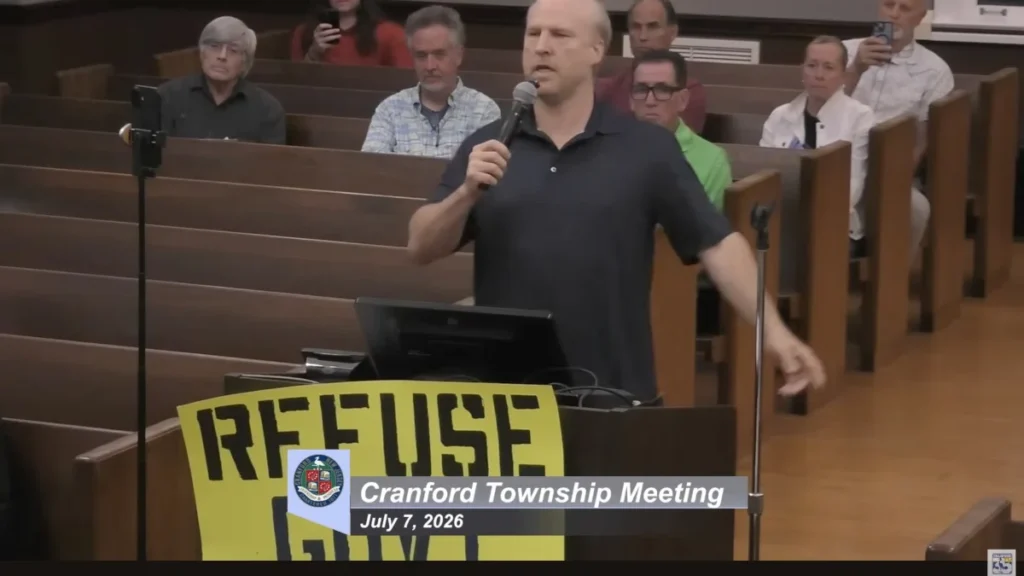

The Cranford Township Committee meeting on July 7th, 2026, devolved into a spectacle of musical protest and costumed performance, drawing national attention to the often-staid proceedings of local governance. What began as a routine public comment period transformed into an impromptu concert featuring a rendition of Morrissey’s 1994 hit "The More You Ignore Me, The Closer I Get," performed by 52-year-old serial provocateur William Thilly, culminating in his arrest. This unusual event was further punctuated by the appearance of a purple-clad figure identifying as "Bongholeo," accompanied by "Bongholito," who delivered an altered version of Lizzo’s "About Damn Time," infused with marijuana-themed lyrics. The incidents, captured on public access television and subsequently circulated online, have ignited conversations about free speech, public decorum, and the evolving nature of civic engagement in an increasingly digital and attention-driven era.
A Detailed Account of the July 7th Meeting’s Disruptions
The Cranford Township Committee meeting commenced like any other, with a standard agenda and the anticipated segment for public comment, a cornerstone of democratic local governance designed to allow citizens to voice concerns, offer suggestions, or express opinions on matters pertinent to the community. However, the evening of July 7th, 2026, was destined to stray far from routine.
The first notable disruption came from William Thilly, a figure already well-known to the Cranford Township Committee and its regular attendees for his unconventional methods of protest. As he approached the podium, a small portable speaker in hand, Thilly positioned a sign prominently displaying the message "Refuse Govt. Abuse." His initial remarks were a pointed critique of what he characterized as a pervasive lack of government transparency, not only within Cranford but across global administrations. He passionately asserted that citizens could no longer passively accept such perceived abuses of power, setting a confrontational tone for his appearance.
As his allotted time for public comment began to dwindle, Thilly surprised the room by activating his speaker and launching into a vocal performance of Morrissey’s "The More You Ignore Me, The Closer I Get." The iconic lyrics, delivered with conviction, seemed to serve as a direct, albeit metaphorical, challenge to the governing body seated before him. Despite repeated attempts by the presiding officer to interject and remind him of the time limits and rules of decorum, Thilly persisted, serenading the committee with the melancholic anthem. The situation escalated rapidly. As Thilly continued to sing past his allocated time, members of the Cranford Police Department, who are typically present at such meetings to ensure public order, approached the podium. With handcuffs visibly at the ready, officers intervened to physically remove Thilly, effectively ending his impromptu concert. He was subsequently charged with disrupting a public meeting, a charge that carries various legal implications depending on local statutes. The entire sequence, from his initial statement to his removal, was broadcast live on public access television, ensuring its widespread dissemination.
Hardly had the reverberations of Thilly’s performance subsided when the meeting was treated to yet another extraordinary display. A second individual, distinctively dressed in a full-body purple costume designed to resemble a bong, stepped up to the microphone. This individual introduced himself as "Bongholeo" and was notably accompanied by a prop he referred to as his "fake baby," "Bongholito." Breaking from traditional commentary, "Bongholeo" proceeded to deliver a performance of Lizzo’s popular track "About Damn Time." Crucially, the lyrics had been creatively altered to incorporate themes and references related to marijuana use, transforming a pop anthem into a satirical commentary, likely pertaining to cannabis policy or cultural perceptions within the community or state. This performance, while less confrontational in its physical execution than Thilly’s, equally commanded the attention of the room and contributed to the meeting’s growing notoriety.
The Provocateur’s Past: William Thilly’s History of Unconventional Activism
William Thilly is not a new face to the Cranford Township Committee meetings nor to the concept of viral public protest. His reputation as a "serial provocateur" has been cemented through a series of highly unconventional and attention-grabbing demonstrations during public comment periods. These actions appear to be deliberate strategies to draw maximum attention to his grievances, which frequently revolve around issues of government accountability, transparency, and what he perceives as systemic abuses of power.
Prior to his Morrissey serenade and subsequent arrest, Thilly achieved significant online notoriety in the preceding year for another remarkable stunt: breakdancing during a public comment period. This incident, captured on video and widely shared across social media platforms like YouTube and TikTok, quickly went viral. The sight of a middle-aged man executing intricate breakdance moves in the formal setting of a township committee meeting struck many as both bizarre and amusing, instantly propelling him into the spotlight as an icon of eccentric civic engagement. While the specific issues he was protesting during the breakdancing incident were not explicitly detailed in the viral clip, it underscored his consistent methodology of using spectacle to convey a message or express dissent.
His consistent presence and methods suggest a deep-seated frustration with traditional avenues of political engagement, leading him to adopt tactics that are almost guaranteed to disrupt and therefore draw eyeballs. Thilly’s protests, whether through song, dance, or direct verbal critiques, generally coalesce around themes of governmental overreach, lack of public access to information, and a perceived disregard for citizen concerns. These themes resonate with a segment of the population that feels unheard by local authorities, making his actions, however unusual, a form of amplified dissent. His history indicates a pattern of pushing the boundaries of what is considered acceptable behavior within a public forum, testing the limits of free expression against the imperative of maintaining order in governmental proceedings. This repeated engagement, often ending in confrontation, highlights a persistent tension between individual rights and institutional decorum.
Public Comment Periods: Purpose, Rules, and the Challenge of Disruption
Public comment periods are a fundamental component of democratic governance in the United States, enshrined in principle by the First Amendment’s guarantee of free speech and the right to petition the government for a redress of grievances. These segments, common in meetings of municipal councils, school boards, and other local bodies, are designed to provide an accessible forum for citizens to directly address their elected representatives. They serve as a crucial conduit for community feedback, allowing officials to hear diverse perspectives, gather input on proposed policies, and respond to local concerns.
However, the implementation of public comment periods is often a delicate balancing act. While the right to speak is protected, municipalities also have a legitimate interest in maintaining orderly meetings, ensuring that official business can be conducted efficiently, and preventing one individual’s actions from infringing upon the rights of others to participate or observe. To manage this, local governments typically establish a set of rules and guidelines for public comment. These rules commonly include:
- Time Limits: Often ranging from two to five minutes per speaker, designed to allow numerous individuals to speak and prevent single individuals from monopolizing the session.
- Subject Matter Relevance: Requiring comments to pertain to topics within the body’s jurisdiction or to items on the current agenda.
- Decorum Requirements: Prohibiting personal attacks, obscenities, threats, or other forms of disruptive behavior.
- Procedures for Addressing the Body: Often requiring speakers to state their name and address for the record, and to address the entire committee or board rather than individual members.
The challenge for local officials lies in enforcing these rules without stifling legitimate dissent or infringing on constitutional rights. When individuals like William Thilly or "Bongholeo" employ unconventional or disruptive tactics, they force officials to make immediate decisions about where to draw the line between protected speech and actionable disorder. Such incidents often lead to debates about the appropriate response, ranging from verbal warnings and gaveling to the ultimate step of removal and charges. The Cranford Township Committee, like many governing bodies, finds itself navigating this complex legal and ethical landscape, where the public’s right to speak freely clashes with the practical necessity of maintaining an environment conducive to public administration. The rise of such performances further complicates this dynamic, turning what is intended as a civic dialogue into potential viral content, impacting both local governance and public perception.
Legal Ramifications and the Enforcement of Order
William Thilly’s arrest and charge for "disrupting a public meeting" highlight the legal framework governing public forums and the inherent tension between free speech rights and the need for governmental bodies to conduct their business effectively. In New Jersey, as in many states, statutes exist to penalize behavior that significantly impedes the lawful proceedings of public gatherings. While the specific nuances of the charge can vary, it generally applies to actions that create disorder, prevent others from speaking, or make it impossible for officials to carry out their duties.
The legal standard for "disruption" typically requires more than mere disagreement or passionate speech. It often necessitates an overt act of interference that goes beyond the bounds of respectful debate or even vigorous protest. Singing loudly past one’s allotted time, particularly after being warned, or engaging in actions that require police intervention, often falls within the scope of what constitutes a chargeable disruption. Penalties for such offenses can range from fines to, in more severe or repeated cases, short jail sentences, depending on the classification of the offense (e.g., a disorderly persons offense).
The police presence and subsequent action at the Cranford Township meeting underscore the role of law enforcement in upholding the rules of public forums. Officers are tasked with maintaining order, ensuring the safety of all attendees, and facilitating the smooth operation of governmental processes. Their intervention with Thilly, while perhaps perceived by some as an overreach, would be justified by the township as a necessary step to enforce established rules, prevent prolonged disruption, and allow the meeting to proceed.
This situation invariably ignites a broader legal and ethical discussion. Advocates for free speech often argue that such charges can have a chilling effect on legitimate protest and dissent, particularly when directed at local government. They contend that public forums are precisely where citizens should be able to express strong opinions, even if those opinions are unpopular or delivered in an unconventional manner. Conversely, municipal officials and law enforcement emphasize their responsibility to ensure that meetings remain productive and respectful, preventing a few individuals from monopolizing or sabotaging the public discourse. The courts often become the ultimate arbiter in these disputes, weighing the individual’s First Amendment rights against the government’s interest in maintaining order and efficiency. Thilly’s case, therefore, becomes a local microcosm of a national debate on the boundaries of free expression in public spaces.
Official Reactions and Township Stance
Following the highly unusual events of July 7th, the Cranford Township Committee and its administration faced the delicate task of responding to the public disruptions while upholding their commitment to both democratic principles and orderly governance. While direct, explicit statements from individual council members or the Mayor are not immediately available in the provided context, their inferred reactions and the official actions taken offer insight into the township’s stance.
The prompt intervention of the Cranford Police Department to remove William Thilly and charge him with disrupting a public meeting indicates a clear administrative position: while public comment is valued, it must adhere to established rules of decorum and time limits. This action signals that the township prioritizes the structured conduct of its meetings and will enforce regulations to prevent prolonged interruptions. It is highly probable that official statements from the Mayor or Township Administrator, if issued, would emphasize the importance of respectful dialogue and the adherence to procedural rules during public comment periods. Such statements typically reaffirm the township’s dedication to transparency and citizen engagement but simultaneously stress the necessity of maintaining an environment where all voices can be heard without being overshadowed by disruptive behavior.
In the aftermath of such high-profile incidents, it is also common for municipalities to review their existing policies regarding public comment. This might involve re-evaluating time limits, clarifying rules of conduct, or discussing new strategies for managing potentially disruptive speakers. The goal would be to find a balance that preserves the spirit of open government while safeguarding the efficiency and integrity of official proceedings. For instance, discussions might arise about implementing stricter warnings, offering alternative channels for citizen feedback outside of public meetings, or even exploring legal avenues to address repeat offenders who consistently violate decorum.
The presence of "Bongholeo" and "Bongholito," while not resulting in an arrest, further tests the boundaries of acceptable expression. The administration would likely view such performances as tangential to the core purpose of public comment, even if not directly disruptive in the same vein as Thilly’s defiance. The focus for officials remains on ensuring that the public comment period serves its intended function as a platform for constructive civic discourse, rather than a stage for entertainment or personal protest that detracts from the serious business of local governance.
The Digital Echo Chamber: Viral Moments and Public Discourse
The incidents at the Cranford Township Committee meeting on July 7th quickly transcended the local sphere, morphing into viral content that resonated across social media platforms and digital news outlets. The raw, unfiltered nature of public access television broadcasts, particularly when capturing unexpected events, provides fertile ground for internet virality. Videos of Thilly’s Morrissey performance and subsequent removal, as well as "Bongholeo’s" Lizzo rendition, were rapidly clipped, shared, and reposted on platforms like YouTube, X (formerly Twitter), Reddit, and various news aggregators.
This digital amplification profoundly impacts how such events are perceived. For many, especially those outside of Cranford, the videos became a source of entertainment or comedic relief, a testament to the unpredictable nature of local politics. Comments sections and social media threads filled with reactions ranging from amusement to bewilderment, and often, strong opinions on the underlying issues. Some viewers lauded Thilly and "Bongholeo" as champions of free speech, individuals willing to push boundaries to challenge authority and bring attention to their causes. They saw their actions as a legitimate form of protest against perceived governmental indifference or overreach. Others criticized the individuals for disrespecting the democratic process, arguing that such stunts undermine the serious nature of local governance and waste valuable public time and resources. This segment of the audience often expressed frustration with the increasing theatricality of public forums, preferring more traditional and decorous forms of engagement.
The viral spread of these moments also raises questions about the impact on the township’s image. While Cranford Township is likely accustomed to local news coverage, becoming the subject of national and international internet virality exposes it to a much broader audience, whose perceptions are shaped by brief, often decontextualized, video clips. This can inadvertently frame the township as a place of unusual antics, potentially overshadowing its day-to-day operations and achievements. For local officials, managing this digital narrative becomes an additional challenge, as they seek to convey a message of responsible governance amidst the clamor of internet commentary. The incidents underscore the power of social media to turn isolated local events into global talking points, influencing public discourse far beyond the immediate community.
The Broader Landscape of Civic Disobedience and Unconventional Engagement
The events in Cranford Township are not isolated anomalies but rather fit into a broader trend of increasingly unconventional and theatrical forms of civic engagement and protest at local government levels. Across the United States, citizens are employing diverse tactics to make their voices heard, often driven by a combination of factors:
- Frustration with Traditional Channels: Many individuals feel that traditional methods of engagement—writing letters, attending meetings and speaking decorously, or voting—are insufficient to effect change or that their concerns are consistently ignored by elected officials. This frustration can lead to a search for more impactful, attention-grabbing methods.
- Influence of Social Media: The pervasive nature of social media platforms has transformed the landscape of activism. Protesters understand that a visually striking or unusual act has a higher chance of going viral, thereby amplifying their message far beyond the confines of a local meeting room. The desire for virality can itself become a motivator for unconventional displays.
- Desire for Immediate Attention: In a crowded media environment, cutting through the noise requires distinctiveness. Singing, dancing, elaborate costumes, or other performative acts are designed to shock, amuse, or provoke, ensuring that the message, however delivered, captures attention.
- Polarization and Distrust: A climate of increasing political polarization and declining trust in institutions can foster a more confrontational approach to governance. Citizens may feel less obligation to adhere to traditional norms of respect and decorum when they perceive the institutions themselves as untrustworthy or unresponsive.
- Historical Precedent: While the methods may evolve, the spirit of unconventional protest is deeply rooted in American history, from suffragettes chaining themselves to fences to civil rights activists employing sit-ins and marches. These contemporary acts are modern iterations of a long tradition of civic disobedience designed to disrupt the status quo and force a reckoning.
For local governments, this evolving landscape presents significant challenges. They must navigate the fine line between upholding constitutional rights to free speech and assembly, and maintaining the operational integrity of public institutions. Striking this balance requires clear policies, consistent enforcement, and often, a degree of public relations savvy to manage the narrative that emerges from such high-profile incidents. The incidents in Cranford serve as a vivid illustration of this dynamic tension, highlighting how individuals like William Thilly and "Bongholeo" are actively pushing the boundaries of civic participation, forcing both officials and the public to reconsider the nature and limits of expression in a democratic society.
In conclusion, the Cranford Township Committee meeting of July 7th, 2026, will likely be remembered not for its agenda items, but for the unforgettable performances of a Morrissey-singing provocateur and a Lizzo-tunes-wielding "Bongholeo." These events underscore the ongoing, often contentious, negotiation between individual rights to free expression and the collective need for orderly governance. As the digital age continues to reshape civic engagement, such unconventional acts are becoming increasingly common, posing complex questions for local officials about how to manage public forums in a way that respects diverse voices while preserving the decorum and functionality essential for effective public administration. The stream of these viral moments ensures that the debate around free speech, public order, and the very definition of civic participation will continue to evolve, one unexpected performance at a time.