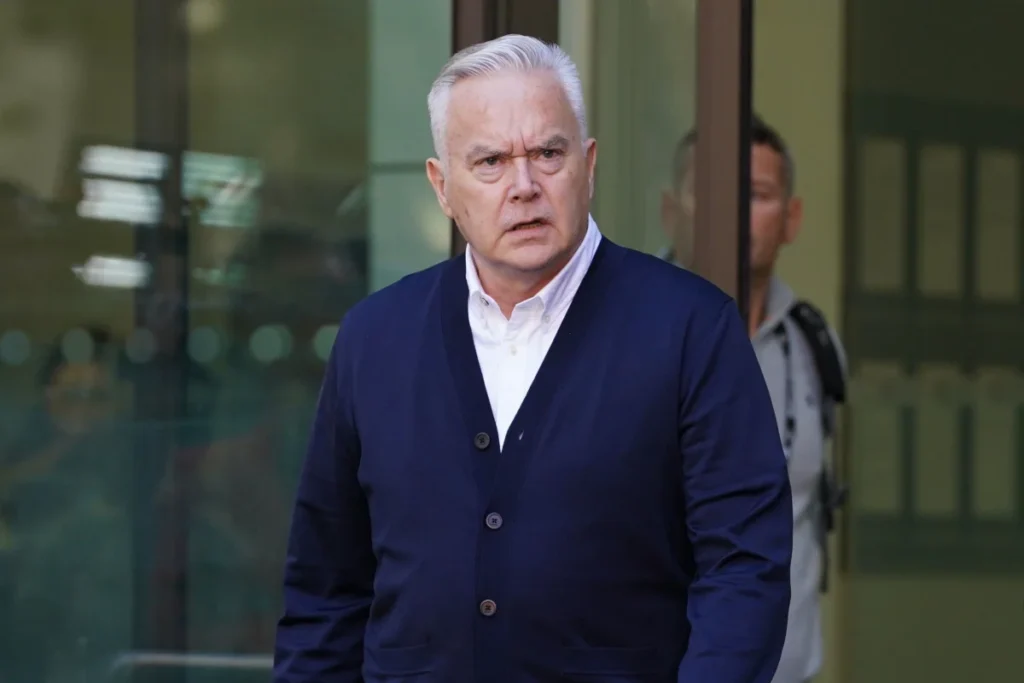

Dr. Samir Shah, the newly appointed chair of the British Broadcasting Corporation (BBC), has emphatically called for disgraced newsreader Huw Edwards to return his £200,000 salary, asserting that the sum rightfully belongs to licence fee payers. Testifying before the Culture Committee, Dr. Shah stated that the BBC has not "abandoned hope" of recovering the substantial amount, stressing that its return would be a fundamental demonstration of "moral rectitude" by Edwards. This demand comes in the wake of Edwards’ resignation from the BBC and his subsequent guilty plea to charges related to indecent images of children, casting a long shadow over his once-illustrious career and raising significant questions about accountability within public broadcasting.
Dr. Shah’s testimony underscored a firm stance from the BBC’s leadership, articulating a clear expectation for Edwards to relinquish the funds. "I’ve already said that I think Huw Edwards ought to return the money; he hasn’t done so. I read that he’s seeking some kind of redemption," Dr. Shah told the committee. "I think one very good step in that if he has an ounce of moral rectitude, he would return the money. He hasn’t done so, I think he should." This unequivocal statement highlights the BBC’s commitment to protecting public funds and upholding ethical standards, even in the face of complex personnel issues. The £200,000 in question represents the salary paid to Edwards during a six-month period, spanning from his arrest in November 2023 to his eventual resignation in May 2024. During this time, Edwards remained suspended by the corporation as investigations unfolded.
The Fall of a Broadcast Icon: A Chronology of Events
Huw Edwards, for decades, was one of the most recognisable and trusted faces of British journalism, a veteran broadcaster whose career at the BBC spanned over 40 years. He was the principal presenter of the BBC News at Ten, often fronting major national events such as general elections, royal weddings, and the funeral of Queen Elizabeth II. His authoritative yet calm demeanour earned him widespread public admiration, making his sudden downfall all the more shocking and impactful.

The initial public allegations against Edwards surfaced in July 2023, when The Sun newspaper published a story claiming a prominent male BBC presenter had paid a young person for sexually explicit images over a three-year period, starting when the individual was 17. The allegations quickly spiralled into a national scandal, prompting intense media speculation and public scrutiny. While Edwards was not immediately named, the BBC swiftly confirmed it had suspended a male presenter and launched an internal investigation.
- July 2023: The Sun publishes initial allegations. The BBC suspends an unnamed male presenter and initiates an internal investigation. Police are later contacted by the BBC regarding the allegations. Edwards is subsequently identified as the presenter in question by his wife, Vicky Flind, who stated he was suffering from serious mental health issues and receiving inpatient hospital care.
- November 2023: Edwards is formally arrested in connection with the allegations. Despite his arrest and ongoing suspension, the BBC continued to pay his salary, a practice that has now become a point of contention for Dr. Shah and the wider public.
- May 2024: After six months of suspension and amid ongoing investigations, Huw Edwards formally resigns from the BBC on health grounds. This marked the end of a storied career that had brought him into millions of homes nightly.
- June 2024: Details of the criminal charges against Edwards begin to emerge through court proceedings. He pleads guilty to three criminal charges relating to 41 illegal images of a child. Westminster Magistrates’ Court hears the disturbing specifics of his involvement in procuring and possessing indecent images.
- Late June/Early July 2024: Dr. Samir Shah makes his public demand for Edwards to repay his £200,000 salary during a Culture Committee hearing, reigniting public debate on the financial implications of the scandal for licence fee payers. Simultaneously, Edwards launches a personal blog and signals his intention to produce his own documentary or podcast, drawing criticism from child sexual abuse campaigners.
The Gravity of the Offences and Courtroom Revelations
The details that emerged from Westminster Magistrates’ Court painted a grim picture, starkly contrasting with Edwards’ public persona. He pleaded guilty to three charges relating to the possession of 41 illegal images of a child. The court heard how Edwards had actively solicited and received indecent images and videos, some depicting children as young as seven to nine years old, from a convicted paedophile. His communications included responses such as "any more" when sent serious abuse images and "Go on" when offered "naughty" videos from the same source.
Further compounding the gravity of the situation, it was revealed that Edwards had paid up to £1,500 to Alex Williams, a university student, between 2020 and 2021. Williams, who sourced images from the Dark Web, supplied Edwards with both legal pornographic pictures of young men and, crucially, illegal images and videos of children being sexually abused via WhatsApp. One victim, a teenager, stated they were just 17 when allegedly pressured by Edwards into sending explicit content, an experience they claimed led to a severe drug addiction. These revelations underscore the profound breach of trust and the devastating impact of Edwards’ actions on vulnerable individuals.
During his court appearance, Edwards expressed "profound sorrow" for his actions and offered an apology for "betraying the priceless trust and faith of so many people." This public statement, however, has been met with mixed reactions, particularly in light of his subsequent refusal to return the £200,000 salary and his plans to present his own narrative of events.

Official Responses and Public Accountability
The BBC’s handling of the Huw Edwards scandal has been under intense scrutiny, particularly regarding the decision to continue paying his salary during his suspension. The BBC is funded primarily by the annual television licence fee, a mandatory charge for households watching or recording live TV or using the BBC’s iPlayer service. This direct public funding model places a heightened expectation of transparency and accountability on the corporation. Dr. Shah’s firm stance on the repayment reflects this public expectation, framing the £200,000 as belonging unequivocally to the licence fee payers, not to Edwards.
The Culture Committee, comprising Members of Parliament, plays a critical oversight role for public institutions like the BBC. Dr. Shah’s appearance before the committee provided a platform for MPs to question the corporation’s governance, ethical policies, and financial decisions in light of the scandal. The demand for repayment can be seen as a direct response to public and parliamentary pressure for greater accountability, especially when public funds are involved in cases of such severe misconduct. The BBC’s internal guidelines typically allow for continued payment during suspension, but the severity and nature of Edwards’ crimes have prompted a re-evaluation of public sentiment and ethical responsibility.
Beyond Dr. Shah’s statements, child sexual abuse campaigners have voiced strong condemnation of Edwards’ actions and his subsequent attempts to shape his public image. His recent launch of a blog, intended to offer analysis on current affairs and mental health, has been branded "disrespectful" by these groups. Campaigners argue that focusing on his own narrative or mental health struggles, while ignoring the severe harm inflicted on victims, is inappropriate and detracts from the gravity of his crimes. While mental health is a serious consideration, the context of child abuse allegations places a moral imperative on acknowledging victim impact above personal redemption narratives, at least initially.
Broader Implications for the BBC and Public Trust

The Huw Edwards scandal represents one of the most significant crises of public trust for the BBC in recent memory, particularly following previous high-profile controversies such as the Jimmy Savile affair. As a public service broadcaster, the BBC relies heavily on its reputation for integrity, impartiality, and ethical conduct. The involvement of one of its most prominent figures in such heinous crimes inevitably damages this reputation.
The scandal has prompted renewed discussions about:
- Due Diligence and Vetting: Questions have been raised about the BBC’s internal vetting processes for high-profile talent and its ability to detect concerning behaviour before it escalates.
- Employee Conduct and Responsibility: The case highlights the significant responsibility that comes with being a public figure, particularly one funded by public money. The expectation is that individuals representing the BBC uphold the highest standards of conduct both professionally and personally.
- Financial Accountability: The debate over Edwards’ salary repayment underscores the sensitive nature of public funds. Licence fee payers expect their money to be used responsibly and ethically, and paying a suspended employee facing severe criminal charges, particularly for an extended period, challenges this expectation.
- Media Ethics and Reporting: The initial reporting by The Sun and the subsequent media frenzy also raised questions about journalistic ethics, the naming of individuals, and the balance between public interest and individual privacy, particularly in the early stages of allegations.
- Support for Victims: The case has brought the issue of child sexual abuse and its devastating impact back into the public consciousness, reinforcing the need for robust support systems for victims and stringent legal frameworks to prosecute offenders.
Edwards’ stated intention to create his own documentary or podcast series to "state his case" and "challenge the misleading or fabricated claims made in recent coverage" adds another layer of complexity to the narrative. While he is legally entitled to tell his story, the timing and context, particularly without the repayment of public funds and amidst the profound suffering of his victims, are likely to attract further criticism and fuel public debate about his perceived lack of remorse or accountability. The recent Channel 5 factual drama, "Power: The Downfall Of Huw Edwards," which featured actor Martin Clunes in the titular role, indicates a growing public fascination and desire to understand the intricacies of such high-profile cases. However, Edwards’ desire to offer a counter-narrative suggests a belief that the full story has not yet been told from his perspective, a move that will be watched closely by the public, the media, and, most importantly, the victims of his crimes.
In conclusion, the demand for Huw Edwards to repay his £200,000 salary is more than just a financial dispute; it is a symbolic gesture aimed at restoring public trust, affirming ethical governance within the BBC, and ensuring accountability for severe misconduct by a public figure. The ongoing repercussions of this scandal will undoubtedly shape future policies regarding employee conduct, financial transparency, and the delicate balance between personal rights and public responsibility within the UK’s most prominent public service broadcaster.